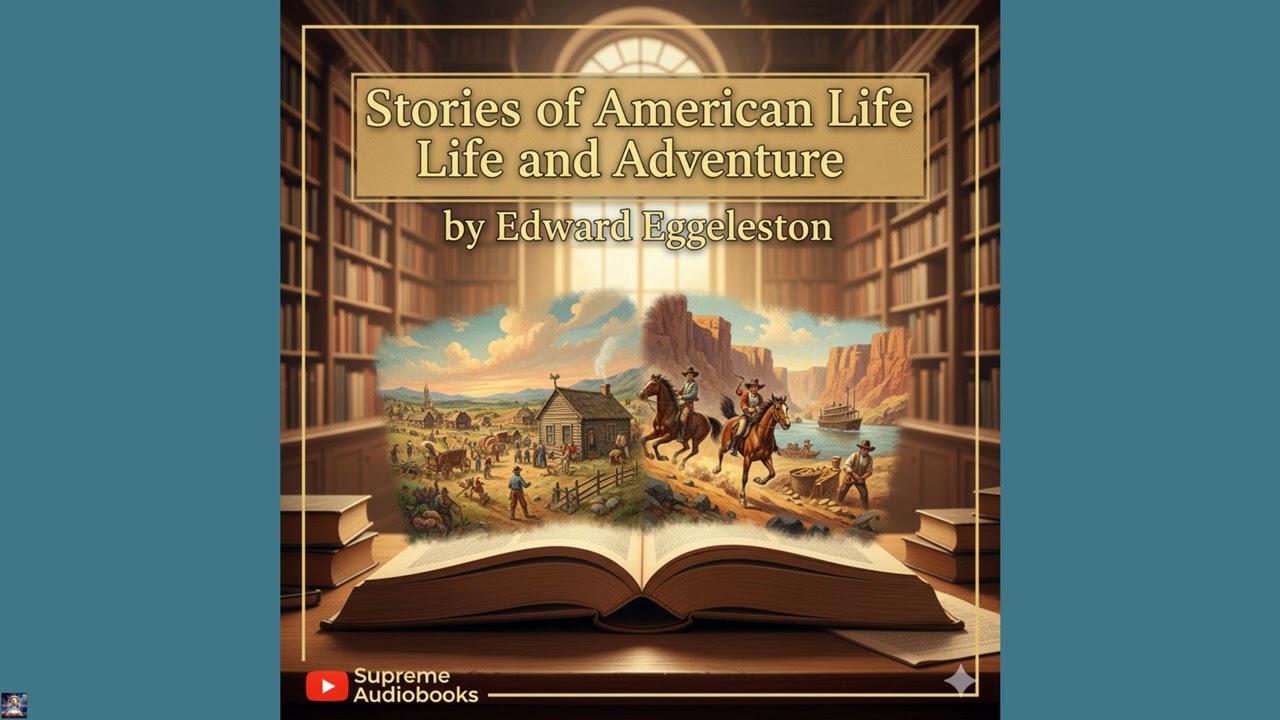
Stories of American Life and Adventure - Edward Eggleston
Edward Eggleston's Stories of American Life and Adventure offers an unparalleled window into the formative years of the United States, specifically the often-overlooked experiences of the nineteenth-century frontier. This collection serves not merely as entertainment, but as an essential historical document, preserving the voices, struggles, and triumphs of ordinary people who shaped the nation. In an era where connection to our past can feel tenuous, these narratives provide a grounded, authentic look at the challenges and simple joys that defined early American character, reminding listeners of the enduring spirit of ingenuity, resilience, and community that continues to resonate today. This collection, rather than following a single narrative thread, presents a panorama of vignettes and tales, each a vivid snapshot of life in a bygone era. Listeners are transported to the rapidly expanding American frontier, into the rustic schoolhouses, bustling marketplaces, and quiet cabins of the Midwest and beyond. The main characters are not grand figures of history, but the common folk: the earnest schoolteacher navigating a rowdy class, the industrious farmer confronting the wilderness, children learning hard lessons from nature, and families striving to build a life in uncharted territory. Each story presents a distinct situation, from humorous predicaments to moments of genuine peril, all united by their realistic portrayal of everyday existence. Listeners will meet individuals grappling with the forces of nature, the complexities of social custom, and the ever-present drive for survival and betterment in a developing land. The overarching arc is one of collective experience, illustrating the varied aspects of a society in flux, where courage, wit, and moral fortitude were often the most valuable currencies. The narratives reveal how communities were forged, how education became a beacon, and how the fabric of American identity was woven through countless personal adventures. The man behind these compelling stories, Edward Eggleston, was a singular figure in American letters, born in Vevay, Indiana, in 1837. His early life was profoundly shaped by the raw reality of the frontier and the evangelical fervor of the era. Though often sickly as a child, he absorbed the customs, speech, and spirit of the nascent Midwest. Eggleston’s formal education was sporadic, yet his self-directed studies led him to a remarkable career trajectory. He began as a Methodist circuit rider, traveling extensively through Indiana and Minnesota, ministering to scattered congregations. This experience proved invaluable, immersing him in the diverse dialects, superstitions, and social dynamics of rural America, providing a rich repository of material for his later literary endeavors. Transitioning from the pulpit to the printing press, Eggleston became a newspaper editor in various cities, eventually rising to prominence as the editor of The Independent and later Hearth and Home in New York. It was during this period that he penned his most acclaimed novel, The Hoosier Schoolmaster (1871). This groundbreaking work, celebrated for its literary realism and its meticulous recording of Midwestern dialect, established Eggleston as a significant voice in American literature. He continued to write several other novels, including The Circuit Rider and Roxy, all marked by their commitment to depicting American life with authenticity, eschewing the romanticized notions prevalent at the time. Eggleston’s dedication to historical accuracy later led him to devote himself to writing serious historical works, solidifying his place as both a keen observer of his present and a diligent historian of the past. At their core, Eggleston’s stories enact several profound themes, illuminating the period he chronicled. Foremost is the theme of realism and regionalism. Eggleston was a pioneer in presenting ordinary American lives with unvarnished truth, capturing local customs, dialect, and the specificities of frontier existence. For instance, his vivid descriptions of a log cabin schoolhouse, complete with its rough-hewn benches and a teacher grappling with unruly pupils, paint an immediate and tangible picture of the challenges and humor inherent in early rural education. He transcribed speech patterns phonetically, allowing readers to truly hear the voices of his characters, fostering a deep connection to their world. Another prominent theme is education and self-improvement. Many of Eggleston’s narratives center on characters, particularly young ones, who strive for knowledge and moral betterment in an environment that often valued brawn over books. A young protagonist might be seen overcoming significant obstacles, from arduous journeys to the skepticism of their community, simply to attend a school or acquire a treasured book. These narratives underscore the profound value placed on literacy and the potential for upward mobility through learning in a society eager to define itself. They demonstrate how individuals, through diligence and a desire for growth, could shape their own destinies even in the most rugged of circumstances. These stories emerged from a specific and pivotal moment in American history—the late nineteenth century. Following the conclusion of the Civil War, the United States was undergoing a period of immense transformation. Westward expansion gained new momentum, industrialization was rapidly changing urban centers, and the country was grappling with questions of national identity and reunification. This era saw a distinct shift in literary tastes, moving away from the more sentimental and romantic traditions toward realism and local color. There was a burgeoning demand for stories that authentically reflected the diverse experiences of Americans, especially those living on the edges of civilization, whose lives were often ignored by the Eastern literary establishment. Edward Eggleston was perfectly positioned to answer this call. His background on the Indiana frontier gave him firsthand knowledge of the lives he depicted, and his experiences as a minister and editor provided him with the skills and platform to share these observations widely. His work became a vital part of this broader literary movement, offering readers a mirror to their rapidly changing society and preserving the narratives of a disappearing frontier life. His desire to document and celebrate the common man, the regional variations, and the everyday struggles helped define what American literature could be, establishing a tradition of storytelling that was distinctly national in scope and character. Listening to Stories of American Life and Adventure as an audiobook offers a particularly immersive and fitting experience. Eggleston’s meticulous attention to dialect and the oral traditions of frontier storytelling truly comes to life through skilled narration. The very nature of these tales—often presented as fireside anecdotes or community gossip in their original context—lends itself perfectly to the spoken word. Listeners can savor the specific cadences of speech, the subtle humor in colloquialisms, and the raw emotion conveyed through a narrator's voice, transporting them directly into the rustic settings and challenging circumstances of the stories. The run length, measured in several hours, allows for a comprehensive yet digestible listening experience, perfect for daily commutes, quiet evenings, or longer stretches of focused engagement. Listen for the nuanced pacing that allows moments of tension to build and humorous observations to land, and for the distinct voices that bring each character—from the stern schoolmaster to the curious child—vividly to life, deepening the atmosphere and enhancing the overall sense of historical authenticity.
Enjoyed Stories of American Life and Adventure - Edward Eggleston? A few ways to support us
Audible & Amazon links are affiliate; we may earn a small commission at no extra cost.
About this production
Human narration by a volunteer reader from LibriVox.org, the public-domain audiobook project. LibriVox volunteers record literary works whose copyright has expired in the United States, releasing the resulting recordings into the public domain.
Stories of American Life and Adventure - Edward Eggleston by Edward Eggleston. The underlying text is in the U.S. public domain. We do not republish any modern copyrighted edition, translation, or commentary.
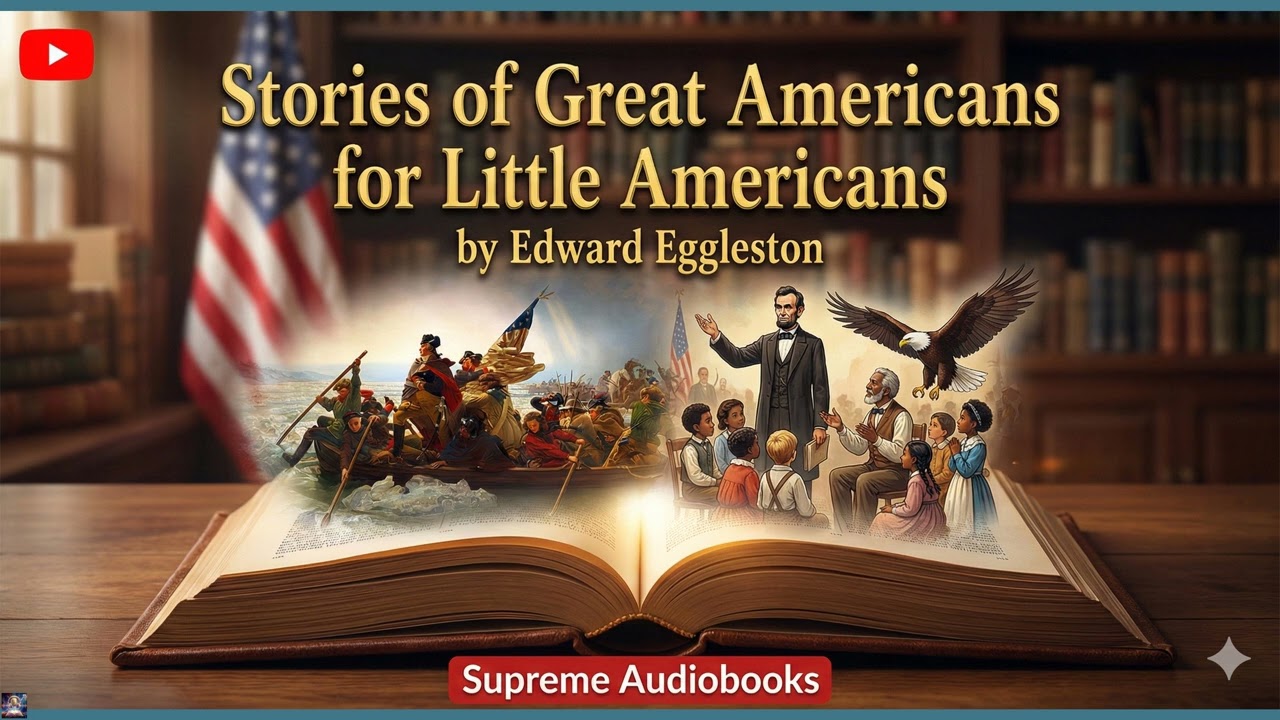
The 4K cinematic visuals accompanying this audiobook are generated by an AI image model from prompts derived from the source text. No copyrighted photos, paintings, or stock footage are used. AI generation is disclosed on every video on our YouTube channel as required by YouTube's altered/synthetic content policy.
English subtitles are transcribed from the LibriVox recording with OpenAI Whisper. Translations into the 11 other supported languages are produced by Meta's NLLB-200 neural translation model. No human translator's copyrighted translation is used.
Questions about sourcing or rights? See our DMCA & Sourcing policy or contact us.
Enjoyed this audiobook?
If you'd like to own a copy of Stories of American Life and Adventure - Edward Eggleston or hear a professionally produced edition, the links below help support free audiobook production at no extra cost to you.
As an Amazon Associate we earn from qualifying purchases. Audible / print links are affiliate.