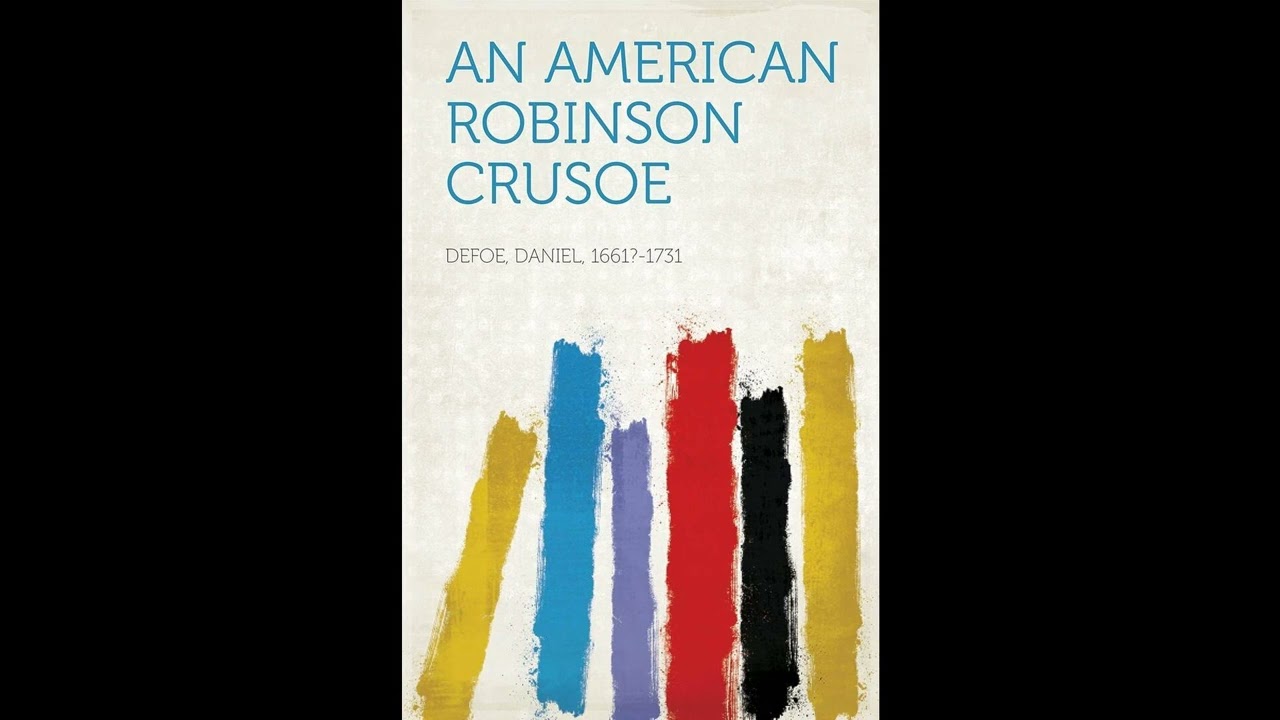
An American Robinson Crusoe
Imagine being cast utterly alone onto the vast, untamed shores of a burgeoning continent, stripped of society's comforts and facing the raw power of nature. This is the stark, compelling premise of An American Robinson Crusoe, a gripping tale from the pen of Daniel Defoe that echoes the indomitable spirit of human survival. More than just an adventure story, it is a foundational examination of resilience, ingenuity, and the profound psychological toll of isolation. This narrative speaks directly to the enduring human need for self-reliance and the drive to build a new world from nothing—a theme as resonant in the struggles of modern life as it was in the grand narratives of pioneering centuries past. It asks us to consider what truly defines us when everything else is stripped away. The story unfolds in the early years of colonial expansion, placing its protagonist, a venturesome but perhaps overly ambitious young man named Jonathan Thorpe, in an unprecedented predicament. Having set sail from the Old World with dreams of fortune and a new beginning, his vessel is tragically wrecked by a ferocious storm off the rugged, unexplored coast of what would become the nascent American wilderness. Thorpe awakens amidst the debris, the sole survivor, finding himself marooned on a desolate, sprawling stretch of land—perhaps an uncharted island or a remote peninsula—far from any known settlement or sign of civilization. His initial days are a desperate struggle against despair and the immediate threats of hunger, thirst, and exposure to the elements. As weeks turn into months, Thorpe meticulously salvages what he can from the wreck—tools, provisions, and even remnants of his former life—using his wits and sheer will to construct a rudimentary shelter, fashion basic implements, and procure sustenance from the unfamiliar flora and fauna. His days become a meticulous routine of building, foraging, and mapping his new, solitary domain. He battles the fear of the unknown, the constant anxiety of dwindling supplies, and the crushing weight of profound loneliness. This struggle forces him to confront his own character, stripping away the pretensions of his former life and revealing a capacity for invention and perseverance he never knew he possessed. The narrative follows his evolving relationship with the untamed landscape, his attempts to impose order and create a semblance of home amidst the wild, and the growing tension as he contemplates the terrifying prospect of permanent isolation, or perhaps, the unsettling possibility of not being entirely alone. Few figures loom as large in the lineage of English prose as Daniel Defoe, born Daniel Foe around 1660 in London. A prodigious writer whose career spanned decades, Defoe's own life was as adventurous and unpredictable as many of his fictional creations. The son of a nonconformist butcher, he was initially destined for the Presbyterian ministry but instead turned to a volatile existence as a merchant, trader, and political pamphleteer. His sharp wit and sometimes biting satire often landed him in trouble, most famously resulting in public humiliation in the pillory and imprisonment for his satirical pamphlet, The Shortest Way with the Dissenters. It was only in his late fifties that Defoe turned to full-length fiction, profoundly shaping the very form of the novel as we know it. His detailed, journalistic prose, grounded in a stark realism, lent an unprecedented verisimilitude to his narratives, blurring the lines between fact and fiction. He became a master of crafting seemingly authentic memoirs and travelogues, capturing the gritty realities of everyday life and extraordinary circumstances. Beyond An American Robinson Crusoe, Defoe’s output includes the foundational classic The Life and Strange Surprizing Adventures of Robinson Crusoe, the gritty social commentary of Moll Flanders, and the chilling historical account A Journal of the Plague Year. His work cemented the novel's place as a serious literary art form, offering intimate glimpses into individual experience against broad societal backdrops. At its heart, An American Robinson Crusoe powerfully articulates themes of survival and the extraordinary power of self-reliance. Jonathan Thorpe’s struggle is not merely against the physical environment but also against the existential dread of isolation. We witness his methodical efforts to recreate a microcosm of civilization—salvaging planks to build a sturdy dwelling, discovering edible plants, and even devising methods for crafting tools from raw materials. His initial despair slowly yields to a determined will to live, showcasing humanity’s innate capacity for invention and adaptation, transforming a desperate castaway into the unwitting architect of his own new world. The narrative also subtly examines early ideals of American individualism and the spirit of colonial expansion. Thorpe, much like the nascent nation itself, is confronted with a vast, untamed wilderness. He doesn’t simply survive; he begins to claim and cultivate his surroundings, naming landmarks, organizing his resources, and establishing a form of dominion over the land. This act of imposing order on chaos reflects the burgeoning European perception of the New World as a canvas for human enterprise. Furthermore, the story engages with profound questions of faith and providence, as Thorpe, confronted with his vulnerability and mortality, often turns to introspection, grappling with his past actions and seeking spiritual solace in his desolate solitude. His internal monologues reveal a man wrestling with his conscience and seeking meaning in his unimaginable plight, demonstrating Defoe’s deep interest in the moral and spiritual dimensions of human experience. An American Robinson Crusoe emerged during a period of immense change and intellectual ferment in early 18th-century England. The Enlightenment was gaining momentum, emphasizing reason, individualism, and empirical observation. This era saw a fascination with travel accounts, scientific discovery, and the expanding British Empire’s reach across the globe. Defoe’s narratives tapped into the public’s appetite for "true stories" of far-off lands and harrowing adventures, often blending journalistic detail with fictionalized accounts. Politically and economically, England was a leading maritime power, driven by mercantile interests and colonial expansion. The Americas, though still largely undeveloped by European standards, were becoming increasingly important as sources of raw materials and new markets. The idea of the self-made man, conquering new frontiers and establishing prosperity through hard work and ingenuity, was deeply ingrained in the Protestant work ethic prevalent at the time. This novel speaks to that contemporary interest in overseas ventures, the challenges of colonization, and the idealization of the individual who could thrive independently, carving out an existence in the face of daunting challenges, mirroring the aspirations and anxieties of a nation looking westward. Listening to An American Robinson Crusoe as an audiobook offers a uniquely intimate encounter with Thorpe’s isolated existence. The narrator becomes your sole companion on this desolate shore, the voice carrying the full weight of the protagonist's emotional and physical trials. Over several hours of compelling listening, you will experience the meticulously described efforts of survival—the rustle of new growth underfoot, the rhythmic crash of waves, the desperate, quiet breathing of a man utterly alone. Listen for the narrator’s pacing, which skillfully shifts from the deliberate rhythm of daily toil to the heightened tension of sudden discovery or profound despair. The internal monologues become particularly poignant when voiced aloud, allowing you to inhabit Thorpe’s thoughts and feel the texture of his resolve, his terror, and his growing self-awareness as he grapples with the raw reality of his new American world.
Enjoyed An American Robinson Crusoe? A few ways to support us
Audible & Amazon links are affiliate; we may earn a small commission at no extra cost.
About this production
Human narration by a volunteer reader from LibriVox.org, the public-domain audiobook project. LibriVox volunteers record literary works whose copyright has expired in the United States, releasing the resulting recordings into the public domain.
An American Robinson Crusoe by Daniel Defoe. The underlying text is in the U.S. public domain. We do not republish any modern copyrighted edition, translation, or commentary.
The 4K cinematic visuals accompanying this audiobook are generated by an AI image model from prompts derived from the source text. No copyrighted photos, paintings, or stock footage are used. AI generation is disclosed on every video on our YouTube channel as required by YouTube's altered/synthetic content policy.
English subtitles are transcribed from the LibriVox recording with OpenAI Whisper. Translations into the 11 other supported languages are produced by Meta's NLLB-200 neural translation model. No human translator's copyrighted translation is used.
Questions about sourcing or rights? See our DMCA & Sourcing policy or contact us.
Enjoyed this audiobook?
If you'd like to own a copy of An American Robinson Crusoe or hear a professionally produced edition, the links below help support free audiobook production at no extra cost to you.
As an Amazon Associate we earn from qualifying purchases. Audible / print links are affiliate.