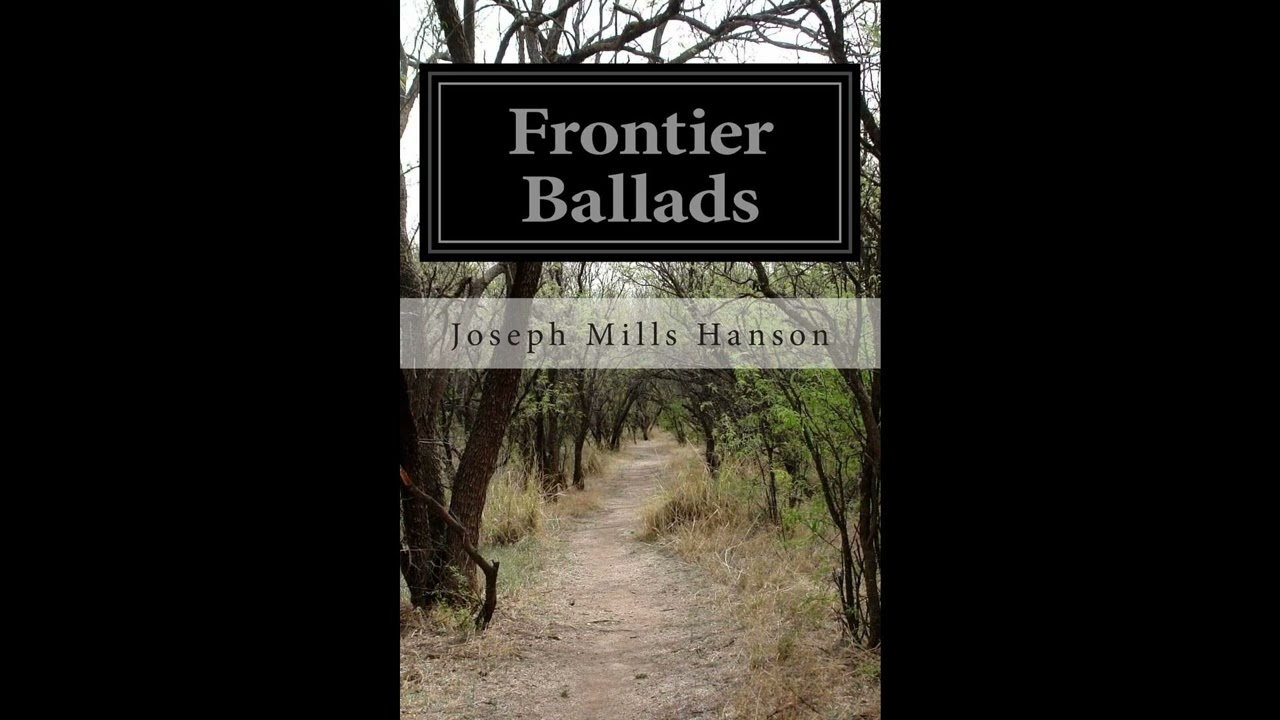
Frontier Ballads
Step into the stark, breathtaking landscapes of the American West, not through the lens of a sweeping novel, but through the vibrant, rhythmic verses of Joseph Mills Hanson’s Frontier Ballads. This collection of narrative poems offers an evocative portrait of an era now passed, capturing the spirit, struggles, and legends that forged a significant part of American identity. Why should a listener engage with these historic echoes today? Because Hanson’s work allows us to peer into the collective imagination of a nation grappling with its own expansion, an imagination shaped by both rugged reality and powerful mythology. These poems serve as an invaluable historical and literary artifact, revealing how a nascent nation understood its own adventurous past and the figures who defined it, offering perspective on the stories we continue to tell about courage, conflict, and the enduring human spirit against an untamed horizon. Hanson's collection transports listeners across the sprawling plains, through towering mountain passes, and into the quiet, often perilous, outposts of a developing continent. The book introduces no single protagonist, but rather a gallery of archetypal figures whose lives intersected on this ever-moving edge of civilization. You will encounter the stoic cowboy facing down the elements, the resilient pioneer woman enduring unimaginable hardships, the brave cavalryman standing guard against unseen threats, and the Native American warrior fighting for ancestral lands. Each ballad presents a snapshot of life, from the quiet dignity of a prospector’s solitary vigil to the thundering drama of a cattle drive or a skirmish on the open range. The central tension running through Frontier Ballads is the perennial struggle of humanity against both the formidable power of nature and the inherent conflicts that arise when disparate cultures and ambitions collide. Listeners will witness the raw pursuit of dreams, whether for land, gold, or a new beginning, often weighed against the profound loneliness of vast, unforgiving spaces. The arc of these stories moves from the initial optimistic push westward, fueled by expansionist ideals, through moments of desperate survival and profound loss, eventually settling into a poignant reflection on a way of life that, even in Hanson's time, was rapidly fading. While each poem stands alone, together they form a comprehensive mosaic of frontier existence—its trials, its triumphs, and its indelible mark on the American psyche. Hanson carefully avoids definitive conclusions for the individual tales, instead leaving a sense of the ongoing, often unresolved, challenges that characterized the era. Joseph Mills Hanson (1875-1960) was uniquely positioned to chronicle the American West. Born in Yankton, South Dakota, he had a direct, almost ancestral, connection to the very frontier he depicted. Hanson lived a life as varied and engaged as the stories he penned: he served as a historian, a journalist, and even as a soldier in the Spanish-American War and later in World War I, experiences that undoubtedly lent a keen sense of authenticity and dramatic flair to his writing. His career demonstrated a deep commitment to preserving and understanding American history, particularly the narratives of westward expansion. Beyond Frontier Ballads, Hanson also authored significant historical works such as The Conquest of Missouri and With Carrington on the Bozeman Road, solidifying his reputation as a meticulous researcher and engaging storyteller. While not strictly aligned with a major literary movement like modernism, his work stands as a powerful example of regional literature and historical romanticism from the early 20th century. Hanson’s place in the literary canon resides in his role as a chronicler and myth-maker of the American West, preserving the tales and spirit of an era just as its physical manifestations were disappearing. He was part of a generation that felt compelled to document the experiences of pioneers, cowboys, and soldiers, ensuring their stories became part of the national consciousness. The poems in Frontier Ballads enact several powerful themes. One prominent theme is the spirit of adventure and exploration, a driving force often romanticized as Manifest Destiny. Hanson captures this in verses depicting scouting parties pushing into uncharted territories or wagon trains forging paths across seemingly endless plains, embodying a relentless human drive toward the horizon. Coupled with this is the hardship and resilience of frontier life. His ballads frequently illustrate the brutal realities of survival—facing blizzards, enduring droughts, and the constant, back-breaking toil of homesteading. A poem about a lone settler building a cabin in the face of winter’s coming storm paints a vivid picture of this determination. Another significant theme is conflict and cultural clash, particularly the struggles between expanding Anglo-American settlements and established Native American nations, as well as the inherent disorder of a territory not yet fully governed by law. Hanson’s work does not shy away from depicting skirmishes and the tragic consequences of these encounters, often presenting the courage and suffering on all sides. Finally, the collection highlights the romanticization of the West itself, the transformation of everyday struggles into legend. Characters like the stoic cowboy or the brave soldier are often elevated to heroic status, their deeds magnified to fit the grand scale of the landscape and the national narrative. This creation of legendary figures serves to solidify a particular version of American heroism, shaping popular perceptions of the frontier for generations to come. Published in 1910, Frontier Ballads emerged at a pivotal moment in American history and culture. Just two decades prior, the Superintendent of the Census had declared the frontier officially "closed" in 1890, a pronouncement that prompted significant national introspection. Historian Frederick Jackson Turner’s influential "Frontier Thesis" of 1893 further cemented the idea that the frontier had been a defining force in shaping American democracy and character. Hanson’s collection, therefore, appeared during a period of intense nostalgia and a desire to preserve the stories and spirit of a vanishing era. Culturally, there was a widespread fascination with the "Old West," reflected in dime novels, Wild West shows, and early motion pictures. Politically, America was asserting itself as a global power, moving beyond internal expansion. Hanson’s work satisfied a cultural longing to memorialize the rugged individualism and adventurous spirit that many believed the frontier had instilled, offering a looking-back perspective just as the country was turning its gaze forward. It was a cultural artifact designed to consolidate a national mythology before the living memory of the frontier truly faded. Listening to Frontier Ballads as an audiobook offers a uniquely powerful way to experience these narrative poems. Ballads, by their very nature, were meant to be heard, recited aloud, their rhythms and rhymes amplifying their dramatic impact. The run length, several hours in total, makes it an ideal companion for focused listening sessions, long drives, or even breaking down into shorter segments for daily reflection. A skilled narrator can bring out the inherent musicality and emotional depth of Hanson’s verses, allowing the listener to fully appreciate the pacing—from the measured tread of a solitary rider to the frantic rush of a chase. The right voice can give distinct character to the diverse figures who populate these poems, conveying the gruff sincerity of a cowboy, the quiet fortitude of a pioneer, or the solemn gravity of a historical account. The narration can create an immersive atmosphere, conjuring images of vast, wind-swept plains, the crackle of a campfire under a star-strewn sky, or the distant echoes of a forgotten skirmish, making the stories of the American West feel immediate and alive.
Enjoyed Frontier Ballads? A few ways to support us
Audible & Amazon links are affiliate; we may earn a small commission at no extra cost.
About this production
Human narration by a volunteer reader from LibriVox.org, the public-domain audiobook project. LibriVox volunteers record literary works whose copyright has expired in the United States, releasing the resulting recordings into the public domain.
Frontier Ballads by Joseph Mills Hanson. The underlying text is in the U.S. public domain. We do not republish any modern copyrighted edition, translation, or commentary.
The 4K cinematic visuals accompanying this audiobook are generated by an AI image model from prompts derived from the source text. No copyrighted photos, paintings, or stock footage are used. AI generation is disclosed on every video on our YouTube channel as required by YouTube's altered/synthetic content policy.
English subtitles are transcribed from the LibriVox recording with OpenAI Whisper. Translations into the 11 other supported languages are produced by Meta's NLLB-200 neural translation model. No human translator's copyrighted translation is used.
Questions about sourcing or rights? See our DMCA & Sourcing policy or contact us.
Enjoyed this audiobook?
If you'd like to own a copy of Frontier Ballads or hear a professionally produced edition, the links below help support free audiobook production at no extra cost to you.
As an Amazon Associate we earn from qualifying purchases. Audible / print links are affiliate.