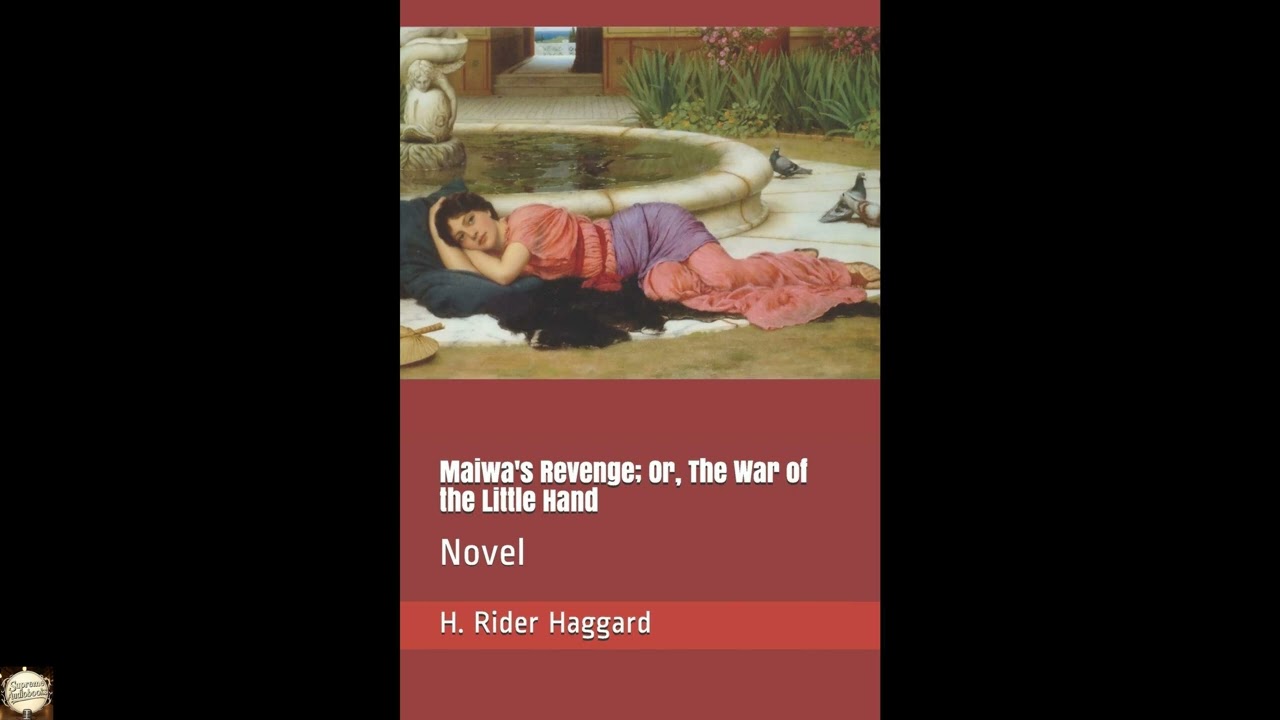
Maiwa's Revenge; Or, The War of the Little Hand: Novel
H. Rider Haggard’s Maiwa's Revenge; Or, The War of the Little Hand: Novel plunges listeners into a world of primal justice, political intrigue, and the relentless pursuit of vengeance amidst the unforgiving landscapes of southern Africa. First published in 1888, this lesser-known but powerful narrative sees the return of Haggard’s iconic adventurer, Allan Quatermain, who finds himself drawn into a conflict far more personal and morally ambiguous than his previous grand quests for treasure. It is a story that, despite its late Victorian origins, resonates with perennial human struggles for dignity and retribution, forcing us to consider the costs and complexities of interfering in another culture's battles, and the enduring human desire to right a grievous wrong. The story unfolds as Allan Quatermain, the seasoned white hunter and explorer, is living a quiet life, believing his days of perilous adventure are behind him. This peace is shattered by the arrival of Maiwa, a queen from a neighboring tribal nation, who seeks his aid under the most desperate circumstances. Maiwa’s husband, the brutal and tyrannical King Wambe, has committed an unspeakable act: he has murdered their infant son – the "Little Hand" – and unjustly exiled Maiwa herself, solely to secure his own power and eliminate any potential rivals to the throne. Driven by an all-consuming grief and an unwavering resolve for justice, Maiwa appeals to Quatermain to lead a small force to overthrow Wambe, reinstate her as queen, and exact revenge for her murdered child. Initially reluctant to involve himself in the complex, often violent, tribal politics of the region, Quatermain is ultimately moved by Maiwa’s raw courage and profound sorrow. He agrees to help, assembling a small, loyal company that includes his trusted companions from previous adventures: the mighty Zulu warrior Umslopogaas and the wise Hottentot, Ventvögel. Together, this unlikely band sets out on a perilous expedition into Wambe’s territory. They must navigate treacherous terrain, face the overwhelming numerical superiority of Wambe’s army, and confront the moral ambiguities of their mission. The narrative builds with suspense and a growing sense of urgency as the "War of the Little Hand" – fought on behalf of a murdered child – draws closer, promising a confrontation that will determine the fate of a queen and the soul of a kingdom. H. Rider Haggard, born in Norfolk, England, in 1856, was a true product of his time, a man whose personal experiences profoundly shaped his literary output. At just 19, he moved to Natal in South Africa, serving as secretary to Sir Henry Bulwer, the Lieutenant-Governor. Later, he worked on the staff of Theophilus Shepstone during the annexation of the Transvaal and witnessed firsthand the tumultuous events of the Anglo-Zulu War and the First Boer War. These years in southern Africa, living among and observing the indigenous peoples and the dynamics of colonial expansion, provided him with an unparalleled wealth of material and an enduring fascination with the continent. Upon his return to England, Haggard channeled his experiences into fiction, quickly becoming a prolific and hugely popular author. His literary breakthrough came with King Solomon’s Mines in 1885, which introduced Allan Quatermain to the world, followed swiftly by She (1887) and Allan Quatermain (1887). Haggard is widely recognized as one of the originators of the "lost world" adventure genre. He captivated millions with his vivid descriptions of exotic lands, fast-paced action, and compelling, often larger-than-life characters. He continued to write extensively until his death in 1925, solidifying his place as a foundational figure in popular adventure fiction, influencing generations of writers from Rudyard Kipling to Edgar Rice Burroughs. Maiwa’s Revenge foregrounds several compelling themes that were central to Haggard’s work and remain relevant. One prominent idea is the concept of justice versus revenge. Maiwa’s quest is driven by a profound desire for retribution against the king who murdered her child, yet Quatermain must grapple with the moral complexities of such an undertaking. Is it justice to intervene in a foreign kingdom’s internal power struggles, even when a horrific wrong has been committed? This question is brought to life vividly when Maiwa describes her infant son’s murder, painting a harrowing picture of tyranny that compels Quatermain despite his reservations. Another significant theme is the clash of cultures and the paternalistic gaze of colonialism. Haggard’s depiction of African societies, while often problematic by modern standards, provides a window into Victorian perceptions of non-European peoples. Quatermain, as the European "hero," often takes on a role of protector or facilitator for the African characters, embodying a certain imperial ideology. This is exemplified when he initially tries to dissuade Maiwa, but then accepts the burden of her cause, viewing it as a duty. The book also touches upon the enduring human spirit and the struggle of individuals against seemingly insurmountable odds, as Maiwa's small, determined force confronts a powerful, established kingdom. The late nineteenth century, when Maiwa’s Revenge was conceived and published, was a period of intense global change and imperial expansion. Britain was at the zenith of its power, and the "Scramble for Africa"—the rapid colonization of the continent by European powers—was in full swing. This era created a voracious public appetite for tales of exotic lands, daring exploits, and the supposed heroism of British adventurers abroad. Haggard’s fiction perfectly tapped into this cultural zeitgeist, offering vicarious participation in the grand narratives of empire. Moreover, the literary landscape of the time was undergoing a transformation, with popular adventure fiction emerging as a dominant genre. Writers like Haggard provided an escape from the growing industrialization and societal strictures of Victorian England, transporting readers to realms where courage and cunning prevailed over modern complexities. His works often reflected contemporary anxieties and fascinations with the "primitive" versus the "civilized," and while his portrayals of African characters and cultures were often stereotypical, they nonetheless captured the imagination of a generation eager for stories from the farthest corners of the map. Listening to Maiwa’s Revenge as an audiobook offers a particularly immersive way to experience Haggard’s storytelling. A skilled narrator can bring the diverse array of voices and accents to life, from Allan Quatermain's thoughtful, world-weary reflections to Maiwa's fierce, impassioned pleas for justice, and the resonant tones of Umslopogaas. The several hours of run time allow for sustained engagement, making it an ideal companion for long drives, household tasks, or simply relaxing with a good story. Listeners can fully appreciate the dynamic pacing, which shifts between detailed descriptions of the African wilderness and heart-pounding battle sequences. The narrator’s voice can heighten the atmosphere, conveying the tension of confrontation, the vastness of the landscape, and the raw emotions of characters locked in a desperate struggle, making the "War of the Little Hand" unfold vividly in the theater of the mind.
Enjoyed Maiwa's Revenge; Or, The War of the Little Hand: Novel? A few ways to support us
Audible & Amazon links are affiliate; we may earn a small commission at no extra cost.
About this production
Human narration by a volunteer reader from LibriVox.org, the public-domain audiobook project. LibriVox volunteers record literary works whose copyright has expired in the United States, releasing the resulting recordings into the public domain.
Maiwa's Revenge; Or, The War of the Little Hand: Novel by H. Rider Haggard. The underlying text is in the U.S. public domain. We do not republish any modern copyrighted edition, translation, or commentary.
The 4K cinematic visuals accompanying this audiobook are generated by an AI image model from prompts derived from the source text. No copyrighted photos, paintings, or stock footage are used. AI generation is disclosed on every video on our YouTube channel as required by YouTube's altered/synthetic content policy.
English subtitles are transcribed from the LibriVox recording with OpenAI Whisper. Translations into the 11 other supported languages are produced by Meta's NLLB-200 neural translation model. No human translator's copyrighted translation is used.
Questions about sourcing or rights? See our DMCA & Sourcing policy or contact us.
Enjoyed this audiobook?
If you'd like to own a copy of Maiwa's Revenge; Or, The War of the Little Hand: Novel or hear a professionally produced edition, the links below help support free audiobook production at no extra cost to you.
As an Amazon Associate we earn from qualifying purchases. Audible / print links are affiliate.