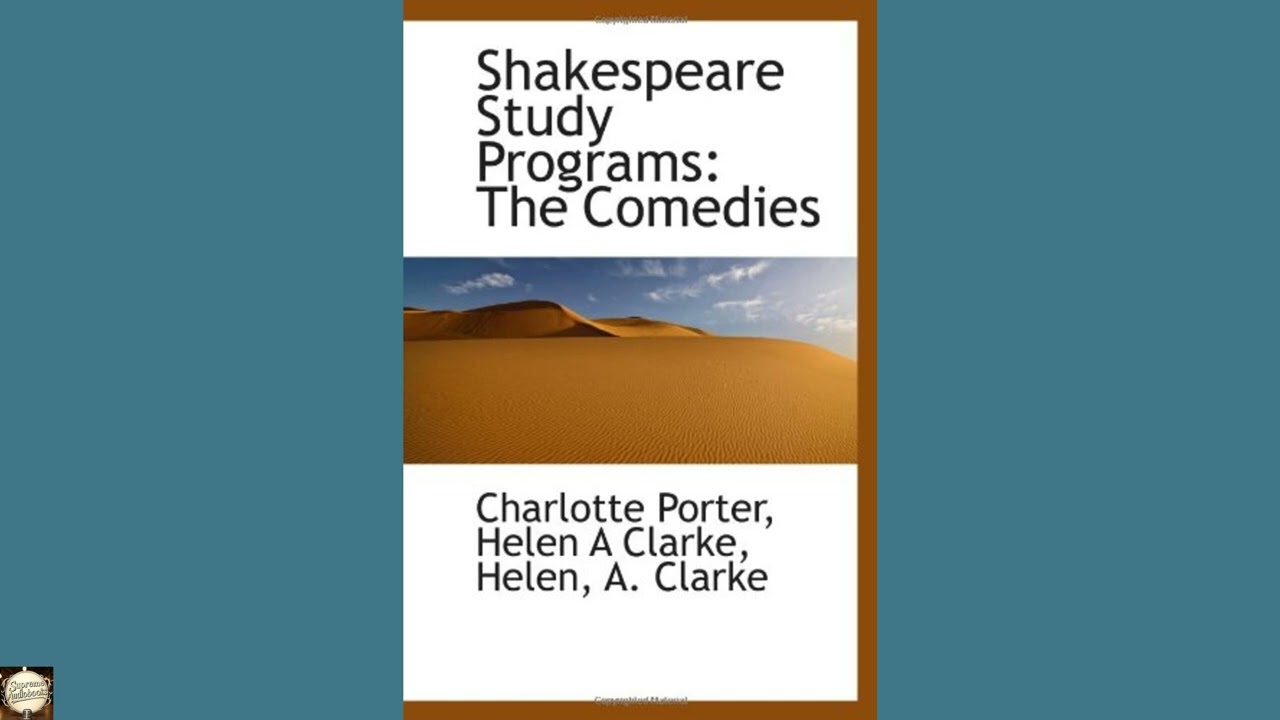
Shakespeare Study Programs: The Comedies
William Shakespeare's comedies offer a unique brand of joy, wit, and profound insight into the human condition, yet their linguistic complexities and historical distance can sometimes obscure their brilliance for modern audiences. Charlotte Porter's Shakespeare Study Programs: The Comedies offers a structured, illuminating path through these celebrated plays, providing listeners with the tools to unlock their humor, dramatic tension, and underlying wisdom. This program isn't just a commentary; it is an invitation to engage with Shakespeare’s genius on a deeper level, transforming passive appreciation into active understanding and making these age-old stories resonate powerfully with contemporary life. It is an essential guide for anyone wishing to truly grasp the artistry behind the Bard's most delightful works. This comprehensive study program guides the listener through the rich landscape of Shakespearean comedy, presenting not a single narrative, but a coherent framework for understanding the playwright's distinctive approach to mirth and love. It introduces the recurrent settings—often pastoral and magical spaces like the Forest of Arden in As You Like It or the enchanted wood in A Midsummer Night's Dream—which serve as backdrops for transformation and playful deception. The program shines a light on the archetypal characters that populate these worlds: the witty heroines like Rosalind and Viola, disguised for survival or for sport; the lovesick young men whose affections are comically misplaced; the bumbling clowns and wise fools who often speak profound truths; and the stern fathers or oppressive rulers whose decrees must be circumvented. The central conflict in these comedies frequently revolves around obstacles to love, identity confusion, and the restoration of social harmony. Characters might face separation, mistaken identities due to disguise or striking resemblance, or the arbitrary whims of fate and societal expectations. The arc typically moves from an initial disruption—a flight from persecution, an unrequited love, a tyrannical law—through a period of confusion and delightful chaos, often involving misunderstandings and madcap schemes. The program helps listeners discern how these disparate threads ultimately converge, leading to joyful recognition, the shedding of disguises, and the promise of multiple marriages, all culminating in a festive resolution that celebrates community and romantic fulfillment. It reveals how Shakespeare masterfully orchestrates these elements to create a sense of earned happiness without giving away the specific, delightful twists that make each play unique. Charlotte Porter, born in 1859 in Towanda, Pennsylvania, was a pioneering figure in American literary scholarship and criticism. Her life was dedicated to the rigorous study and intelligent dissemination of classic literature, particularly the works of William Shakespeare and Robert Browning. After graduating from Wells College in 1886, Porter began a distinguished career that saw her move beyond conventional academic roles, establishing herself as an editor and interpreter of profound influence. She was co-founder and editor, alongside Helen A. Clarke, of Poet Lore, a quarterly journal that began in 1889 and quickly became a significant forum for critical discussion and the publication of new poetry and dramatic works, specializing in comparative literature and promoting a global perspective on literary art. Porter’s most enduring legacy stems from her meticulous textual scholarship. In partnership with Clarke, she undertook the monumental task of producing the "First Folio" edition of Shakespeare's works, a groundbreaking multi-volume collection that aimed to present the plays in their original Early Modern English spellings and punctuation, offering scholars and general readers alike an unprecedented closeness to the initial publication. This monumental effort, completed over several years, revealed her profound commitment to textual accuracy and historical context, marking a significant advancement in Shakespearean studies. She also produced acclaimed editions of Browning's poetry and established herself as a literary critic whose insights were both accessible and academically sound, cementing her place as a formidable intellect who bridged the gap between academic rigor and public literary appreciation until her passing in 1926. One prominent theme within Shakespeare’s comedies, consistently highlighted by Porter’s study program, is the transformative power of disguise and mistaken identity. In Twelfth Night, for instance, Viola assumes the male identity of Cesario, leading to a cascade of humorous misunderstandings and unrequited affections. Her disguise creates a comedic triangle where Olivia loves Cesario, Cesario (Viola) loves Orsino, and Orsino loves Olivia. This elaborate web of mistaken identity not only generates much of the play's laughter but also serves to illuminate deeper truths about love, gender roles, and self-discovery as characters are forced to examine their desires and prejudices. The study program guides listeners through these layers, showing how the temporary chaos of mistaken identity ultimately paves the way for clarity and genuine connection. Another central theme is the tension between societal rules and natural human desires, often manifest in the creation of a "green world" or a pastoral retreat. In As You Like It, the exiled characters escape the rigid confines of the court for the freedom of the Forest of Arden. Here, traditional hierarchies dissolve, and love blossoms more freely, allowing characters like Rosalind and Orlando to shed societal expectations and express their true selves. This temporary escape from the pressures of civilization allows for a period of personal growth and emotional fluidity, culminating in a return to society where lessons learned in the natural world can be integrated into a newly harmonized social order. Porter's program encourages listeners to recognize these recurring patterns and appreciate their dramatic and philosophical implications. When Charlotte Porter was writing and publishing her study programs and critical editions, the late nineteenth and early twentieth centuries represented a dynamic period in American literary scholarship. There was a burgeoning interest in making classic literature, previously the domain of elite academics, more accessible to a wider reading public. Universities were expanding, and literary criticism was evolving from mere appreciation to more systematic analysis, incorporating historical, biographical, and textual approaches. Porter's work emerged from this environment, meeting a demand for rigorous yet approachable guides to complex authors like Shakespeare. Her emphasis on the original texts, alongside her clear analytical framework, positioned her as a leader in a movement that sought to democratize literary understanding and foster a deeper, more informed engagement with the foundational works of Western culture. Her commitment to structured study reflected a broader educational trend of the era, which valued methodical learning and critical thinking. Listening to Shakespeare Study Programs: The Comedies as an audiobook offers an unparalleled opportunity to engage with complex literary concepts at your own pace. The narrator’s clear and measured delivery brings Porter's insightful analysis to life, allowing the listener to absorb challenging ideas without the visual strain of a printed text. The several hours of content provide ample opportunity for sustained reflection, making it ideal for commuters, students, or anyone who prefers to learn on the go. You can pause, rewind, and relisten to specific sections, allowing Porter's guidance to truly sink in. The carefully articulated pacing ensures that even listeners new to Shakespearean scholarship can follow the arguments with ease, making the subtleties of the Bard's comedic genius resonate in an engaging and accessible format.
Enjoyed Shakespeare Study Programs: The Comedies? A few ways to support us
Audible & Amazon links are affiliate; we may earn a small commission at no extra cost.
About this production
Human narration by a volunteer reader from LibriVox.org, the public-domain audiobook project. LibriVox volunteers record literary works whose copyright has expired in the United States, releasing the resulting recordings into the public domain.
Shakespeare Study Programs: The Comedies by Charlotte Porter. The underlying text is in the U.S. public domain. We do not republish any modern copyrighted edition, translation, or commentary.
The 4K cinematic visuals accompanying this audiobook are generated by an AI image model from prompts derived from the source text. No copyrighted photos, paintings, or stock footage are used. AI generation is disclosed on every video on our YouTube channel as required by YouTube's altered/synthetic content policy.
English subtitles are transcribed from the LibriVox recording with OpenAI Whisper. Translations into the 11 other supported languages are produced by Meta's NLLB-200 neural translation model. No human translator's copyrighted translation is used.
Questions about sourcing or rights? See our DMCA & Sourcing policy or contact us.
Enjoyed this audiobook?
If you'd like to own a copy of Shakespeare Study Programs: The Comedies or hear a professionally produced edition, the links below help support free audiobook production at no extra cost to you.
As an Amazon Associate we earn from qualifying purchases. Audible / print links are affiliate.