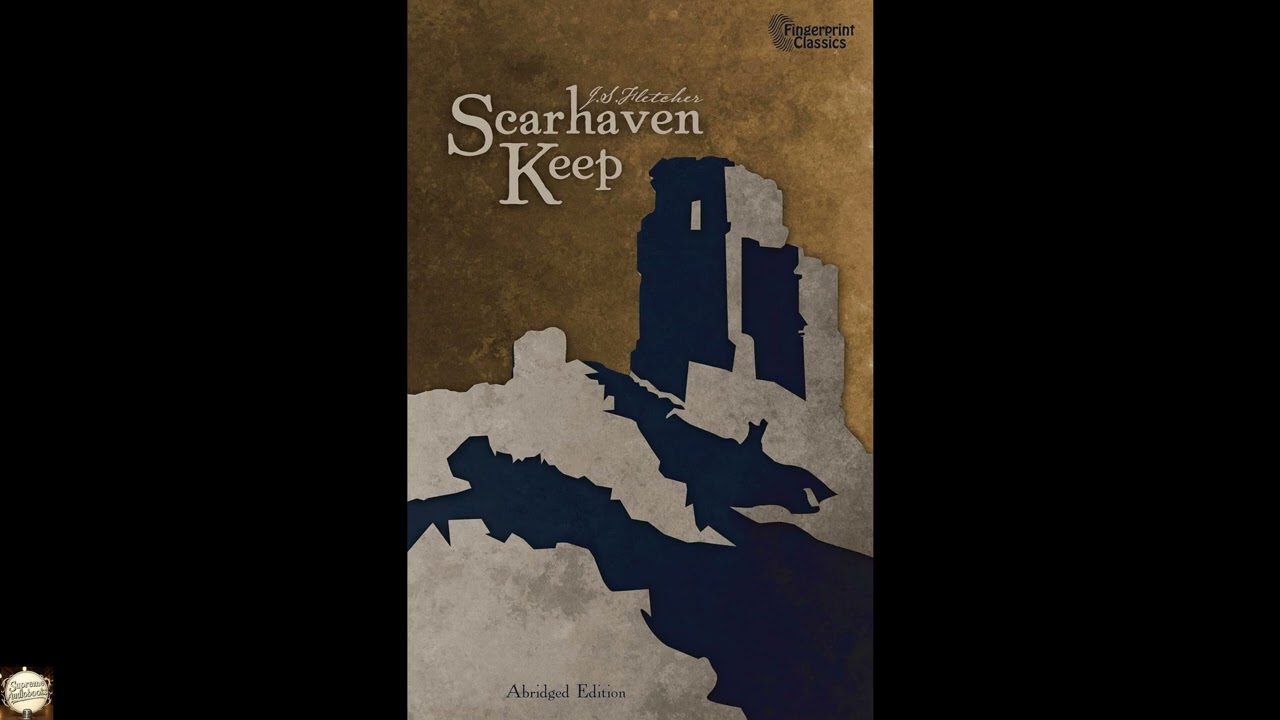
Scarhaven Keep
Step into the unsettling quiet of Scarhaven Keep, a place where ancient stones whisper of past wrongs and present dangers. J. S. Fletcher's classic mystery, published in 1922, draws listeners into a chilling narrative set against the dramatic backdrop of England's rugged coast. This isn't merely a whodunit; it is a meticulously constructed tale of long-buried secrets, sudden death, and the relentless pursuit of truth, all filtered through the eyes of a lawyer unwittingly entangled in a deadly game. For aficionados of intricate plotting and atmospheric suspense, Scarhaven Keep offers a gripping experience, demonstrating how the shadows of yesterday can still reach out to ensnare the unwary in a labyrinth of deceit. Its enduring appeal lies in its masterful creation of an oppressive mood and the slow, agonizing revelation of a dark history that still resonates with psychological intrigue today. The story begins with John Harris, a diligent London solicitor, receiving an urgent summons from an obscure client, a Mr. Armytage, who resides at the isolated Scarhaven Keep. The message is dire: Armytage is gravely ill and wishes to make a new will and a deathbed confession. Harris reluctantly travels north, finding the formidable, windswept keep perched precariously on a cliff edge—a place that seems to hold its breath. Upon his arrival, he is met not only by Armytage's suspicious household—a strange array of relatives, servants, and a resident doctor—but also by an undeniable sense of foreboding. The elderly client, on the brink of death, begins to speak of a long-ago murder, a missing body, and a fortune hidden away, but his confession is cut short by a sudden, violent demise that leaves Harris with more questions than answers. As the fog of mystery thickens, Harris finds himself drawn deeper into the unsettling affairs of Scarhaven. He soon discovers that Armytage’s death was not as simple as it first appeared, and that the Keep itself harbors a complex history of disappearances, strange inheritances, and veiled identities. Figures from the past, once thought gone, begin to reappear, challenging Harris’s understanding of the truth. He must navigate a treacherous landscape of hidden passages, cryptic clues, and conflicting testimonies, all while contending with the very real possibility that one of the Keep’s residents is a cunning killer. The lawyer, initially a detached observer, becomes an active participant in unraveling a chilling scheme that dates back decades, affecting the fates of all within the Keep’s shadowed walls. The tension steadily escalates as Harris pieces together fragments of a sinister puzzle, aware that every new discovery brings him closer to a dangerous truth and puts his own life at risk. Joseph Smith Fletcher, the prolific author behind Scarhaven Keep, was born in Halifax, Yorkshire, in 1863, and lived until 1935. A man of letters in the truest sense, Fletcher began his career as a journalist, working for various provincial newspapers before turning his hand to fiction. His roots in rural Yorkshire often permeated his writings, providing richly detailed backdrops for his stories. He was an incredibly industrious writer, credited with penning over 200 books across various genres, including historical novels, poetry, and social commentaries. However, it was his detective and mystery fiction that truly secured his place in popular literature, earning him a dedicated following on both sides of the Atlantic. Fletcher’s detective novels, such as the widely acclaimed The Middle Temple Murder (1919) and The Talleyrand Maxim (1919), often featured intelligent, observant protagonists and meticulously crafted plots. He is frequently recognized as a bridge figure in the evolution of British crime fiction, connecting the sensation novels of the Victorian era with the "Golden Age" of detective fiction that flourished in the 1920s and 30s. While his work may not always have aspired to the lofty literary heights of some of his contemporaries, Fletcher’s skill in storytelling, his keen eye for character, and his ability to construct compelling puzzles solidified his reputation as a master of popular suspense, making his books essential reading for fans of early twentieth-century crime fiction. Scarhaven Keep showcases several enduring themes that lend it lasting significance. One prominent idea is the burden of the past; the very structure of the ancient keep, with its hidden rooms and long-held secrets, acts as a physical embodiment of history's inescapable grip. The plot reveals how a decades-old crime continues to dictate the lives and fates of the present inhabitants, demonstrating how unresolved injustices can echo through generations, poisoning relationships and twisting motives. For instance, the original crime that Armytage attempts to confess is not just a historical event but a living force, driving the present actions and anxieties of everyone connected to the estate. Another significant theme is the deceptive nature of appearances. Characters often present one facade while harboring entirely different intentions or identities, forcing John Harris to question everyone he meets. The solicitor's initial assumptions about the respectable household quickly unravel, revealing a murky world where loyalty is bought, and familial ties are strained by greed and suspicion. The very remote, imposing setting of Scarhaven Keep itself contributes to this sense of deception, looking like a bastion of stability but hiding profound instability and moral decay within its walls. The narrative repeatedly underscores how wealth and status can mask profound moral corruption and how truth often hides in plain sight, obscured by carefully constructed lies. The period in which Scarhaven Keep was published, 1922, was a fascinating juncture in British history, heavily influenced by the aftermath of the First World War. The early 1920s saw a society grappling with immense loss, economic upheaval, and profound social change. There was a public hunger for order and resolution, which detective fiction, with its promise of unraveling chaos and restoring justice, perfectly satisfied. The rise of sophisticated criminal organizations and the loosening of traditional social structures in the wake of the war also fed a growing fascination with crime and its psychological underpinnings. Literarily, this was the dawn of the Golden Age of detective fiction, a period characterized by intricate plots, cerebral puzzles, and emphasis on fair play with the reader. Authors like Agatha Christie and Dorothy L. Sayers were just beginning to define the genre's tropes, and Fletcher, with his already established reputation, contributed significantly to this landscape. Scarhaven Keep, with its atmospheric setting, concealed identities, and complex family history, stands as a prime example of the kind of meticulously crafted mystery that captivated readers during an era marked by a collective need to make sense of a world turned upside down. Listening to Scarhaven Keep as an audiobook provides an immediate immersion into its foreboding atmosphere. The "several hours" run time allows the story to unfold at a deliberate pace, mirroring the slow, creeping dread Harris experiences as he uncovers each new layer of the mystery. A skilled narrator's voice can truly bring the starkness of the coastal setting to life, enhancing the sense of isolation and danger that permeates every scene. Pay attention to the subtle shifts in tone and inflection for each character, from the dying Armytage’s gasping confession to the calculated coolness of the suspected wrongdoers. The careful pacing of the dialogue and the description of the desolate keep itself are crucial elements, helping to build the pervasive tension that makes this classic thriller so effective.
Enjoyed Scarhaven Keep? A few ways to support us
Audible & Amazon links are affiliate; we may earn a small commission at no extra cost.
About this production
Human narration by a volunteer reader from LibriVox.org, the public-domain audiobook project. LibriVox volunteers record literary works whose copyright has expired in the United States, releasing the resulting recordings into the public domain.
Scarhaven Keep by J S Fletcher. The underlying text is in the U.S. public domain. We do not republish any modern copyrighted edition, translation, or commentary.
The 4K cinematic visuals accompanying this audiobook are generated by an AI image model from prompts derived from the source text. No copyrighted photos, paintings, or stock footage are used. AI generation is disclosed on every video on our YouTube channel as required by YouTube's altered/synthetic content policy.
English subtitles are transcribed from the LibriVox recording with OpenAI Whisper. Translations into the 11 other supported languages are produced by Meta's NLLB-200 neural translation model. No human translator's copyrighted translation is used.
Questions about sourcing or rights? See our DMCA & Sourcing policy or contact us.
Enjoyed this audiobook?
If you'd like to own a copy of Scarhaven Keep or hear a professionally produced edition, the links below help support free audiobook production at no extra cost to you.
As an Amazon Associate we earn from qualifying purchases. Audible / print links are affiliate.