A House of Gentlefolk
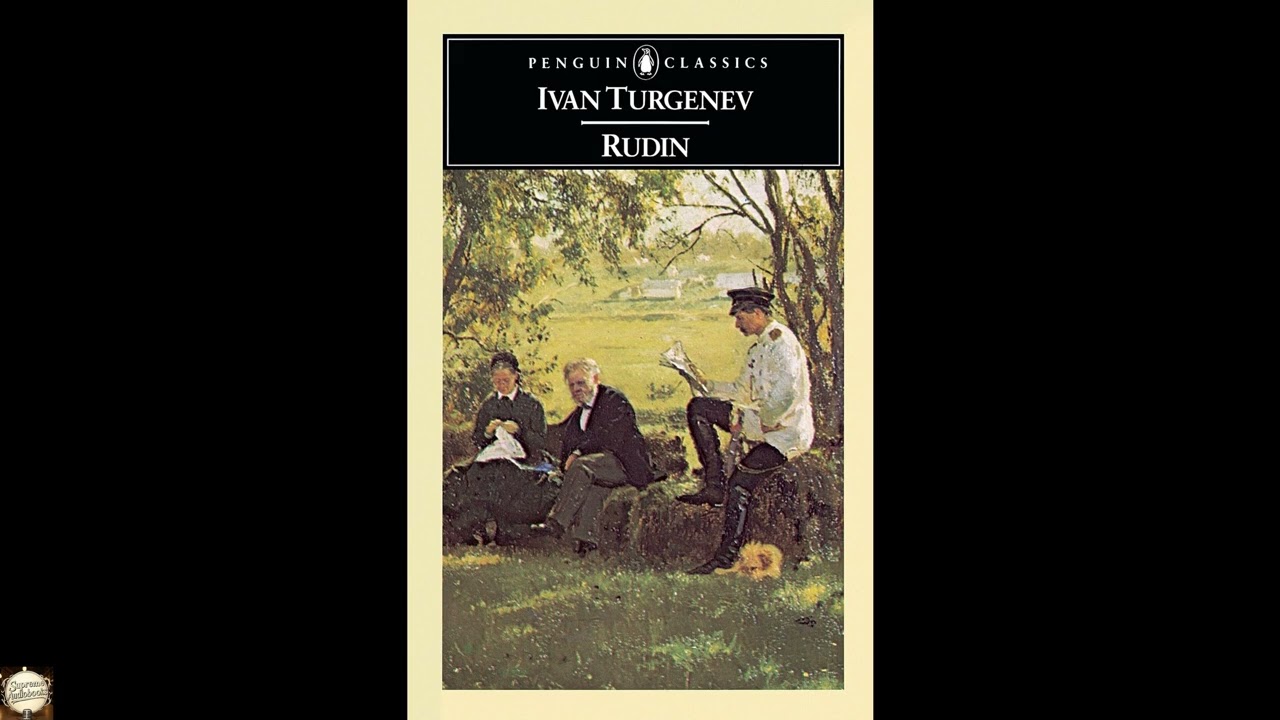
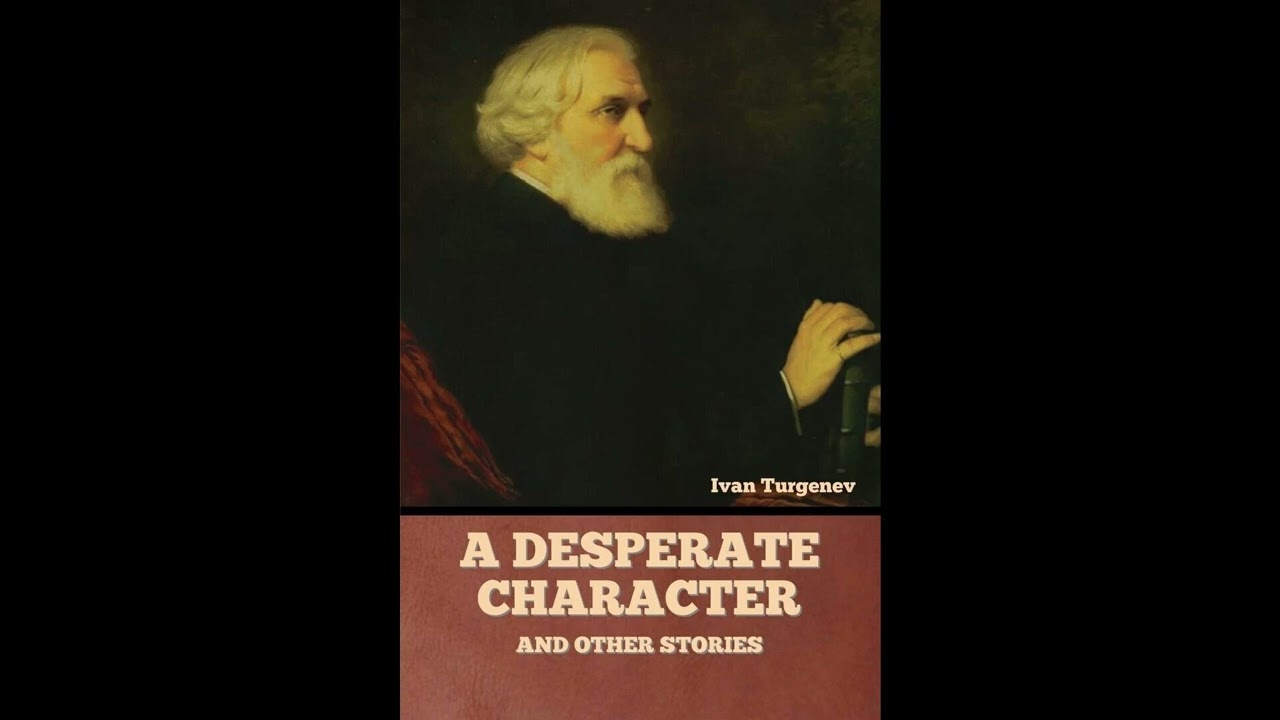
Ivan Turgenev’s A House of Gentlefolk, often known by its more literal Russian title Liza, stands as a quiet yet powerful monument to the human heart’s enduring capacity for love, hope, and resignation amidst the currents of change. Published in 1859, this novel transports listeners to the tranquil, sometimes melancholic, landscape of mid-19th century Russia, inviting them to witness a poignant drama of personal longing and societal expectation. Why should a modern listener care for such a tale? Because at its core, it speaks to universal experiences: the search for belonging, the pursuit of an authentic life, the often-unspoken tragedies of unrequited affection, and the profound impact of one’s past on the possibilities of the future. It offers not just a glimpse into a bygone era, but a mirror reflecting the timeless struggles of finding meaning and connection in a world that rarely conforms to our deepest desires. The story unfolds primarily in the serene, somewhat somnolent atmosphere of a Russian country estate, a world of ordered yet fading elegance. Our central figure is Fyodor Ivanovich Lavretsky, a nobleman returning to his ancestral home after a prolonged absence and a deeply disillusioning period spent in Europe. Lavretsky is a man of quiet intelligence and profound thoughtfulness, but one marked by a significant personal wound: his marriage to the beautiful and worldly Varvara Pavlovna has crumbled under the weight of her infidelity and their fundamental incompatibility. He arrives back in Russia carrying the heavy burden of this personal failure, a man adrift between two worlds, searching for a place of peace and purpose. Into Lavretsky’s life steps Elizaveta Mikhailovna Kalitina, known as Liza, a young woman living in the neighboring household. Liza is a figure of striking spiritual purity and deep moral conviction, contrasting sharply with the superficiality Lavretsky has encountered. She is devout, earnest, and possesses an inner strength that belies her outwardly gentle demeanor. A profound, unspoken understanding begins to blossom between them. In Liza, Lavretsky finds not just companionship, but a genuine solace, a quiet hope for redemption and a future untainted by his past sorrows. Their connection is pure and earnest, seeming to promise a path to genuine happiness. However, just as their burgeoning affection appears to offer a glimmer of a shared future, a shadow from Lavretsky's past unexpectedly reappears, threatening to shatter their nascent happiness and forcing both characters to confront the stark realities of their circumstances and the immutable forces that shape their destinies. Ivan Turgenev, born in 1818 into a wealthy landowning family in the Oryol Governorate of the Russian Empire, was uniquely positioned to document the nuances of Russian society. His childhood on his family’s large estate, overseen by a harsh and autocratic mother, left an indelible mark, fueling his lifelong empathy for the plight of the serfs and a keen understanding of the gentry’s complexities. Educated in Moscow, St. Petersburg, and Berlin, Turgenev developed a profound appreciation for Western European thought, a perspective that often placed him at odds with the more traditionalist Slavophiles of his native land. He spent a significant portion of his adult life living abroad, particularly in France and Germany, where he cultivated friendships with literary giants such as Flaubert, Zola, Maupassant, and Henry James, serving as a vital bridge between Russian and European cultures. Turgenev’s literary career began with poetry and short stories, but he found his true voice in prose, particularly with Notes from a Hunter (1852), a collection of sketches that depicted the lives of serfs and landowners with unprecedented realism and compassion, earning him both acclaim and official displeasure. His later novels, including Rudin, On the Eve, and his most famous work, Fathers and Sons (1862), cemented his reputation as one of Russia's foremost literary figures. He belonged to the burgeoning Realist movement, distinguished by his lyrical prose, his penetrating psychological insights, and his ability to paint vivid, often melancholic, pictures of nature and human emotion. Turgenev is widely recognized for perfecting the archetype of the "superfluous man," an educated but ineffective nobleman, and for his sensitive portrayals of strong, independent Russian women, securing his place as one of the triumvirate of great 19th-century Russian novelists, alongside Tolstoy and Dostoevsky. He passed away in Bougival, France, in 1883. A House of Gentlefolk is steeped in several enduring themes that resonate deeply. One central idea is the weight of the past and its inescapable influence on the present. Lavretsky’s marital history, for instance, acts as a constant, looming presence, shaping his decisions and ultimately determining the trajectory of his happiness with Liza. Even as he seeks a fresh start, his past follows, illustrating how individual histories can become insurmountable barriers to desired futures. Another prominent theme is the quiet decline of the Russian gentry class. The setting of the decaying country estates and the characters’ often-unfulfilled lives reflect a society in transition, where traditional roles are losing their meaning and a new sense of purpose is yet to fully emerge. Lavretsky's attempts to bring order and improvement to his estate symbolize a larger, often futile, struggle to maintain relevance in a changing world. The novel also strikingly contrasts Western influence with traditional Russian values. Lavretsky, educated abroad and disillusioned by the superficiality he found there, embodies the "Westernizer" dilemma, searching for authenticity upon his return home. Liza, with her deep piety, her rootedness in spiritual belief, and her quiet acceptance of fate, represents a contrasting, profoundly Russian ideal of steadfastness and moral rectitude. Their relationship itself becomes a crucible where these differing worldviews meet and intersect. Finally, the novel poignantly examines the nature of sacrifice and resignation. Liza’s ultimate choices, driven by her unshakeable moral code, embody a form of sacrifice that, while tragic from a worldly perspective, affirms her spiritual integrity. The characters’ acceptance of their fates, often without bitterness or fanfare, underscores a uniquely Russian sense of melancholic peace in the face of insurmountable odds. The period in which A House of Gentlefolk was written and published, 1859, was a pivotal moment in Russian history. Tsar Alexander II had recently ascended the throne and was embarking on a series of significant reforms, most notably the impending emancipation of the serfs, which would finally occur in 1861. This was a time of intense intellectual and social ferment, with passionate debates raging between Westernizers, who advocated for Russia to adopt European institutions and values, and Slavophiles, who championed Russia's unique spiritual and communal traditions. Turgenev, with his nuanced understanding of both perspectives, crafted a novel that subtly reflects these societal anxieties and hopes. The characters, particularly Lavretsky, embody the dilemmas faced by an educated gentry class grappling with its own role and identity in a rapidly evolving nation, a society struggling to reconcile its past with an uncertain future. Listening to A House of Gentlefolk as an audiobook allows the listener to fully immerse themselves in Turgenev’s exquisitely rendered world. His prose, known for its lyrical beauty and introspective quality, gains an added layer of intimacy when read aloud. A skilled narrator can bring forth the subtle shifts in emotion, the quiet yearning, and the profound melancholy that permeate the story, making the internal lives of Lavretsky and Liza particularly vivid and immediate. The novel’s deliberate pacing, its unhurried observations of nature, and its thoughtful philosophical passages are well-suited to the spoken word, encouraging a meditative engagement with the text. The narrator’s voice becomes a conduit to the tranquil Russian countryside, to the hushed drawing-room conversations, and to the silent spaces between words where so much of the characters’ drama unfolds. This allows listeners to savor the delicate unfolding of affection and heartbreak, experiencing the full emotional weight of a narrative that, though set in the past, feels profoundly human and relevant.
Enjoyed A House of Gentlefolk? A few ways to support us
Audible & Amazon links are affiliate; we may earn a small commission at no extra cost.
About this production
Human narration by a volunteer reader from LibriVox.org, the public-domain audiobook project. LibriVox volunteers record literary works whose copyright has expired in the United States, releasing the resulting recordings into the public domain.
A House of Gentlefolk by Ivan Turgenev. The underlying text is in the U.S. public domain. We do not republish any modern copyrighted edition, translation, or commentary.
The 4K cinematic visuals accompanying this audiobook are generated by an AI image model from prompts derived from the source text. No copyrighted photos, paintings, or stock footage are used. AI generation is disclosed on every video on our YouTube channel as required by YouTube's altered/synthetic content policy.
English subtitles are transcribed from the LibriVox recording with OpenAI Whisper. Translations into the 11 other supported languages are produced by Meta's NLLB-200 neural translation model. No human translator's copyrighted translation is used.
Questions about sourcing or rights? See our DMCA & Sourcing policy or contact us.
Enjoyed this audiobook?
If you'd like to own a copy of A House of Gentlefolk or hear a professionally produced edition, the links below help support free audiobook production at no extra cost to you.
As an Amazon Associate we earn from qualifying purchases. Audible / print links are affiliate.