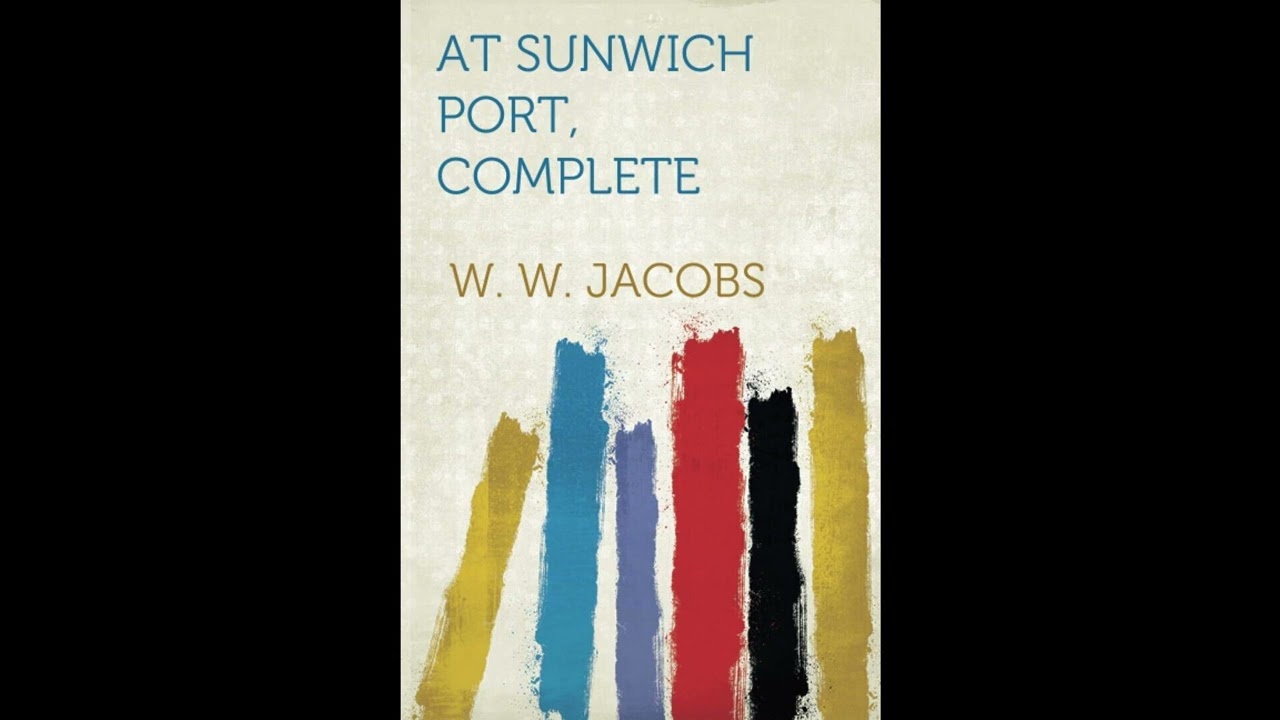
At Sunwich Port, Complete
Step into a delightful corner of early 20th-century England, where the salt-laced air of a bustling port mingles with the whiff of domestic comedy and romantic misadventure. W. W. Jacobs’ At Sunwich Port offers a warm, witty respite, a narrative brimming with unforgettable characters and the gentle humor born from human foibles. This novel invites listeners into a simpler yet endlessly complicated world of small-town gossip, familial squabbles, and the earnest pursuit of love against all odds. It is a story that, despite its period setting, speaks to the enduring nature of spirited independence and the absurdity of social pressures, proving that a good laugh and a well-told tale are always relevant. The story unfolds in the fictional Sunwich Port, a close-knit maritime community where everyone knows, and often judges, everyone else’s business. At the heart of the tale is Captain Nugent, a retired sea captain whose authoritative demeanor and short temper make him a formidable figure in his own home. He is determined to dictate the life and, more importantly, the marriage prospects of his spirited daughter, Kate. Kate, however, possesses her father’s strong will but directs it toward achieving her own desires, rather than submitting to his. Her budding affection for Philip White, a mild-mannered young man, soon becomes a central point of contention, not only with her father but also with Philip’s own overbearing relative. Philip finds himself equally constrained by his miserly uncle, Mr. Chalk, a tight-fisted shipowner who views his nephew as little more than a cheap employee and a pawn in his social maneuverings. As Kate and Philip attempt to navigate their burgeoning romance amidst the disapproval and interference of their respective guardians, a series of misunderstandings, comical deceptions, and farcical schemes are set in motion. From arranged matches that go hilariously awry to elaborate stratagems designed to outwit meddling elders, the young lovers and their eccentric acquaintances find themselves caught in a tangled web of intentions, leading to increasingly humorous predicaments and a lively portrait of provincial life. William Wymark Jacobs, born in 1863 in London, spent his formative years immersed in the sights and sounds of the city’s docklands, a world that profoundly shaped his literary output. His father managed a wharf on the Thames, granting young Jacobs an intimate, firsthand understanding of the lives, language, and peculiar humor of sailors, lightermen, and the riverside community. This invaluable experience provided the bedrock for nearly all his later works. Jacobs initially worked as a clerk in the Post Office Savings Bank, writing in his spare time, until the success of his early short story collections, such as Many Cargoes (1896) and Sea Urchins (1898), allowed him to become a full-time author in 1899. While Jacobs gained lasting fame for his unsettling supernatural short story "The Monkey's Paw," it is his vast collection of humorous tales—often centered on the escapades of sailors ashore, the cunning of landladies, and the domestic lives of the working and lower-middle classes—that truly define his legacy. He was a master of concise narrative and characterization, employing dry wit, irony, and a keen observational eye to depict the peculiarities of everyday people. His place in the literary canon rests not on grand philosophical statements, but on his unparalleled ability to capture a specific social milieu with authenticity and warmth, creating stories that are both entertaining and deeply human. Jacobs passed away in 1943, leaving behind a body of work cherished for its unique blend of comedy and mild adventure. At Sunwich Port beautifully illustrates several key themes, making its humor both entertaining and subtly incisive. One prominent thread is the conflict between filial duty and personal desire. Kate Nugent's struggle against her father's autocratic attempts to marry her off for social advantage, despite her own affections, is a prime example. Listeners can observe her clever, often audacious, schemes to deflect unwanted suitors, such as feigning illness or orchestrating embarrassing public incidents, all while trying to maintain a facade of obedience. Similarly, Philip White’s quiet rebellion against his uncle’s financial control, as he attempts to forge his own path and woo Kate, speaks to the universal yearning for independence from parental or guardian authority. Another central theme is the absurdity of human stubbornness and social convention. Much of the novel’s humor springs from characters clinging rigidly to their pride, their petty grievances, or the unspoken rules of their provincial society. The intricate, often illogical, lengths to which Captain Nugent goes to maintain his authority, or Mr. Chalk’s relentless avarice, are constantly undermined by the unpredictable nature of human interaction. The novel also celebrates the power of place and community, where Sunwich Port itself acts as a living character, its gossip networks and ingrained social dynamics influencing every decision and misadventure. The close-knit nature means secrets are almost impossible to keep, and reputations are fiercely guarded, leading to many of the story's comedic explosions. Jacobs’ novel appeared at the turn of the 20th century, a time of significant transition in Britain. The grand Victorian era was giving way to the Edwardian age, characterized by a lingering sense of stability and imperial confidence, yet also quietly bubbling with social change. The world of At Sunwich Port reflects this moment—a pre-World War I England where maritime trade was still vital, but where modern conveniences were gradually making inroads. While industrialization was reshaping the nation, many provincial towns like Sunwich Port retained a strong sense of local identity and tradition, largely insulated from the faster pace of metropolitan life. Literarily, this period saw a continued appetite for accessible, character-driven fiction that offered both amusement and a gentle reflection of everyday life. Jacobs distinguished himself by focusing on the lives of ordinary people, eschewing the grand narratives or psychological depths of some of his contemporaries. His work provided a comforting, often hilarious, counterpoint to the more serious literature of the time, allowing readers to escape into a world of simple pleasures, relatable dilemmas, and clever wordplay. It was an era when stories were often published in popular magazines, and Jacobs' talent for crafting engaging plots and memorable dialogue made him a favorite, providing a window into a specific slice of British society that was both familiar and entertaining. Listening to At Sunwich Port as an audiobook offers a singular experience, perfectly suited to Jacobs’ style. The novel’s strength lies in its wonderfully distinct characters and their lively dialogue, which a skilled narrator can bring to vivid life. You can truly hear Captain Nugent’s bluster, Kate’s cunning wit, Philip’s earnest mildness, and Mr. Chalk’s clipped avarice, each voice contributing to the overall comedic rhythm. The several hours of listening provide ample time to settle into the leisurely pace of Sunwich Port, allowing the setting and atmosphere to envelop you. Pay close attention to the narrator’s subtle inflections and timing, which often underscore Jacobs’ dry irony and the precise comedic beats of the unfolding plot. It's an opportunity to savor the soundscape of a bygone era, where every conversation, every misunderstanding, and every well-timed punchline lands with delightful precision, transporting you directly into the heart of this charming tale.
Enjoyed At Sunwich Port, Complete? A few ways to support us
Audible & Amazon links are affiliate; we may earn a small commission at no extra cost.
About this production
Human narration by a volunteer reader from LibriVox.org, the public-domain audiobook project. LibriVox volunteers record literary works whose copyright has expired in the United States, releasing the resulting recordings into the public domain.
At Sunwich Port, Complete by W. W. Jacobs. The underlying text is in the U.S. public domain. We do not republish any modern copyrighted edition, translation, or commentary.
The 4K cinematic visuals accompanying this audiobook are generated by an AI image model from prompts derived from the source text. No copyrighted photos, paintings, or stock footage are used. AI generation is disclosed on every video on our YouTube channel as required by YouTube's altered/synthetic content policy.
English subtitles are transcribed from the LibriVox recording with OpenAI Whisper. Translations into the 11 other supported languages are produced by Meta's NLLB-200 neural translation model. No human translator's copyrighted translation is used.
Questions about sourcing or rights? See our DMCA & Sourcing policy or contact us.
Enjoyed this audiobook?
If you'd like to own a copy of At Sunwich Port, Complete or hear a professionally produced edition, the links below help support free audiobook production at no extra cost to you.
As an Amazon Associate we earn from qualifying purchases. Audible / print links are affiliate.