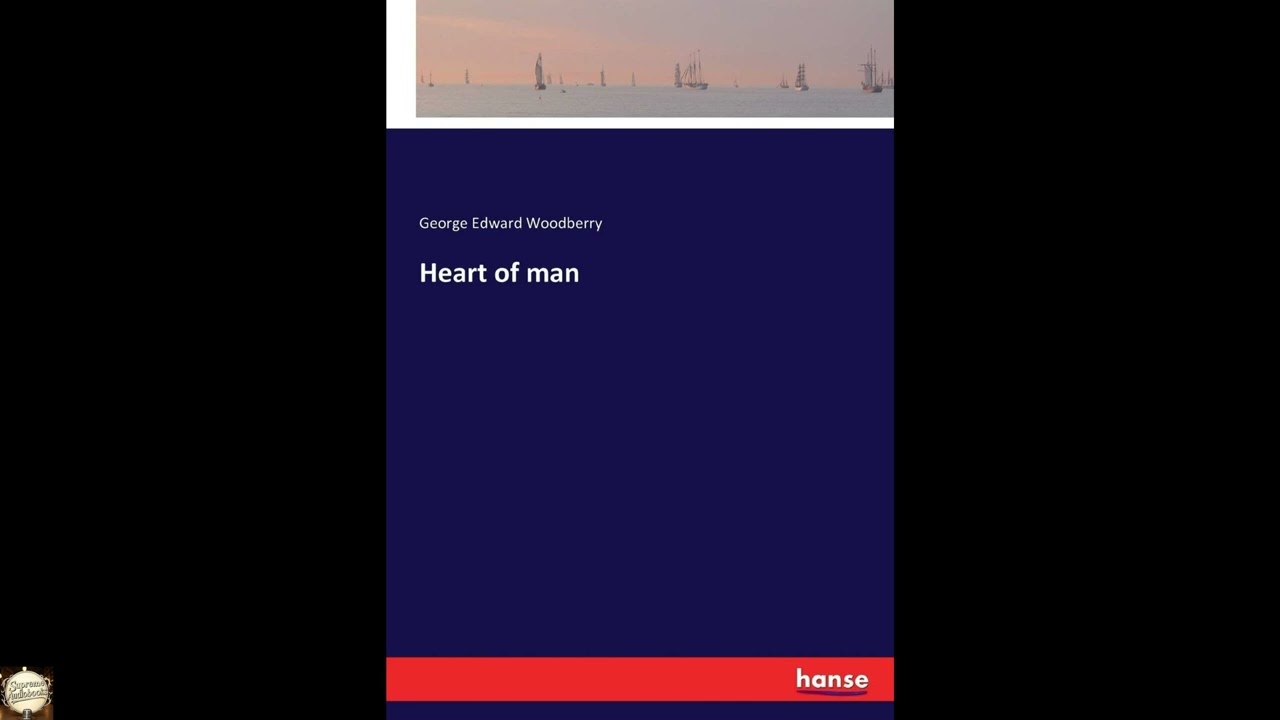
Heart of man
For those who seek to understand the very essence of human experience – its profound sorrows, its fleeting joys, and its eternal yearning for meaning – George Edward Woodberry’s Heart of Man offers a deep, resonant reflection. Published at the close of the nineteenth century, this collection of essays and poems transcends its era to speak directly to the enduring questions of existence, art, and the spirit. It stands as a testament to the power of thoughtful introspection, inviting the listener into a world where beauty and truth are sought not in grand gestures, but in the quiet contemplation of nature, literature, and the inner life. This work provides a profound companion for anyone grappling with the complexities of the soul, offering solace and insight that remain as relevant today as they were over a hundred years ago. Heart of Man does not present a single narrative in the conventional sense, but rather an interconnected sequence of meditations that together form a coherent vision of human consciousness. The setting for these reflections is often the natural world – the rugged coastlines of New England, the vastness of the sea, the changing seasons – which serve as a backdrop and a mirror for the interior landscape of the human spirit. The central "character" is arguably the contemplative voice of the author himself, a keen observer and an erudite scholar who guides the listener through philosophical musings, literary criticism, and deeply personal poetry. Each piece contributes to a larger inquiry, creating an arc that moves from a keen appreciation of natural phenomena to an intellectual and emotional wrestling with humanity's place in the cosmos, its capacity for creation, and its search for the divine. The central conflict animating these pieces is the timeless struggle of humanity to reconcile its finite existence with its infinite aspirations. Woodberry grapples with the fleeting nature of life, the inevitability of loss, and the desire for something enduring and true. He does not offer simple answers, but rather a sustained, eloquent effort to understand these tensions through the lens of art, philosophy, and personal feeling. Listeners will find themselves drawn into a profound dialogue with a mind dedicated to unraveling the mysteries of beauty and sorrow, with each essay and poem building upon the last to create a cumulative effect of introspection and quiet epiphany. The collection culminates not in a single revelation, but in a deepened appreciation for the complex, often paradoxical, nature of the human spirit and its enduring capacity for hope amidst despair. George Edward Woodberry, born in Beverly, Massachusetts, in 1855, was a distinguished American poet, literary critic, and educator whose career spanned the late nineteenth and early twentieth centuries. After graduating from Harvard University in 1877, he spent time traveling abroad before returning to a life dedicated to letters and teaching. He held professorships at the University of Nebraska and later at Columbia University, where he left an indelible mark on generations of students. Woodberry was a true man of letters, deeply versed in classical literature, European Romanticism, and American transcendentalism, influences clearly discernible in his own writings. His prolific output included several volumes of poetry, such as The North Shore Watch and Wild Eden, as well as influential critical biographies of figures like Ralph Waldo Emerson and Edgar Allan Poe. Woodberry's critical acumen and elegant prose style established him as a significant voice in American literary discourse. He belonged to a generation of scholars and poets who, while appreciating the emerging realism and naturalism, maintained a strong connection to idealist aesthetics and the spiritual dimensions of art. His position in the literary canon is that of a humanist critic and a lyric poet, recognized for his profound intellect and his commitment to the enduring values of beauty and truth in a rapidly changing world. Woodberry passed away in 1930, leaving behind a body of work that continues to invite thoughtful engagement. Several core themes resonate throughout Heart of Man, giving the collection its enduring power. One prominent idea is the profound connection between humanity and the natural world, often depicted as a source of both solace and profound existential reflection. For instance, Woodberry’s poems frequently invoke the vast, indifferent power of the sea or the silent endurance of ancient trees, not merely as scenic elements, but as primal forces that mirror the internal storms and quiet strength of the human soul. Another significant theme is the search for beauty and truth through the medium of art, particularly poetry. Woodberry often contemplates the role of the poet as a seer and a conveyor of essential human experience, emphasizing how aesthetic creation can transform sorrow into enduring form, a concept he articulates through his critiques of classical and contemporary verse. Additionally, the collection consistently addresses the individual’s quest for spiritual meaning and moral clarity in a world fraught with doubt. He considers the legacy of past wisdom, from Greek tragedy to Renaissance thought, as a guide for navigating the modern condition, often presenting the pursuit of knowledge and self-understanding as a sacred endeavor. He grapples with the inevitable experience of grief and loss, finding a path toward acceptance and even a form of transcendental hope, suggesting that sorrow itself can refine the spirit and deepen one’s capacity for empathy. Through these interwoven concerns, Woodberry constructs a deeply felt argument for the enduring value of human thought and creative expression in the face of life’s profound mysteries. Heart of Man emerged at a fascinating juncture in American history and literature: the very end of the nineteenth century. This was a period of immense industrial growth, rapid urbanization, and a growing sense of national power on the global stage, but also one marked by intellectual introspection. The philosophical currents of transcendentalism had matured, and the burgeoning movements of realism and naturalism were beginning to challenge earlier Romantic ideals. Woodberry, though deeply appreciative of Romantic poets like Shelley and Wordsworth, and a follower of Emerson's intellectual lineage, also wrote with a keen awareness of the shifts occurring around him. His work can be seen as a thoughtful response to a world increasingly shaped by scientific progress and material concerns, seeking to reaffirm the spiritual, aesthetic, and classical foundations of human culture. It was a time when scholars and artists looked back to established traditions to find guidance and meaning for a future that seemed both promising and uncertain, making Woodberry's blend of classical erudition and personal feeling particularly resonant. Listening to Heart of Man as an audiobook offers a unique opportunity to engage with Woodberry's meticulously crafted prose and verse. The run length, several hours in total, makes it an ideal companion for extended periods of quiet contemplation, whether during a long walk, a commute, or an evening spent in thoughtful repose. A skilled narrator can bring out the rhythmic quality of Woodberry's sentences, allowing the listener to appreciate the cadence of his philosophical arguments and the lyrical beauty of his poetic lines. Paying attention to the narrator's pacing will enhance the reflective atmosphere, allowing the listener to absorb complex ideas without feeling rushed. The spoken word can illuminate the nuanced emotional tone of the essays and the delicate imagery of the poems, transforming a reading experience into a meditative encounter with a profound literary mind.
Enjoyed Heart of man? A few ways to support us
Audible & Amazon links are affiliate; we may earn a small commission at no extra cost.
About this production
Human narration by a volunteer reader from LibriVox.org, the public-domain audiobook project. LibriVox volunteers record literary works whose copyright has expired in the United States, releasing the resulting recordings into the public domain.
Heart of man by George Edward Woodberry. The underlying text is in the U.S. public domain. We do not republish any modern copyrighted edition, translation, or commentary.
The 4K cinematic visuals accompanying this audiobook are generated by an AI image model from prompts derived from the source text. No copyrighted photos, paintings, or stock footage are used. AI generation is disclosed on every video on our YouTube channel as required by YouTube's altered/synthetic content policy.
English subtitles are transcribed from the LibriVox recording with OpenAI Whisper. Translations into the 11 other supported languages are produced by Meta's NLLB-200 neural translation model. No human translator's copyrighted translation is used.
Questions about sourcing or rights? See our DMCA & Sourcing policy or contact us.
Enjoyed this audiobook?
If you'd like to own a copy of Heart of man or hear a professionally produced edition, the links below help support free audiobook production at no extra cost to you.
As an Amazon Associate we earn from qualifying purchases. Audible / print links are affiliate.