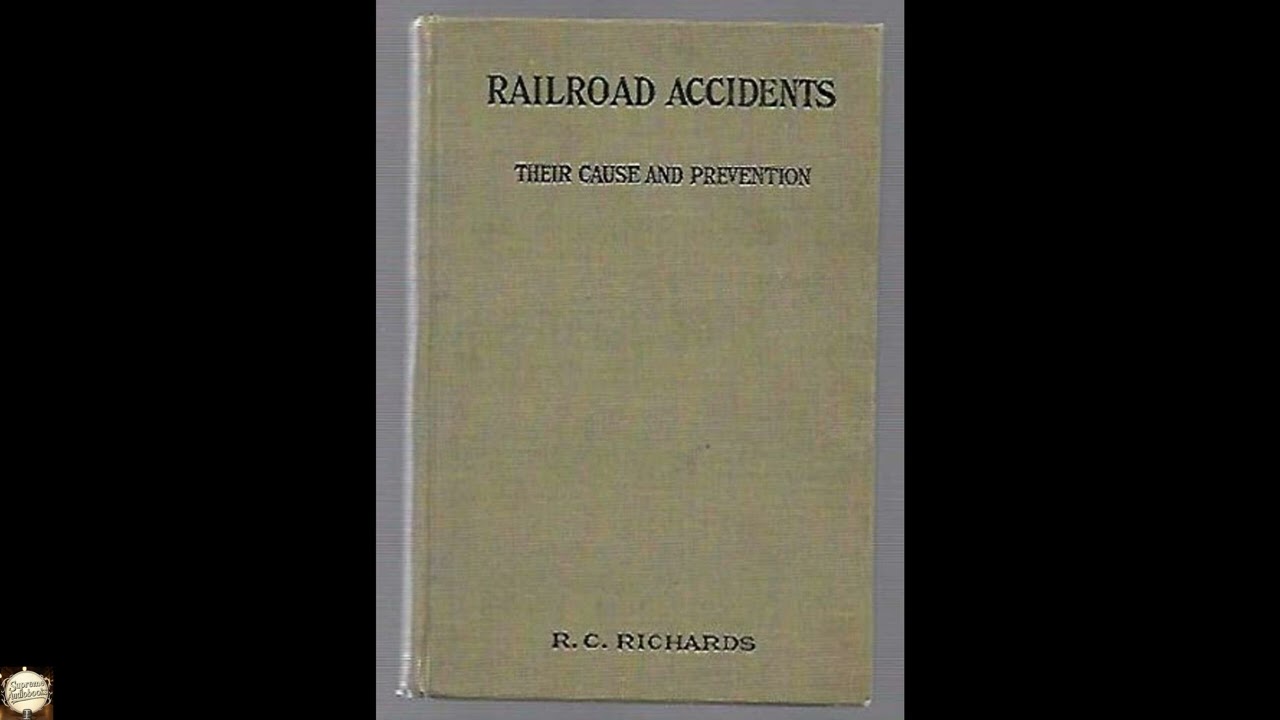
Railroad accidents their cause and prevention
The whistle's shriek, the rhythmic clang of steel on steel, the shuddering power of a locomotive hurtling across the landscape—these sounds once heralded an age of unprecedented progress, connecting distant towns and transforming nations. Yet, alongside this marvel came a grim reality: the ever-present danger of disaster. "Railroad accidents their cause and prevention" by R.C. Richards is not merely a historical document detailing the mechanical failures and human errors of a bygone era; it is a foundational examination of risk, responsibility, and the human cost of innovation. Published at a time when industrial safety was still a nascent concept, this seminal work dissects the anatomy of catastrophe, laying bare the systemic flaws and individual oversights that led to tragic outcomes. For today's listener, it offers a fascinating look into the birth of safety science, demonstrating how an acute awareness of danger led to the development of principles that continue to safeguard complex systems, from air travel to cybersecurity. It stands as a testament to the enduring human endeavor to understand, mitigate, and ultimately prevent the unintended consequences of progress. This remarkable text does not present a fictional narrative but rather a deeply humanistic account of real-world challenges. Imagine a world where the iron horse, while a symbol of progress, was also a formidable and often unforgiving beast. The "setting" for Richards' analysis is the sprawling, rapidly expanding railroad network of a transformative historical period, a time before standardized safety protocols were commonplace. Here, the "characters" are not individuals with names, but rather the collective forces at play: the engineers striving for efficiency, the laborers working under perilous conditions, the corporate executives balancing profit against prudence, and the vast, unfeeling machinery itself, prone to wear and unpredictable failure. Richards masterfully guides the reader through a meticulous examination of these forces, illustrating how they conspired to create moments of profound danger. The central conflict of the volume lies in the inherent tension between technological ambition and human vulnerability. Richards systematically breaks down the many ways accidents occurred, from derailments caused by faulty tracks or broken axles to collisions stemming from misread signals or fatigued crews. He acts as both diagnostician and advocate, not simply cataloging disasters but seeking their root causes with an almost forensic precision. The arc of his argument moves from a thorough exposition of the problem—the widespread occurrence of preventable accidents—to a reasoned, often passionate, appeal for systematic prevention. He describes the chain of events that could lead to a catastrophe, often starting with a seemingly minor oversight, and argues forcefully for the implementation of robust safety measures and a culture of vigilance. The listener is taken on a journey of intellectual discovery, witnessing the author construct a compelling case for fundamental change without ever revealing the final conclusions of his specific accident studies, preserving the analytical suspense of his method. R.C. Richards emerged as a significant voice during a pivotal period in industrial history, distinguishing himself as a pioneering expert in the nascent field of railroad safety. While precise birth and death dates may not be widely known, his work firmly places him within the late 19th and early 20th centuries, an era defined by explosive industrial growth and the urgent necessity of addressing its human costs. Richards was, by all indications, a practical man, likely an engineer or a high-ranking manager within the railroad industry itself, one who possessed both technical acumen and a profound sense of social responsibility. He wasn't merely observing from afar; he was deeply embedded in the operations he analyzed, giving his insights a grounded authority. His perspective was shaped by a period when the very concept of "safety management" was being forged, often in the crucible of tragedy. "Railroad accidents their cause and prevention" stands as his most enduring legacy, but it undoubtedly reflects a career spent observing, documenting, and campaigning for better practices. His place in the broader canon, though not within traditional literary circles, is as a foundational figure in what would become modern occupational safety and risk management. He represents a movement of practical reformers who recognized that technological progress, unchecked by human foresight and ethical consideration, could lead to immense suffering. His methodical approach to problem-solving, his unwavering focus on prevention, and his clear articulation of complex issues distinguish him as a writer of considerable influence and purpose. At its heart, Richards' work wrestles with several enduring themes. One prominent theme is the interplay between human fallibility and systemic design. Richards demonstrates how individual errors—a signalman's moment of inattention, a conductor's misjudgment of speed—are often amplified by flawed or inadequate systems. He might describe, for example, a specific collision where an engineer's fatigue contributed, but then pivot to argue that the schedule itself or the lack of automatic warning systems created the conditions for that fatigue to become catastrophic. Another critical theme is the price of progress. The rapid expansion of rail lines and the relentless pursuit of faster, more efficient transport undeniably brought economic prosperity, but Richards unflinchingly exposes the human cost: the lives lost, the injuries sustained, and the families devastated by incidents that could, with proper foresight, have been avoided. A third theme that permeates the volume is responsibility and accountability. Richards moves beyond blaming individuals to ask who, ultimately, bears the burden of ensuring safety. Is it the individual worker, the immediate supervisor, or the corporate leadership that sets policy and allocates resources? His arguments subtly but forcefully advocate for a shift towards organizational responsibility, foreshadowing modern ideas about safety culture. Finally, the text itself serves as a testament to the birth of safety science. Richards' systematic approach to accident investigation—categorizing types of failures, analyzing their root causes, and proposing data-driven solutions—is a powerful early example of empirical observation leading to formalized prevention strategies, moving safety from mere luck to a disciplined field of study. The emergence of "Railroad accidents their cause and prevention" was perfectly timed with a moment of profound industrial and social transformation. The late 19th and early 20th centuries witnessed the United States and other industrial nations experiencing an explosion in railroad construction and usage. This was the age of the "iron horse," when trains were the primary engines of economic growth, connecting burgeoning cities and transporting vast quantities of goods and people. However, this period of unparalleled expansion also saw a corresponding surge in industrial accidents across many sectors, with railroads being a particularly visible and dangerous frontier. Public awareness of these tragedies grew, fueled by nascent labor movements advocating for worker protections and by the muckraking journalism that exposed corporate negligence. There was a palpable cultural shift, a growing demand for greater accountability from powerful corporations and for the implementation of safety standards. Richards' work didn't just document this reality; it actively contributed to shaping the emerging discourse around industrial safety, providing a rigorous, analytical framework for understanding and addressing the pervasive dangers of the era. It speaks to a society grappling with the immense power of its own creations and struggling to balance ambition with a humane regard for human life. Listening to "Railroad accidents their cause and prevention" as an audiobook offers a singular experience, transforming what could be a dense technical volume into an accessible and compelling historical document. A skilled narrator provides a steady, authoritative voice, imbuing Richards' meticulous prose with the weight and urgency it deserves. The "several hours" run length allows for a deep, unhurried absorption of the material, enabling listeners to truly appreciate the methodical breakdown of complex systems and human factors. The pacing is deliberate, giving ample space to absorb Richards' observations and the profound implications of his conclusions. While there isn't "dialogue" in the traditional sense, the narrator's delivery of Richards' arguments creates an intimate atmosphere, as if a thoughtful expert is explaining these critical concepts directly. One can almost hear the rumble of the trains, feel the industrial atmosphere, and sense the grave responsibility Richards felt, making this more than just an academic reading—it's an auditory gateway to understanding a pivotal moment in the history of human ingenuity and caution.
Enjoyed Railroad accidents their cause and prevention? A few ways to support us
Audible & Amazon links are affiliate; we may earn a small commission at no extra cost.
About this production
Human narration by a volunteer reader from LibriVox.org, the public-domain audiobook project. LibriVox volunteers record literary works whose copyright has expired in the United States, releasing the resulting recordings into the public domain.
Railroad accidents their cause and prevention by R.C. Richards. The underlying text is in the U.S. public domain. We do not republish any modern copyrighted edition, translation, or commentary.
The 4K cinematic visuals accompanying this audiobook are generated by an AI image model from prompts derived from the source text. No copyrighted photos, paintings, or stock footage are used. AI generation is disclosed on every video on our YouTube channel as required by YouTube's altered/synthetic content policy.
English subtitles are transcribed from the LibriVox recording with OpenAI Whisper. Translations into the 11 other supported languages are produced by Meta's NLLB-200 neural translation model. No human translator's copyrighted translation is used.
Questions about sourcing or rights? See our DMCA & Sourcing policy or contact us.
View 10 famous quotes from this book →
Enjoyed this audiobook?
If you'd like to own a copy of Railroad accidents their cause and prevention or hear a professionally produced edition, the links below help support free audiobook production at no extra cost to you.
As an Amazon Associate we earn from qualifying purchases. Audible / print links are affiliate.