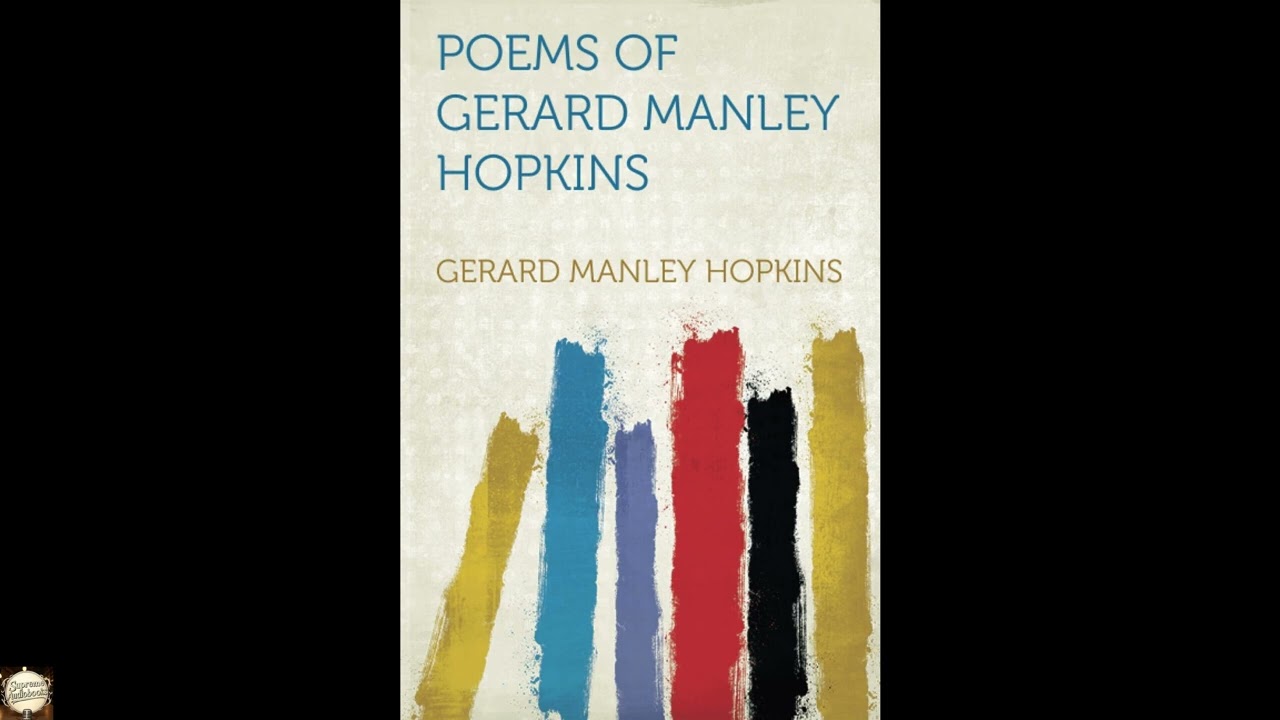
Poems of Gerard Manley Hopkins
Gerard Manley Hopkins stands as a monumental, yet often solitary, figure in English poetry, a voice whose intensity and radical originality continue to electrify listeners over a century after his words were penned. Far from the staid rhythms associated with much Victorian verse, Hopkins’s poetry erupts with a startling freshness, a fervent spiritual passion, and a revolutionary approach to language itself that feels strikingly modern even today. Listening to these poems is an immersion into a unique sonic landscape, a profound spiritual struggle, and an unparalleled celebration of the natural world’s fleeting beauty, all rendered with dynamic musicality that demands to be heard aloud. His work challenges the ear, rewards close attention, and transforms the way one perceives both the spoken word and the divine presence he so earnestly sought to capture. This collection offers an experience unlike any other. The experience of "Poems of Gerard Manley Hopkins" unfolds not as a traditional narrative with characters and plot points, but as a dynamic series of meditations, observations, and profound emotional declarations. It charts the internal landscape of a deeply spiritual man wrestling with faith, doubt, and the overwhelming beauty of creation. The setting shifts from the minute details of the English countryside—a bluebell wood, a soaring kestrel—to the stark, often isolating, chambers of the poet's own mind. The central figures are a sensitive speaker, keenly attuned to the physical world, and a divine presence manifesting in every aspect of nature. The overarching conflict arises from the tension between the transient splendor of the material world and the eternal truth of God. It is a struggle to reconcile suffering with divine love, and to uphold a rigorous spiritual vocation. Listeners will find themselves moving through moments of ecstatic praise, as in the vibrant descriptions of God's power shining through the world found in "God's Grandeur," to periods of intense despair within his "terrible sonnets." This collection presents a raw, unvarnished record of a soul striving to articulate the inexpressible, to find order and meaning in both natural phenomena and personal anguish. The arc, then, is not one of external events, but of an evolving inner dialogue, a testament to the ceaseless human endeavor to perceive and articulate the sacred in the mundane. Gerard Manley Hopkins was born in Stratford, Essex, England, in 1844, to a cultured and artistic Anglican family. His keen intellect and sensitive temperament were honed during his studies at Balliol College, Oxford, where he distinguished himself in classics. While at Oxford, a period of significant spiritual questioning, Hopkins was influenced by John Henry Newman and the Oxford Movement, leading him to convert to Roman Catholicism in 1866. Two years later, in 1868, he made the radical choice to join the Society of Jesus, the Jesuit order. This commitment required him to largely abandon his poetic ambitions for several years, even burning some early verses. He later returned to poetry, blending his rigorous spiritual discipline with renewed artistic output, serving in various Jesuit posts throughout England, Scotland, and finally as a professor in Dublin. His life was marked by periods of intense spiritual struggle, loneliness, and ill health, feelings often reflected in his later, more somber poems. Tragically, Hopkins’s singular genius went almost entirely unrecognized during his lifetime. He published only a handful of poems, and his groundbreaking work remained largely in manuscript form, shared only with a small circle of friends, most notably Robert Bridges. It was Bridges, after Hopkins's death in 1889 at 44 from typhoid fever, who meticulously edited and finally published a collection of his poems in 1918. This posthumous publication was a revelation, positioning Hopkins as a profoundly original voice who anticipated many innovations of 20th-century poetry and secured his enduring place among the greatest English poets. Among the compelling currents flowing through Hopkins’s poetry, the profound interconnectedness of nature and the divine stands as a central pillar. For Hopkins, the natural world was a constant, shimmering revelation of God’s glory. In "Pied Beauty," he celebrates the "dappled things" of creation – "skies of couple-colour," "fresh-firecoal chestnut-falls," "finches' wings" – seeing in their varied imperfections the singular, underlying beauty of God’s craftsmanship. "God's Grandeur" opens with the declaration that "The world is charged with the grandeur of God," envisioning a divine energy pulsing through all existence. Another powerful theme is the intense experience of spiritual struggle and doubt. While known for joyous celebrations, Hopkins also confronted the soul's desolation in his "terrible sonnets." In "No worst, there is none," the speaker grapples with almost unbearable internal pain, expressing profound abandonment and despair: "Mine, O thou lord of life, send my roots rain." This naked honesty about the darkest nights of the soul lends his work a raw humanity. Furthermore, he grapples with individuality and "selfhood," particularly how each unique creature reflects a divine idea, as seen in "As Kingfishers Catch Fire." His innovative use of language—especially "sprung rhythm," alliteration, assonance, and invented words—functions as a means to enact these themes, creating a sound that mirrors the "inscape" (the inner design or essence) of the subject. Hopkins's poetry emerged from the crucible of late Victorian England, a period characterized by rapid industrialization, burgeoning scientific discovery, and profound social and religious shifts. The certainties of faith were challenged by Darwinian evolution and higher criticism of the Bible, leading to widespread spiritual doubt. Against this backdrop, Hopkins’s ardent Catholicism and his fierce defense of traditional spiritual values placed him somewhat at odds with prevailing intellectual currents, yet allowed him to articulate a renewed vision of faith that embraced the material world. His radical experiments with meter, syntax, and diction, while sharing some Victorian traits like moral earnestness and a love of elaborate description, presaged the modernist revolution in poetry. He forged a path between the aestheticism of the Pre-Raphaelites and the more austere, intellectually demanding verse that would follow, his focus on the unique "thisness" of things and the explosive energy of his language forming a bridge from Romantic nature poetry to 20th-century linguistic innovations. To truly appreciate Gerard Manley Hopkins, hearing his poems read aloud is arguably the most authentic way to experience them. Hopkins designed his verse with a deliberate emphasis on sound, rhythm, and cadence—elements that leap into vibrant life through skilled narration. His invention of "sprung rhythm," based on the natural beat of spoken English, truly reveals its power when voiced. Listeners will notice how the narrator’s pacing and emphasis bring out the unexpected stresses, internal rhymes, and explosive alliterations that define Hopkins’s style, allowing the poetry to unfold with a dramatic, musical momentum. The several hours of this collection offer sustained immersion into Hopkins's unique world. The narrator's voice becomes the essential conduit for conveying the raw emotional honesty of the "terrible sonnets," the joyous exultation of his nature poems, and the intricate theological reasoning woven throughout. Every carefully chosen word, every sudden shift in mood, every vibrant image—from the "bright wings" of a kestrel to the weary "heart, where, flamed-out, house her ash and score"—is rendered with the necessary clarity and gravitas. This oral presentation ensures the listener not only understands the intellectual content but also viscerally feels the profound spiritual and aesthetic intensity that makes Hopkins an enduring and unforgettable poet.
Enjoyed Poems of Gerard Manley Hopkins? A few ways to support us
Audible & Amazon links are affiliate; we may earn a small commission at no extra cost.
About this production
Human narration by a volunteer reader from LibriVox.org, the public-domain audiobook project. LibriVox volunteers record literary works whose copyright has expired in the United States, releasing the resulting recordings into the public domain.
Poems of Gerard Manley Hopkins by Gerard Manley Hopkins. The underlying text is in the U.S. public domain. We do not republish any modern copyrighted edition, translation, or commentary.
The 4K cinematic visuals accompanying this audiobook are generated by an AI image model from prompts derived from the source text. No copyrighted photos, paintings, or stock footage are used. AI generation is disclosed on every video on our YouTube channel as required by YouTube's altered/synthetic content policy.
English subtitles are transcribed from the LibriVox recording with OpenAI Whisper. Translations into the 11 other supported languages are produced by Meta's NLLB-200 neural translation model. No human translator's copyrighted translation is used.
Questions about sourcing or rights? See our DMCA & Sourcing policy or contact us.
Enjoyed this audiobook?
If you'd like to own a copy of Poems of Gerard Manley Hopkins or hear a professionally produced edition, the links below help support free audiobook production at no extra cost to you.
As an Amazon Associate we earn from qualifying purchases. Audible / print links are affiliate.