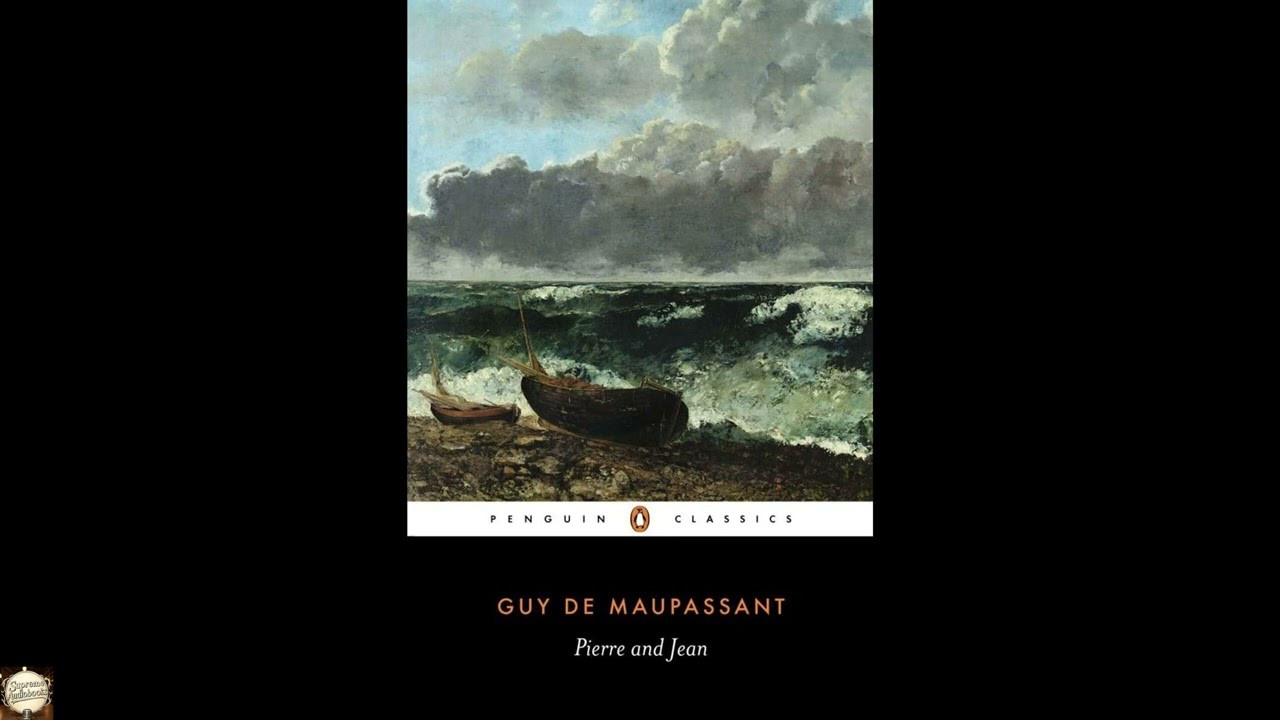
Pierre and Jean
Guy de Maupassant’s Pierre and Jean stands as a lean, incisive marvel of psychological fiction, a novella that peels back the veneer of bourgeois respectability to expose the raw, often ugly impulses that churn beneath. Published in the late 19th century, this compelling story of two brothers and a shattering family secret resonates profoundly even today, speaking to the universal anxieties of identity, jealousy, and the corrosive power of truth. It is a brilliant, unflinching examination of how material fortune can unearth deeply buried resentments and reshape the very fabric of family affection. The questions it poses about loyalty, self-perception, and the uncomfortable realities hidden within every household remain as pertinent and unsettling now as they were over a century ago. The narrative unfolds in the bustling port city of Le Havre, France, centering on the seemingly ordinary Rollin family. Monsieur Rollin, a retired jeweler, and his wife, Madame Rosémilly, live a comfortable, if somewhat unremarkable, life with their two adult sons: Pierre, the elder, a studious and somewhat melancholic medical student, and Jean, the younger, a good-natured and optimistic law student. Though distinct in temperament, the brothers have always been treated equally, sharing a bond forged in shared upbringing and family affection. This delicate balance, however, shatters abruptly with the unexpected news of an inheritance. A long-time family friend, Léon Marowsko, a wealthy pharmacist, has passed away and bequeathed his considerable fortune not to the Rollin parents, nor divided between the sons, but entirely to Jean. The news electrifies the household and the community, but for Pierre, it strikes a discordant, almost unbearable note. The sudden favoritism, the inexplicable decision to disinherit him while elevating his brother, gnaws at him with an intensity that transforms quickly into bitter resentment and gnawing suspicion. His rational mind, trained in medical analysis, begins to dissect not just the inheritance, but the entire history of his family, searching for a hidden explanation. As Jean celebrates his newfound wealth and contemplates a future of ease, Pierre descends into a torment of jealousy, his mind relentlessly pursuing a truth he dimly senses might destroy everything they hold dear. The story meticulously charts Pierre's psychological unravelling as he scrutinizes his mother’s past, her relationship with Marowsko, and the implications of his discoveries for the very identity of his family. Guy de Maupassant was born in 1850 in Normandy, France, into a minor aristocratic family. His early life was shaped by his parents’ separation and a close bond with his mother, Laure Le Poittevin, who was a friend of the acclaimed novelist Gustave Flaubert. Flaubert became a crucial mentor for the young Maupassant, guiding his literary education and instilling in him a rigorous discipline for observation and precise prose. This mentorship proved invaluable as Maupassant embarked on his own writing career, following a brief but impactful service in the Franco-Prussian War, an experience that colored much of his later work with a cynical and realistic lens. Maupassant’s literary output, though compressed into a remarkably short period before his untimely death in 1893, was extraordinarily prolific. He is perhaps best known as a master of the short story, having written some 300 tales, including classics like “Boule de Suif” and “The Necklace,” which display his keen eye for human folly and social hypocrisy. His novels, such as Une vie (A Woman's Life) and Bel-Ami, further cemented his reputation as a leading figure of the Naturalist and Realist movements in French literature. His work is characterized by its objective, often detached portrayal of human behavior, its focus on the commonplace, and its unsentimental exploration of psychology, class distinctions, and the harsh realities of existence, often with a pessimistic undercurrent. Maupassant's personal struggles with syphilis, which led to mental decline and institutionalization, tragically cut short a career that continues to influence writers worldwide. Pierre and Jean powerfully enacts several enduring themes. Foremost among them is the corrosive nature of fraternal jealousy and rivalry. Pierre's inability to reconcile himself with Jean's good fortune transforms his character, turning him from a thoughtful, if somewhat self-centered, individual into a tormented inquisitor. One can practically feel the bile rise in Pierre as he watches his family dote on Jean, or hears the townspeople praise his brother's luck. This envy drives his relentless pursuit of the truth, even knowing it might cause irreparable harm. Another central theme is the destructive power of secrets and the fragility of appearance versus reality. The Rollin family presents a picture of bourgeois contentment, but Marowsko's will rips open a long-buried secret concerning Madame Rollin's past, revealing the moral ambiguities that underscore their seemingly respectable existence. The family’s carefully constructed public image crumbles under Pierre's probing, showing how easily a life built on an unspoken past can be shattered. The novella also sharply observes social climbing and materialism as motivating forces. The inheritance not only provides Jean with comfort but also elevates his social standing, allowing him to pursue a life of leisure and marriage. This stark contrast with Pierre's own struggles and ambitions as a doctor highlights how wealth can alter destinies and expose the underlying desires for status that often guide human actions. The revelation of the truth, then, isn’t just about a past transgression; it’s about how money can be a catalyst for exposing the inherent inequalities and hidden desires within a family, revealing the discomforting truth about who truly benefits from hidden arrangements. Maupassant wrote Pierre and Jean in 1887, a period known as the Belle Époque in France, an era of relative peace, prosperity, and cultural flourishing following the tumultuous Franco-Prussian War and the establishment of the Third Republic. However, beneath this glittering surface, social tensions persisted, and the era also saw the full flowering of the Naturalist literary movement. Writers like Émile Zola and Maupassant himself sought to apply a scientific, almost clinical, approach to fiction, observing human behavior with dispassionate detail and often portraying characters as products of their heredity and environment. This era was fascinated by the internal workings of the human mind and the societal forces that shaped individual destinies. Pierre and Jean perfectly embodies this spirit, offering a meticulous psychological study of a family unit under pressure, set against the backdrop of a thriving port city where commerce and social standing were paramount. The novel’s emergence then reflects a broader cultural preoccupation with dissecting the moral fabric of society and the psychological undercurrents of everyday life. For an audiobook listener, Pierre and Jean offers an extraordinarily intimate and immersive experience. The novella's relatively concise length, typically several hours in audio format, makes it an ideal choice for focused listening, perhaps during a long commute or an afternoon's relaxation. Maupassant's prose is famously precise and economic, but its emotional weight is immense, particularly in rendering Pierre's spiraling jealousy and internal torment. A skilled narrator can amplify this psychological intensity, allowing the listener to truly inhabit Pierre's perspective, feeling his growing unease and suspicion with every nuanced inflection. Listen for the subtle shifts in the narrator's voice as the family's pleasantries begin to fray, revealing the sharp edges of resentment and accusation beneath. The dialogue, though sparse, carries significant dramatic tension, and a good performance can capture the unspoken anxieties and power dynamics within the Rollin household, creating an atmosphere of palpable suspense and psychological drama.
Enjoyed Pierre and Jean? A few ways to support us
Audible & Amazon links are affiliate; we may earn a small commission at no extra cost.
About this production
Human narration by a volunteer reader from LibriVox.org, the public-domain audiobook project. LibriVox volunteers record literary works whose copyright has expired in the United States, releasing the resulting recordings into the public domain.
Pierre and Jean by Guy de Maupassant. The underlying text is in the U.S. public domain. We do not republish any modern copyrighted edition, translation, or commentary.
The 4K cinematic visuals accompanying this audiobook are generated by an AI image model from prompts derived from the source text. No copyrighted photos, paintings, or stock footage are used. AI generation is disclosed on every video on our YouTube channel as required by YouTube's altered/synthetic content policy.
English subtitles are transcribed from the LibriVox recording with OpenAI Whisper. Translations into the 11 other supported languages are produced by Meta's NLLB-200 neural translation model. No human translator's copyrighted translation is used.
Questions about sourcing or rights? See our DMCA & Sourcing policy or contact us.
Enjoyed this audiobook?
If you'd like to own a copy of Pierre and Jean or hear a professionally produced edition, the links below help support free audiobook production at no extra cost to you.
As an Amazon Associate we earn from qualifying purchases. Audible / print links are affiliate.