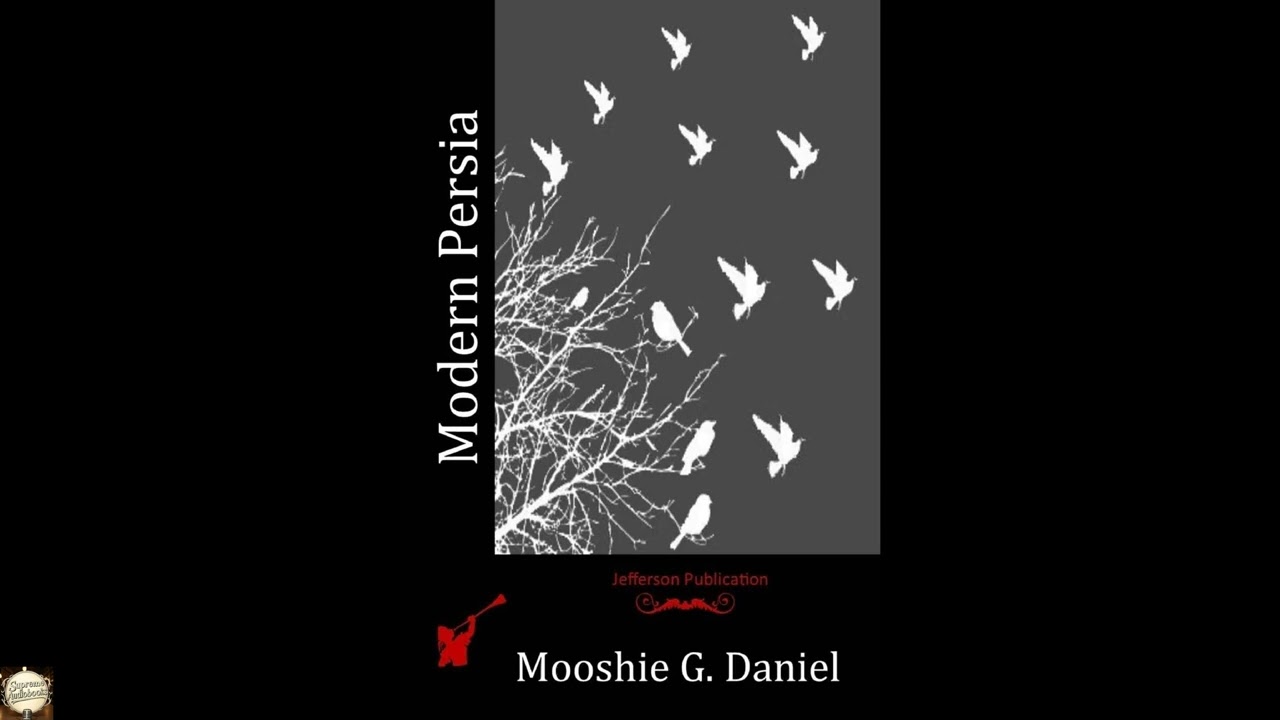
Modern Persia
Step into a world of profound transformation and enduring human spirit with Mooshie G. Daniel's Modern Persia, a classic of literature that transports listeners to a pivotal era where an ancient civilization grappled with the insistent currents of change. Far more than a historical novel, this seminal text offers a window into the soul of a nation poised between its storied past and an uncertain future, its pages alive with the clash of tradition and progress, the intimate struggles of individuals caught in forces larger than themselves. To engage with Modern Persia today is to confront universal questions of identity, the legacy of empire, and the relentless quest for self-determination that continue to echo in our contemporary global landscape, making its insights as relevant and resonant now as when it first appeared. The story unfolds in the early decades of the twentieth century, a period of fervent unrest and burgeoning modernity across the Persian Empire. We are introduced to Reza Arjomand, a young man of noble lineage, recently returned from his studies in Paris, his mind alight with European ideals of constitutional government, scientific advancement, and individual liberty. He arrives back at his family’s ancestral estate in Isfahan, a place steeped in generations of tradition and expectation, to find his aging father, a respected but rigid landowner, bewildered by the radical shifts occurring in Tehran. Reza’s return sets the stage for a dramatic conflict, not just with his family’s entrenched conservatism, but with the very fabric of the society he seeks to transform. His vision for a reformed Persia, where justice prevails and education is accessible, finds itself constantly battling against deeply rooted customs and the subtle manipulations of established power. Amidst this burgeoning political and social ferment, the narrative introduces Fara, a spirited young woman from a more modest background, whose intelligence and ambition challenge the restrictive roles prescribed for women of her time. Fara, initially drawn to Reza’s progressive ideas, soon finds her own voice and path, advocating for women's education and greater societal participation within the rapidly changing urban centers. Her interactions with Reza reveal not only the external pressures facing Persia, but also the internal debates and personal sacrifices demanded by the pursuit of a modern identity. As the nation lurches from one crisis to the next – political assassinations, burgeoning oil concessions, and the insidious whispers of foreign interference – both Reza and Fara must navigate personal loyalties and public duties, their individual destinies inextricably linked to the grand, often turbulent, sweep of their country’s evolution, leading them through a series of compelling choices and profound sacrifices without yet revealing the ultimate outcome of their struggles. Mooshie G. Daniel, born in Isfahan in the late nineteenth century, emerged as a significant literary voice during a period of immense upheaval for his homeland. His early life was marked by exposure to both the ancient cultural heart of Persia and the burgeoning influence of Western thought, having spent several formative years studying in London during his youth. This dual perspective deeply informed his writing, allowing him to portray the complexities of his characters with nuance and insight. Upon his return to Persia, Daniel held various positions within educational institutions, quietly observing the political machinations and social transformations that would become the wellspring of his fiction. While Modern Persia remains his most recognized contribution to the literary canon, Daniel also penned several shorter works, including a collection of poignant short stories titled Shadows of the Bazaar and a philosophical novella, The Architect’s Dream, which further explored themes of cultural preservation and the human cost of progress. His prose, known for its measured pace and evocative descriptions, placed him squarely within the realist tradition, yet infused with a distinctly Persian sensibility that drew heavily on classical Persian poetry and philosophical discourse. Daniel’s work is considered essential for understanding the intellectual and emotional landscape of twentieth-century Persian literature, solidifying his place as an author who not only documented his era but also gave voice to its deepest anxieties and aspirations. The enduring appeal of Modern Persia rests on its thoughtful engagement with several profound themes. One central concern is the clash between tradition and modernity, exemplified vividly through Reza’s internal struggles as he attempts to reconcile his European-inspired progressive ideals with the deeply ingrained customs of his aristocratic family. We witness this tension in a pivotal scene where Reza proposes modern agricultural methods to his father, only to be met with a staunch refusal rooted in ancestral practices, illustrating the formidable resistance to change even when faced with demonstrable benefits. Another prominent theme is the quest for national and individual identity, as both Persia and its people search for a coherent sense of self amidst external pressures and internal divisions. Fara’s determined efforts to establish a school for girls, often against the direct opposition of male elders, powerfully illustrates her struggle for personal agency and her vision for a modernized national identity that includes educated women. The novel further addresses the often-unseen price of progress, suggesting that societal advancement is rarely achieved without significant cost. The decline of certain traditional crafts, once the pride of Isfahan, is depicted with a melancholic tenderness, showcasing the loss of cultural heritage in the face of imported goods and industrialization. This is perhaps best observed in the detailed descriptions of the city’s ancient bazaars, which, while still bustling, show signs of yielding to newer, more utilitarian commerce. Finally, the theme of power and its shifting dynamics pervades the narrative. Daniel meticulously reveals how political power transitions from the absolute rule of the Shah to the nascent, often chaotic, attempts at constitutional government, and how this affects the lives of ordinary citizens. The machinations of court officials and foreign diplomats, subtly influencing local politics, provide a constant backdrop, demonstrating the complex web of forces that shape a nation's destiny and the limited agency individuals sometimes possess against them. Modern Persia emerged during a critical juncture in world history, a period defined by accelerating global interconnectedness, the decline of old empires, and the rise of nationalist movements. Written during the mid-twentieth century, Daniel’s novel reflects a profound concern with the legacy of colonialism and the challenges faced by nations striving for self-determination in a world increasingly dominated by Western powers. Politically, Persia had undergone its Constitutional Revolution decades earlier, yet the ideals of democracy were continuously tested by internal strife, the machinations of foreign powers, and the emergence of new autocratic regimes. Culturally, the nation was experiencing a vibrant intellectual awakening, with artists and writers grappling with how to synthesize their rich historical traditions with the demands of a rapidly modernizing world. Daniel’s work, therefore, resonated deeply with contemporary audiences seeking to understand their own past and envision a viable future for their country. It spoke to a widespread hunger for narratives that critically examined the path taken and offered reflections on the sacrifices involved in forging a distinct national identity. Listening to Modern Persia as an audiobook offers a singular opportunity to immerse oneself fully in Mooshie G. Daniel’s meticulously crafted world. The several hours of narration provide ample space for the story’s intricate character developments and the gradual unfolding of its historical backdrop, allowing listeners to absorb the nuances of the period at a contemplative pace. A skilled narrator brings to life the diverse voices of early twentieth-century Persia—the measured cadences of traditional elders, the fervent pronouncements of young reformers, and the subtle inflections of those caught between worlds. The vocal performance can elevate the philosophical debates and intimate dialogues, making the clash of ideas feel immediate and personal. Furthermore, the rhythmic flow of Daniel’s prose, with its descriptive passages of Isfahan’s gardens and Tehran’s bustling streets, lends itself beautifully to the spoken word, creating a palpable atmosphere that transports the listener directly into the heart of a nation in transition. The careful pacing of the narration ensures that every significant event, every subtle shift in allegiance, and every poignant reflection on the human condition is given its due weight, allowing the profound resonance of this classic work to unfold with compelling clarity.
Enjoyed Modern Persia? A few ways to support us
Audible & Amazon links are affiliate; we may earn a small commission at no extra cost.
About this production
Human narration by a volunteer reader from LibriVox.org, the public-domain audiobook project. LibriVox volunteers record literary works whose copyright has expired in the United States, releasing the resulting recordings into the public domain.
Modern Persia by Mooshie G. Daniel. The underlying text is in the U.S. public domain. We do not republish any modern copyrighted edition, translation, or commentary.
The 4K cinematic visuals accompanying this audiobook are generated by an AI image model from prompts derived from the source text. No copyrighted photos, paintings, or stock footage are used. AI generation is disclosed on every video on our YouTube channel as required by YouTube's altered/synthetic content policy.
English subtitles are transcribed from the LibriVox recording with OpenAI Whisper. Translations into the 11 other supported languages are produced by Meta's NLLB-200 neural translation model. No human translator's copyrighted translation is used.
Questions about sourcing or rights? See our DMCA & Sourcing policy or contact us.
View 10 famous quotes from this book →
Enjoyed this audiobook?
If you'd like to own a copy of Modern Persia or hear a professionally produced edition, the links below help support free audiobook production at no extra cost to you.
As an Amazon Associate we earn from qualifying purchases. Audible / print links are affiliate.