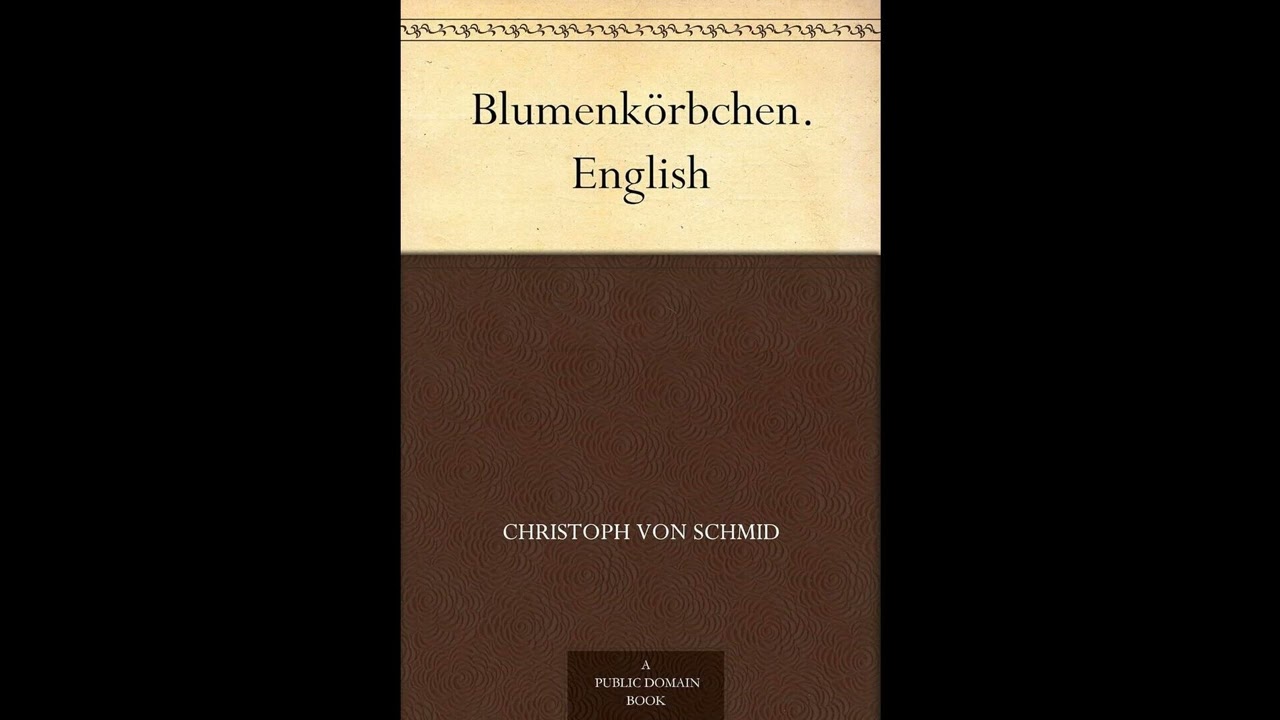
Blumenkörbchen. English
In an age often defined by cynicism and complexity, the simple, profound beauty of The Little Flower Basket offers a quiet refuge, a story that reminds us of the perennial power of virtue and the enduring strength of the human spirit. This cherished classic, originally a German tale known as Blumenkörbchen from the early 19th century, has transcended its origins to become a beloved narrative across generations and cultures. It is far more than a children's story; it is a gentle parable for anyone seeking solace in goodness, a testament to faith, and a compelling illustration of how unwavering moral character can triumph over life's severest trials. Its gentle wisdom and poignant narrative continue to resonate today, offering a refreshing perspective on resilience, familial love, and the quiet dignity of a righteous heart. The story centers on Mary, a young girl living in a humble cottage with her blind mother, their world circumscribed by poverty yet illuminated by their mutual devotion. Mary's sole source of income comes from selling flowers she diligently gathers from the woods and fields, arranging them into small, charming baskets. Their existence is one of constant struggle, where every small kindness, every simple act of care, becomes a beacon against the encroaching shadows of hardship. A kindly noblewoman, the Countess, takes notice of Mary's industry and sweet disposition, extending an offer of help that promises to lift them from their destitution. However, fate, or perhaps the machinations of less benevolent individuals, intervenes, casting Mary into a series of unfortunate events that separate her from her beloved mother and force her to face the world alone. Cast adrift and forced to contend with circumstances far beyond her years, Mary finds herself relying solely on her unwavering faith, her innate goodness, and the practical skills she learned in her simple upbringing. She encounters both cruelty and unexpected kindness, navigating a world that often seems indifferent to her plight. Despite the overwhelming odds and the profound grief of separation, Mary never loses sight of her values, her hope, or her singular goal: to one day reunite with her mother. Her trials become a crucible, testing her resolve and allowing her innate virtues to shine even brighter, setting her on a path that is both harrowing and ultimately redemptive, proving that genuine goodness can endure and even flourish in the harshest environments. Christoph von Schmid, the author of The Little Flower Basket, was a German Catholic priest and educator whose life spanned from 1768 to 1854. Born in Dinkelsbühl, Bavaria, Schmid was ordained in 1791 and dedicated his early career to teaching. He served as a parish priest in various Bavarian towns, eventually becoming a canon at Augsburg Cathedral in 1827. His experiences in education and pastoral care deeply informed his writing, leading him to believe in the power of simple, moral tales to instruct and uplift young minds. Schmid was not merely a storyteller; he was a pedagogical visionary who recognized the necessity of literature tailored specifically for children, aimed at cultivating virtue, piety, and an understanding of Christian principles. Schmid’s literary output was prodigious, encompassing over a hundred works, many of which became enormously popular throughout Europe. Beyond Blumenkörbchen, his other celebrated tales include Genovefa, a medieval legend he retold with his characteristic moral earnestness, and Eustachius, another story of unwavering faith in the face of adversity. He is often associated with the Biedermeier period in German culture, an era characterized by an emphasis on domesticity, simplicity, and emotional depth, particularly within middle-class life. Schmid’s work played a significant role in shaping children’s literature in the 19th century, influencing generations of writers and readers with his clear prose, straightforward plots, and clear moral messages, securing his place as one of the pioneering figures in the genre. One of the central themes in The Little Flower Basket is filial devotion and the boundless love between a child and parent. Mary’s unwavering commitment to her blind mother, from gathering flowers to providing comfort, forms the emotional core of the narrative. Even when she is tragically separated and faces immense personal suffering, her motivation remains tethered to the hope of reuniting with her mother, illustrating how this profound bond can serve as a guiding star in life’s darkest moments. The story concretely demonstrates this through Mary’s constant yearning and her self-sacrificing actions, all undertaken with her mother's well-being in mind. Another compelling theme is resilience and the power of perseverance in the face of adversity. Mary’s journey is fraught with hardship, including destitution, false accusations, and forced separation. Yet, at every turn, she responds not with despair but with unwavering goodness, hard work, and an unshakeable belief in divine providence. For instance, when she finds herself alone and without resources, she doesn't succumb to bitterness but seeks honest labor, upholding her integrity despite the difficult circumstances she endures. This steadfastness in character, even when others would yield to cynicism or anger, speaks to the inherent strength that goodness can bestow. The narrative also thoughtfully presents the idea that true virtue is its own reward, even when material gains are absent, suggesting that a clear conscience and a pure heart are riches beyond measure. The early 19th century in Germany, when Christoph von Schmid penned The Little Flower Basket, was a period of significant cultural and social transformation. Following the tumultuous Napoleonic Wars and the subsequent Restoration, there was a widespread desire for stability, moral renewal, and a return to traditional values. This era fostered the Biedermeier style, which idealized domestic life, simple pleasures, and deep personal faith, often as a counterpoint to the political unrest and intellectual upheaval of the preceding Enlightenment. Within this context, there was a growing recognition of childhood as a distinct developmental stage and an increasing demand for literature that specifically catered to the moral and educational needs of children. Schmid's work emerged directly from this cultural milieu, providing stories that reinforced piety, obedience, and the virtues of a well-ordered home, perfectly aligning with the prevailing societal aspirations. His writings served as an accessible and popular means of moral instruction at a time when education was increasingly valued as a cornerstone of societal well-being. Listening to The Little Flower Basket as an audiobook transforms the experience of this gentle story. The several hours of narrative unfold at a deliberate, soothing pace, allowing for quiet contemplation of Mary's trials and triumphs. A skilled narrator brings a subtle warmth and sincerity to the characters, especially Mary, conveying her innocence and steadfastness without over-dramatizing the events. The clear, articulate voice allows the simple yet profound dialogue to resonate, drawing listeners into a world where moral clarity reigns supreme. This audio presentation creates an immersive atmosphere that makes the virtues of filial love, perseverance, and faith feel immediately accessible and deeply affecting, perfect for reflective listening during a quiet evening, a thoughtful commute, or shared moments with family, offering a serene escape into a truly moving tale.
Enjoyed Blumenkörbchen. English? A few ways to support us
Audible & Amazon links are affiliate; we may earn a small commission at no extra cost.
About this production
Human narration by a volunteer reader from LibriVox.org, the public-domain audiobook project. LibriVox volunteers record literary works whose copyright has expired in the United States, releasing the resulting recordings into the public domain.
Blumenkörbchen. English by Christoph von Schmid. The underlying text is in the U.S. public domain. We do not republish any modern copyrighted edition, translation, or commentary.
The 4K cinematic visuals accompanying this audiobook are generated by an AI image model from prompts derived from the source text. No copyrighted photos, paintings, or stock footage are used. AI generation is disclosed on every video on our YouTube channel as required by YouTube's altered/synthetic content policy.
English subtitles are transcribed from the LibriVox recording with OpenAI Whisper. Translations into the 11 other supported languages are produced by Meta's NLLB-200 neural translation model. No human translator's copyrighted translation is used.
Questions about sourcing or rights? See our DMCA & Sourcing policy or contact us.
Enjoyed this audiobook?
If you'd like to own a copy of Blumenkörbchen. English or hear a professionally produced edition, the links below help support free audiobook production at no extra cost to you.
As an Amazon Associate we earn from qualifying purchases. Audible / print links are affiliate.

![Children's Classics in Dramatic Form, Book Two. [1909] by Augusta Stevenson — free full audiobook](https://img.youtube.com/vi/h4bTKUeuO7U/maxresdefault.jpg)