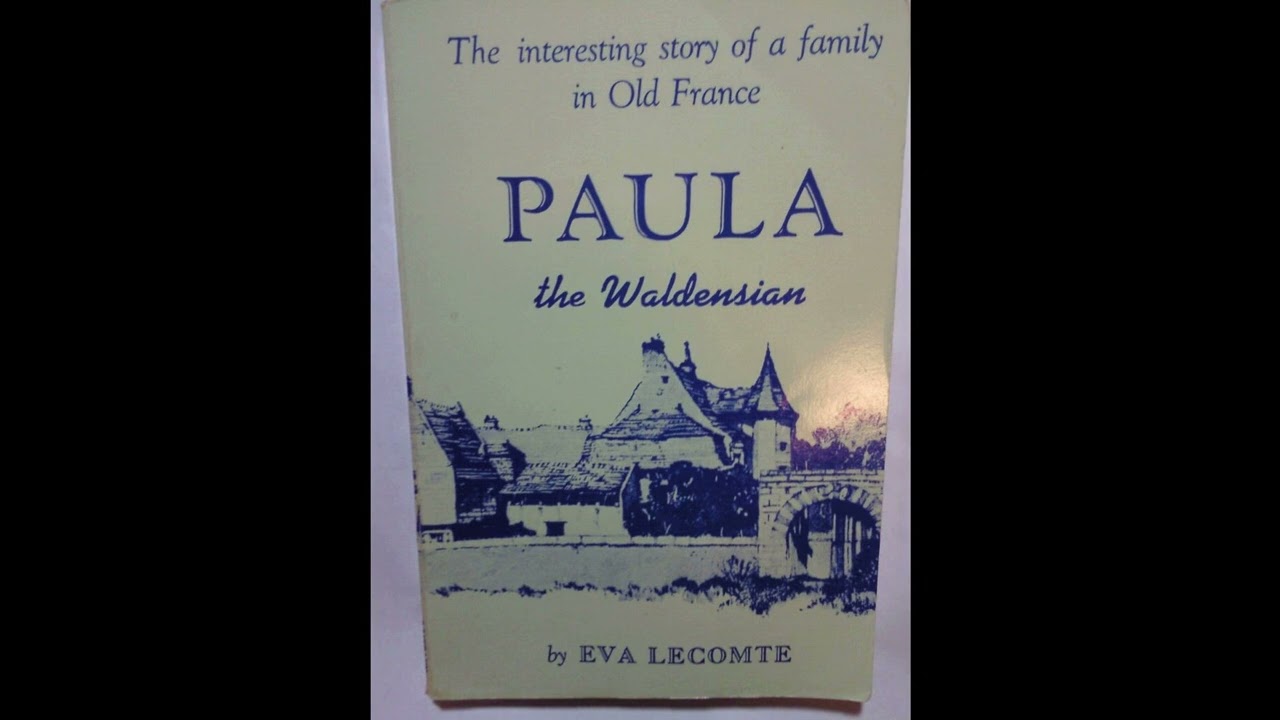
Paula, the Waldensian
"Paula, the Waldensian" transports listeners to a world where faith defines survival, a defiance against relentless persecution. Eva Lecomte's poignant narrative draws us into the harrowing existence of a people committed to their convictions, even as the forces of empire seek their eradication. This story of a young woman's steadfast spirit, set against a backdrop of breathtaking beauty and brutal conflict, resonates deeply today. It stands as a powerful testament to the human capacity for hope and resistance in the face of tyranny, mirroring contemporary struggles for freedom of conscience and the resilience of marginalized communities. The fight for personal belief and communal identity remains as relevant now as it was centuries ago. The story unfolds in the rugged, sun-drenched valleys of Piedmont, a picturesque yet perilous sanctuary for the Waldensians in the seventeenth century. These "People of the Valleys" were an ancient Protestant sect whose adherence to scripture had marked them for centuries of relentless suppression by the Roman Catholic Church and the Savoyard dukes who ruled the region. We meet Paula, a young Waldensian woman whose quiet strength and unwavering piety anchor her family and her community as they face escalating threats. Her world is one of close-knit familial bonds, communal worship held in secret grottoes, and the constant, gnawing fear of sudden raids, imprisonment, and forced conversion. Paula’s personal struggles mirror those of her people. She navigates the challenges of hearth and home, amplified by the ever-present danger that looms over every harvest, every gathering, every act of worship. A central tension arises from the constant pressure to conform, to renounce her faith, or to flee the only home she has ever known. Friendships are tested, loyalties strained, and the very fabric of their society threatens to unravel under sustained hostility. Through Paula’s eyes, we witness the quiet heroism of ordinary people who find extraordinary courage in their convictions, clinging to their beliefs even when facing unspeakable hardships. The narrative follows the Waldensian community through desperate flight and defiant standoffs. Paula is not just a witness; she is an active participant in their survival, her actions often crucial to the safety and morale of those around her. The story builds toward a pivotal moment where the community’s fate hangs in the balance, a crisis demanding immense sacrifice and courage from everyone. Paula must grapple with wrenching personal choices that have profound implications for her family and the future of her people. The arc highlights their incredible fortitude and their refusal to surrender their spiritual heritage, painting a vivid picture of human endurance against overwhelming odds. Eva Lecomte, author of "Paula, the Waldensian," emerges from a tradition of historical novelists dedicated to illuminating significant, often overlooked episodes of religious and social history. While specific biographical details for Lecomte can be elusive, her literary output suggests a deep engagement with Protestant historical narratives and a keen interest in figures who stood firm against dominant religious or political powers. Authors like Lecomte often gained prominence during periods of heightened historical consciousness, perhaps in the late nineteenth or early twentieth century, when there was an appetite for tales of moral fortitude and the struggles of conscience against institutional might. It is likely Lecomte was part of a literary milieu that valued historical accuracy blended with dramatic storytelling, aiming to inspire contemporary readers through the lessons of the past. Her choice of the Waldensians as a subject speaks volumes; these "Protestants before the Reformation" held particular fascination for those looking to trace a lineage of independent thought and religious dissent. Her writing would have educated and rallied sympathetic readers, reminding them of the price of religious freedom and the enduring power of faith. Lecomte’s place in the literary landscape is within a specialized, yet vital, niche of historical fiction that champions underrepresented voices and historical movements. She stands as an important chronicler for those interested in the human spirit’s capacity for endurance and the historical precedents for religious tolerance. At its heart, "Paula, the Waldensian" is a profound meditation on unwavering faith and the formidable strength of community. The book repeatedly illustrates religious conviction through Paula’s refusal to abandon her beliefs, even when her home is threatened or loved ones are endangered. For example, a scene where Paula silently resists a demand to attend a Catholic mass, instead finding solace in a clandestine prayer meeting, demonstrates her inner resolve and the pervasive nature of their spiritual resistance. This steadfastness is not an abstract concept, but a lived, often painful, reality shaping every decision within the community. Another significant theme is the resilience of marginalized people in the face of systemic oppression. Lecomte expertly portrays how the Waldensians, despite being outnumbered, maintain their identity and traditions through collective courage and mutual support. We see this in their ingenious methods of communication and warning systems, their shared sacrifice during scarcity, and their unwavering commitment to educating their children in their own faith, even when forbidden. The story also highlights the quiet power of women like Paula, who, within their defined roles, display immense courage and practical leadership, often becoming emotional and spiritual anchors of their families. The novel stands as a tribute to these enduring qualities. Eva Lecomte's decision to chronicle the Waldensian experience likely arose during a period of considerable interest in historical narratives of religious freedom and the origins of Protestantism. The late nineteenth and early twentieth centuries, for instance, saw a surge in historical scholarship and popular literature revisiting foundational conflicts of faith and power, particularly in the wake of social and political reforms. The enduring struggles for religious liberty, and the memory of past persecutions, would have made the Waldensian story especially resonant for contemporary readers. The Waldensians themselves — an ancient Christian movement predating the Reformation, repeatedly condemned as heretical and subject to brutal campaigns of extermination — provided fertile ground for authors seeking to draw parallels between historical injustices and contemporary moral questions. Lecomte’s book would have served as a historical reminder that the fight for freedom of conscience was hard-won, and that vigilance against intolerance remained essential. It placed the Waldensians within a broader Protestant narrative of endurance and witness. Listening to "Paula, the Waldensian" as an audiobook offers a uniquely immersive way to experience this powerful narrative. The several hours of spoken word allow the listener to sink into the rhythms of seventeenth-century life in the Piedmontese valleys, to feel the tension and quiet defiance in every word. A skilled narrator will bring Lecomte’s prose to life, giving voice to Paula's inner turmoil and the hushed conversations of a community living under duress. Listen for the subtle shifts in pacing, reflecting moments of desperate flight against periods of brief respite, and the nuanced portrayal of dialogue that conveys both deep love and profound fear. The atmosphere evoked by the narrator’s voice — the rustle of leaves in the hiding places, the stark silence of impending danger, the fervent sincerity of prayer — becomes a palpable presence, drawing you fully into this saga of courage and conviction.
Enjoyed Paula, the Waldensian? A few ways to support us
Audible & Amazon links are affiliate; we may earn a small commission at no extra cost.
About this production
Human narration by a volunteer reader from LibriVox.org, the public-domain audiobook project. LibriVox volunteers record literary works whose copyright has expired in the United States, releasing the resulting recordings into the public domain.
Paula, the Waldensian by Eva Lecomte. The underlying text is in the U.S. public domain. We do not republish any modern copyrighted edition, translation, or commentary.
The 4K cinematic visuals accompanying this audiobook are generated by an AI image model from prompts derived from the source text. No copyrighted photos, paintings, or stock footage are used. AI generation is disclosed on every video on our YouTube channel as required by YouTube's altered/synthetic content policy.
English subtitles are transcribed from the LibriVox recording with OpenAI Whisper. Translations into the 11 other supported languages are produced by Meta's NLLB-200 neural translation model. No human translator's copyrighted translation is used.
Questions about sourcing or rights? See our DMCA & Sourcing policy or contact us.
Enjoyed this audiobook?
If you'd like to own a copy of Paula, the Waldensian or hear a professionally produced edition, the links below help support free audiobook production at no extra cost to you.
As an Amazon Associate we earn from qualifying purchases. Audible / print links are affiliate.