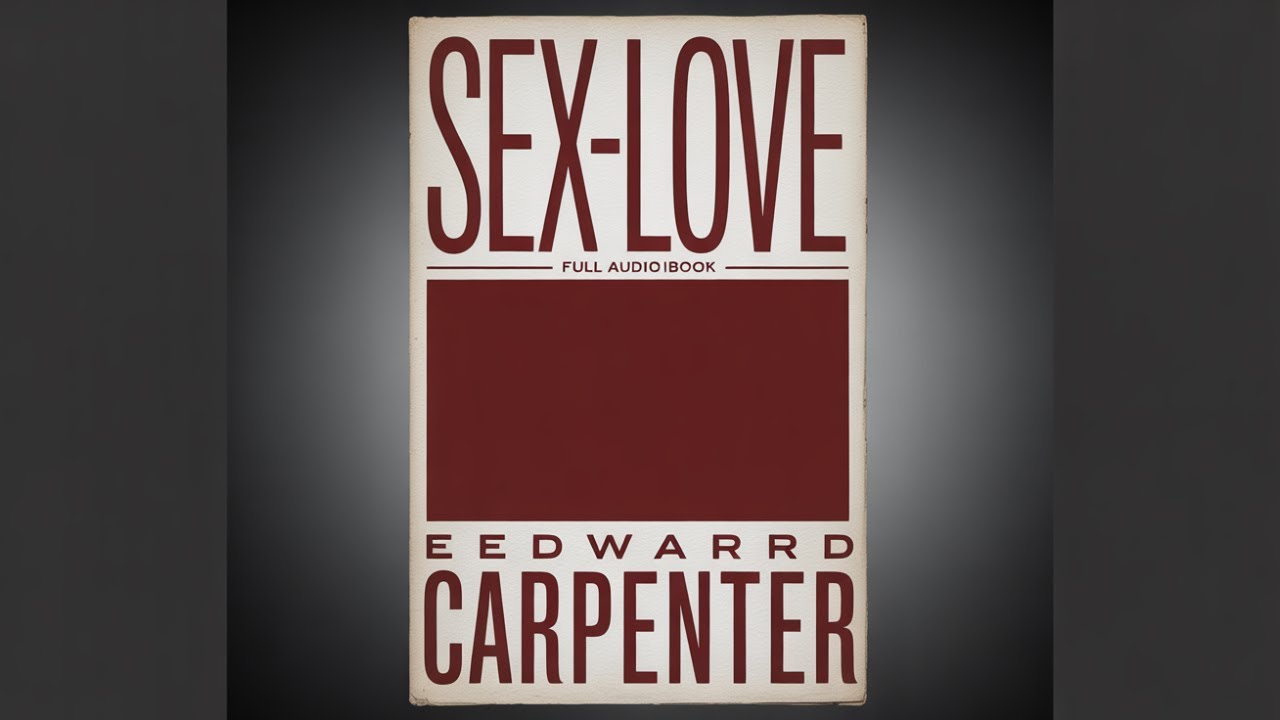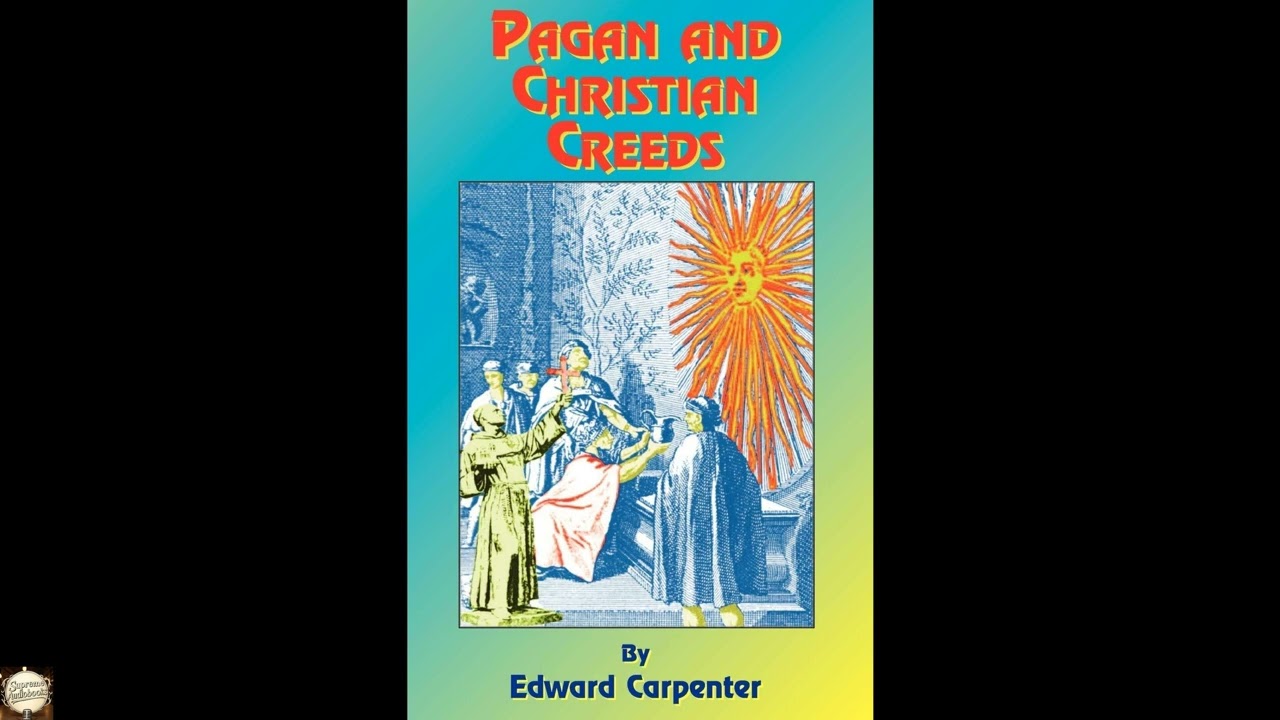
Pagan & Christian Creeds: Their Origin and Meaning
"Pagan & Christian Creeds: Their Origin and Meaning" by Edward Carpenter offers a profound look into the very foundations of human belief, drawing unexpected parallels between the religious systems that have shaped civilizations. Published in 1920, this book challenges conventional understandings of religious history by tracing the deep, often hidden connections between the myths, rituals, and symbols of ancient pagan traditions and the emergent doctrines of early Christianity. In an age grappling with the intersections of faith, science, and a renewed search for spiritual authenticity, Carpenter's work remains strikingly relevant, urging us to look beyond sectarian divisions and recognize the universal patterns of human spiritual expression that echo through millennia. It encourages a critical yet open-minded approach to understanding how and why we believe, making it a compelling listen for anyone seeking to comprehend the enduring power of creed and story. Carpenter sets his intellectual stage not in a specific geographical location, but across the vast expanse of human spiritual history, from the dawn of agriculture and ancient mystery cults to the rise of the early Christian church. The primary "characters" in this expansive narrative are the belief systems themselves: the Eleusinian Mysteries, Mithraism, the worship of Osiris, Dionysus, and Attis, each with their own pantheon of deities, sacred stories, and devotional practices. Carpenter, acting as our erudite guide, unveils these historical systems with careful attention to their specific details, but always with an eye toward their shared essence. He establishes the setting as a world where humanity constantly sought to understand its place in the cosmos, to commune with natural forces, and to confront the mysteries of life, death, and rebirth through myth and ritual. The central intellectual challenge Carpenter addresses is the widespread assumption that Christianity emerged sui generis, entirely unique and original in its tenets. He systematically presents evidence suggesting otherwise, revealing how many core concepts—such as a divine savior, virgin birth narratives, resurrection myths, baptismal rites, and sacred communal meals—were already deeply embedded in older, widespread pagan traditions across the Near East and Mediterranean world. The arc of his argument progresses from an initial presentation of various pagan beliefs, meticulously detailing their commonalities, and then demonstrating how these same symbolic and structural patterns recur in nascent Christianity. He does not seek to diminish Christianity, but rather to contextualize it within a broader, continuous stream of human spiritual development, inviting listeners to witness the evolution of religious thought rather than a sudden, singular revelation. Edward Carpenter, born in Brighton, Sussex, England, in 1844, was a figure of remarkable intellect and courage who profoundly influenced social thought in the late 19th and early 20th centuries. Educated at Trinity Hall, Cambridge, he initially pursued an academic and clerical path, becoming an ordained curate. However, a growing disillusionment with the strictures of organized religion and conventional academia led him to abandon both. He dedicated himself to working-class education, lecturing for the University Extension Movement, and later embracing a simpler, agrarian life in Millthorpe, Derbyshire, with his partner, George Merrill. This move allowed him to live authentically, fostering his intellectual and social radicalism. Carpenter was an outspoken advocate for social reform, sexual liberation, and environmentalism at a time when such views were considered scandalous. His writings covered a vast range of subjects, from poetry in the vein of Walt Whitman—whom he visited in America and was deeply inspired by—to critiques of modern civilization, explorations of human sexuality, and philosophical treatises. Notable among his other works are "Towards Democracy," a lengthy free-verse poem expressing his spiritual and social vision; "Civilisation: Its Cause and Cure," which critiques industrial society; and "The Intermediate Sex," a pioneering work on homosexuality. He was a foundational figure in the socialist, feminist, and early gay rights movements, often serving as a bridge between the Victorian intellectual world and emerging progressive thought. Carpenter passed away in 1929, leaving behind a legacy as a radical visionary whose ideas continue to resonate with contemporary issues. A key theme running through "Pagan & Christian Creeds" is the universalism of religious experience. Carpenter powerfully argues that despite superficial differences in dogma and ritual, human beings across diverse cultures and epochs have grappled with fundamentally similar spiritual questions and expressed them through recurring archetypes. For instance, he details the widespread motif of the "dying and rising god" figure, seen in narratives like the Egyptian Osiris, the Phrygian Attis, or the Greek Dionysus, whose deaths and resurrections symbolized the cycles of nature, fertility, and renewal. By drawing these explicit parallels, Carpenter suggests that the Christ narrative, rather than being an entirely unique event, resonates with an ancient and deeply ingrained human understanding of sacrifice and triumph over death. Another significant theme is Carpenter's subtle critique of dogmatic orthodoxy and religious exclusivity. By demonstrating the shared mythological and ritualistic heritage of various belief systems, he implicitly questions the absolute claims of any single religion to unique divine revelation. He encourages a more comparative and open-minded understanding of faith. Consider his examination of the Eucharist or communion rite in Christianity; Carpenter links it to ancient pagan sacred meals, where devotees partook of a god's symbolic flesh and blood to achieve spiritual union. This comparison does not invalidate the Christian practice but places it within a long tradition of human attempts to connect with the divine through symbolic ingestion, highlighting continuity rather than rupture. The period surrounding the publication of "Pagan & Christian Creeds" in 1920 was a tumultuous and transformative era, both culturally and intellectually. The devastating aftermath of World War I had left many disillusioned with traditional institutions, including established religion, fostering a widespread questioning of societal norms and beliefs. This period also saw a burgeoning interest in comparative religion, anthropology, and psychology, fields that sought to understand human behavior and belief systems from a scientific or empirical perspective. Carpenter's work sits comfortably alongside pioneering studies like Sir James Frazer's monumental "The Golden Bough," which likewise explored the commonalities of myth and ritual across cultures, although Carpenter's focus was more explicitly on the ethical and spiritual implications. His approach appealed to a generation seeking alternative spiritual paths, often looking eastward or to ancient traditions, as a counterbalance to the perceived failures of Western industrial and religious paradigms. Listening to "Pagan & Christian Creeds" as an audiobook offers a particularly engaging way to absorb its complex arguments and extensive historical details. The spoken word allows the listener to follow Carpenter's meticulous comparisons and connections between ancient creeds with greater ease, especially when a skilled narrator lends clarity and appropriate pacing to the philosophical exposition. The several hours of listening time make this a perfect companion for reflective walks, commutes, or periods of focused intellectual engagement. A good narration can bring the historical weight of the subject matter to life, making the distinctions between diverse pagan practices and their Christian counterparts more vivid. It allows the listener to truly dwell on the patterns of human belief as they unfold, offering a chance to absorb, reflect, and digest the profound implications of Carpenter's vision for a more inclusive understanding of spirituality.
Enjoyed Pagan & Christian Creeds: Their Origin and Meaning? A few ways to support us
Audible & Amazon links are affiliate; we may earn a small commission at no extra cost.
About this production
Human narration by a volunteer reader from LibriVox.org, the public-domain audiobook project. LibriVox volunteers record literary works whose copyright has expired in the United States, releasing the resulting recordings into the public domain.
Pagan & Christian Creeds: Their Origin and Meaning by Edward Carpenter. The underlying text is in the U.S. public domain. We do not republish any modern copyrighted edition, translation, or commentary.
The 4K cinematic visuals accompanying this audiobook are generated by an AI image model from prompts derived from the source text. No copyrighted photos, paintings, or stock footage are used. AI generation is disclosed on every video on our YouTube channel as required by YouTube's altered/synthetic content policy.
English subtitles are transcribed from the LibriVox recording with OpenAI Whisper. Translations into the 11 other supported languages are produced by Meta's NLLB-200 neural translation model. No human translator's copyrighted translation is used.
Questions about sourcing or rights? See our DMCA & Sourcing policy or contact us.
Enjoyed this audiobook?
If you'd like to own a copy of Pagan & Christian Creeds: Their Origin and Meaning or hear a professionally produced edition, the links below help support free audiobook production at no extra cost to you.
As an Amazon Associate we earn from qualifying purchases. Audible / print links are affiliate.