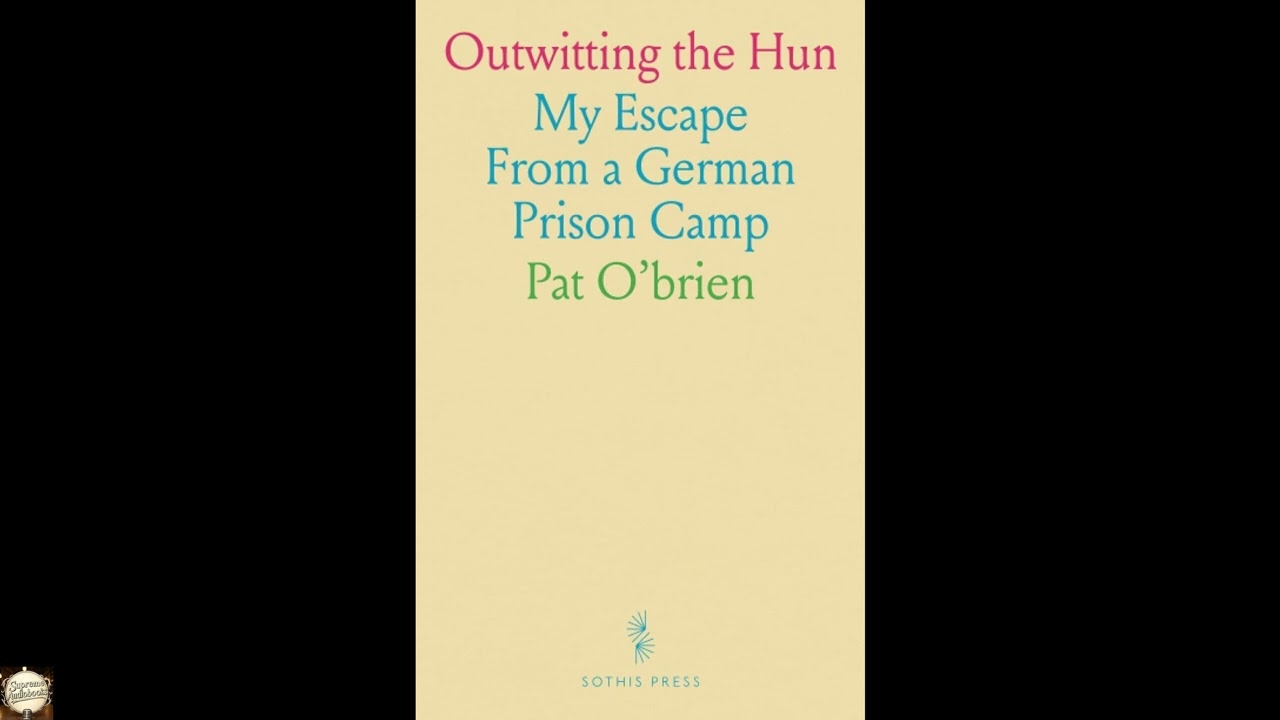
Outwitting the Hun: My Escape From a German Prison Camp
Imagine being adrift in enemy territory, your aircraft a wreck, your freedom stolen in an instant. This is the stark reality that opens Pat O'Brien's electrifying memoir, Outwitting the Hun: My Escape From a German Prison Camp. More than a century after its initial publication, this account remains a powerful testament to the human spirit's unyielding demand for liberty. It is a story that resonates profoundly today, reminding us of the courage found in desperate circumstances, the ingenious spark of invention under duress, and the fundamental yearning for home that transcends time and conflict. O'Brien's personal struggle against the might of an enemy nation offers not just a thrilling narrative of survival, but a deep exploration of psychological fortitude in the face of overwhelming odds. The narrative plunges directly into the harrowing experience of World War I. Pat O'Brien, a daring aviator with the Royal Flying Corps, finds himself plummeting from the sky after a fierce dogfight over German lines. His capture is swift and brutal, marking the abrupt end of his life as a free man and the beginning of a relentless ordeal as a prisoner of war. Confined to a series of German camps, including the infamous Courtrai, O'Brien quickly assesses his new, grim reality. The setting is one of crushing monotony, the oppressive presence of guards, and the ever-present threat of punishment for any defiance. His fellow prisoners are a motley collection of Allied soldiers—each with their own tales of misfortune, their spirits wavering between despair and a stubborn flicker of hope. From the moment of his capture, O'Brien’s central conflict is clear: he refuses to remain a prisoner. The early chapters detail his growing understanding of the camp's routines, the personalities of his captors, and the subtle ways information flows among the inmates. We see him grappling with the physical discomfort of poor rations and inadequate shelter, but more acutely, the crushing psychological weight of confinement. His initial, more impulsive attempts at escape are met with failure, yet they serve not to deter him, but to sharpen his resolve and his observation skills. He begins to meticulously plan, learning from mistakes, gathering snippets of intelligence, and forging alliances with those few who share his burning ambition for freedom, setting the stage for a daring bid that will challenge every ounce of his cunning and nerve. Patrick O'Brien, born in Chicago on February 27, 1893, led a life that seemed destined for high-stakes adventure long before his wartime experiences. Although an American, he crossed the border into Canada to volunteer for the Royal Flying Corps even before the United States officially entered the First World War. His aerial exploits, flying Sopwith Camels, quickly established him as a brave and skilled pilot until that fateful day in August 1917 when he was shot down over German territory, leading to his capture and the events described in his famous memoir. Upon his remarkable escape and return to Allied lines, O'Brien became a celebrity, a living embodiment of wartime heroism. His book, Outwitting the Hun, published in 1918, became an instant bestseller, cementing his place as one of the most compelling voices of the conflict. After the war, O'Brien continued his fascination with aviation, performing as a barnstormer and stunt pilot, dazzling audiences with aerial maneuvers across the country. He later contributed to the burgeoning aviation industry as a consultant, ever close to the skies that had once held him captive. He passed away on May 11, 1982, leaving behind a legacy not only as a brave airman but as a significant chronicler of his own extraordinary defiance. The powerful allure of Outwitting the Hun stems from its vivid portrayal of several enduring themes. Foremost among these is the theme of resilience, the unyielding human capacity to persist against overwhelming adversity. O'Brien exemplifies this through his sheer refusal to accept his fate. After each setback, each discovery by guards, each failed attempt, he doesn't succumb to despair but instead meticulously re-evaluates, learns, and plans anew. We see his inner fortitude when he endures solitary confinement or the physical toll of his long trek, his spirit remaining unbroken, always focused on the ultimate goal of freedom. Equally prominent is the theme of ingenuity, showcased through O'Brien's cleverness and resourcefulness. He doesn't merely break out; he outsmarts his captors. His detailed descriptions of crafting makeshift tools from scrap, fashioning disguises from scavenged uniforms, and his astute observations of guard patterns demonstrate a remarkable ability to adapt and innovate under extreme pressure. Another significant theme present throughout the narrative is camaraderie among prisoners. Despite their shared misery and the inherent risks, there are moments of profound human connection and mutual support. Other inmates provide crucial intelligence, distractions, or even small, invaluable acts of kindness that contribute to the success of O'Brien's efforts. These quiet acts of solidarity illuminate how shared suffering can forge powerful bonds and offer glimmers of hope in the darkest of places. Lastly, the book subtly explores the psychological toll of captivity and the overwhelming desire for freedom. While the physical dangers are ever-present, O'Brien also conveys the mental strain—the boredom, the constant vigilance required to maintain hope, and the profound, almost spiritual longing for open spaces and self-determination. The book’s publication in 1918 placed it squarely within the fervent patriotic climate of World War I. As the conflict neared its brutal end, the public on both sides was hungry for stories of heroism, sacrifice, and ultimately, triumph. O'Brien's escape narrative provided a much-needed morale boost for the Allied cause, a tangible example of an individual defying the "Hun"—a derogatory term for Germans common at the time—and embodying the spirit of Allied determination. It tapped into a burgeoning interest in war literature, moving beyond the romanticized accounts of earlier conflicts to offer a more immediate, albeit still heroic, perspective on the realities of modern warfare and the nascent field of aerial combat. In the audio format, Outwitting the Hun transforms into an even more immediate and immersive experience. The narrator's voice becomes the very vessel for O'Brien's extraordinary tale, allowing the listener to feel the pulse of suspense with every whispered plan and every stealthy movement. The several hours of running time offer ample opportunity to sink into the atmosphere of the German prison camp—the clanking of keys, the distant shouts of guards, the hushed conversations among prisoners. A skilled narrator can perfectly convey O'Brien’s unwavering resolve, the simmering tension of his confinement, and the exhilarating rush of his eventual flight to freedom, making the detailed descriptions of his cunning and sheer bravery feel as fresh and urgent as the day they first unfolded.
Enjoyed Outwitting the Hun: My Escape From a German Prison Camp? A few ways to support us
Audible & Amazon links are affiliate; we may earn a small commission at no extra cost.
About this production
Human narration by a volunteer reader from LibriVox.org, the public-domain audiobook project. LibriVox volunteers record literary works whose copyright has expired in the United States, releasing the resulting recordings into the public domain.
Outwitting the Hun: My Escape From a German Prison Camp by O'Brien Pat. The underlying text is in the U.S. public domain. We do not republish any modern copyrighted edition, translation, or commentary.
The 4K cinematic visuals accompanying this audiobook are generated by an AI image model from prompts derived from the source text. No copyrighted photos, paintings, or stock footage are used. AI generation is disclosed on every video on our YouTube channel as required by YouTube's altered/synthetic content policy.
English subtitles are transcribed from the LibriVox recording with OpenAI Whisper. Translations into the 11 other supported languages are produced by Meta's NLLB-200 neural translation model. No human translator's copyrighted translation is used.
Questions about sourcing or rights? See our DMCA & Sourcing policy or contact us.
Enjoyed this audiobook?
If you'd like to own a copy of Outwitting the Hun: My Escape From a German Prison Camp or hear a professionally produced edition, the links below help support free audiobook production at no extra cost to you.
As an Amazon Associate we earn from qualifying purchases. Audible / print links are affiliate.