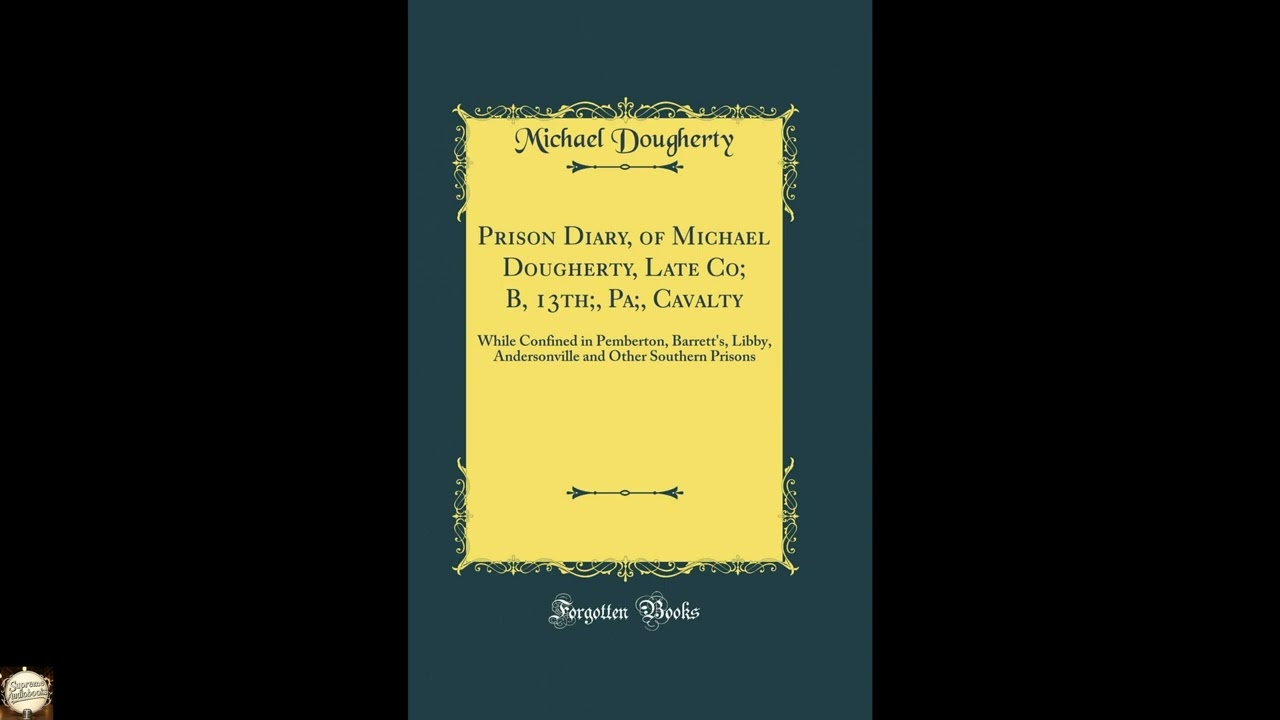
War Prison Diary
The quiet testament of the individual voice against the din of history holds a singular power, a truth made stark and unforgettable in Michael Dougherty's War Prison Diary. This isn't merely a historical artifact, but a raw, unflinching account of human resilience forged in the crucible of conflict and confinement. It speaks to the universal struggle for dignity, sanity, and hope when stripped of everything familiar, a narrative that resonates deeply with anyone contemplating the limits of endurance, the cost of freedom, and the enduring strength of the human spirit even in the direst circumstances. Its pages, now voiced, offer a profound connection to the past, reminding us that even in despair, the human need to observe, to record, and to remember remains a defiant act of life. The narrative plunges the listener into the grim reality of an enemy prisoner-of-war camp, a desolate place of mud, makeshift shelters, and constant hunger, set against the backdrop of an unspecified but clearly brutal conflict. Our guide through this harrowing experience is Michael Dougherty himself, a soldier thrust into an unimaginable existence. The early days are marked by a disorientation that quickly gives way to the stark calculus of survival: securing rations, finding warmth, and evading the pervasive watchful eyes of the guards. Dougherty meticulously details the physical degradation and psychological pressure, the gnawing emptiness in the stomach and the chilling dread in the heart. As the days turn into weeks, and weeks into months, a strange microcosm of society forms within the camp's barbed wire confines. Dougherty introduces us to his fellow prisoners—a motley collection of men from varied backgrounds, forced into an intimate, often fraught, communion. There is the stoic sergeant who maintains an unwavering resolve, the young recruit who falters under the strain, the quiet scholar who tries to find solace in shared stories, and the cynical veteran who sees through every false promise. The central conflict of the story isn't just the physical captivity, but the constant, internal battle against despair, the struggle to maintain one's identity and humanity when every external force conspires to strip it away. We witness the ingenious ways men invent to pass the time, share meager resources, and offer each other slivers of comfort and camaraderie, all while the specter of illness, starvation, and capricious brutality looms. Michael Dougherty was a man whose experiences on the battlefield profoundly shaped his understanding of the world, leading him to become a meticulous chronicler of hardship and human endurance. While specific dates of his birth and death are not widely known in common discourse, his literary output places him firmly within a tradition of soldier-authors who emerged from the cataclysms of the late nineteenth and early twentieth centuries. His War Prison Diary, while perhaps his most widely recognized work, stands alongside other writings of his—essays and letters—which similarly bear witness to the profound impact of conflict on the individual psyche and broader society. He was not a detached observer but a participant, lending an authentic, immediate quality to his prose that has resonated with generations of readers. Dougherty's voice, as captured in his writing, reflects an era when personal narratives of war were beginning to shift from heroic romanticism to a starker, more realistic portrayal of suffering and disillusionment. He moved within circles of writers and intellectuals who, in the aftermath of widespread global conflicts, sought to understand and articulate the devastating human cost of armed struggle. His commitment to detailing the mundane horrors of daily captivity—the cold, the hunger, the constant surveillance—elevated his work beyond a simple memoir, securing its place as a significant document in the literature of war. He is celebrated not for grand pronouncements, but for his honest, unadorned witness to human strength in the face of profound adversity. Several potent themes anchor War Prison Diary, offering profound reflections on the human condition. Foremost among them is resilience, not as a dramatic flourish, but as a grueling, day-to-day grind. We see this enacted repeatedly, for instance, in the meticulous planning prisoners undertake to share a single piece of bread among a dozen men, each receiving a precise crumb, a tiny victory against starvation. Another key theme is the dehumanizing effect of systematic oppression versus the enduring spark of individual humanity. Dougherty often describes how the guards treat prisoners as faceless numbers, yet he balances this with poignant observations of small acts of kindness among the captives—a shared joke, a whispered story of home, a hand offered to a fallen comrade during a forced march—demonstrating that even in the most brutal environments, the capacity for compassion and connection persists. The work also starkly illuminates the psychological toll of prolonged confinement and uncertainty. Dougherty frequently describes the pervasive mental fog, the vivid dreams of freedom that make waking reality even harder, and the desperate strategies men employ to cling to their sanity. One passage recounts a prisoner meticulously drawing maps of his hometown in the dirt with a stick, a ritualistic act designed not just to recall, but to assert a connection to a world that might no longer exist. Finally, the power of memory and storytelling becomes a survival mechanism. The diary itself is an act of memory, a defiant refusal to let the experience be forgotten. Prisoners gather to recount stories from their lives before the war, tales that transport them momentarily beyond the barbed wire, strengthening their bonds and reminding them of who they once were and who they might become again. War Prison Diary emerged at a particular cultural and political juncture when the industrialized nature of warfare had irrevocably altered public perception of conflict. The romanticized notions of glory and heroism, often propagated in earlier literature, were beginning to unravel in the face of unprecedented casualties and the grim realities brought home by returning soldiers. This was a period when personal testimonies and detailed, often brutal, accounts of battle and captivity gained significant traction, feeding a growing public appetite for truth over sanitized propaganda. The work contributed to a literary shift towards realism and naturalism, challenging readers to confront the stark, unvarnished experiences of those directly affected by war, rather than rely on distant, idealized portrayals. It was a time when the very definition of courage was being redefined, moving from battlefield heroics to the quiet, daily fortitude required to simply endure. Listening to War Prison Diary as an audiobook offers an exceptionally intimate and visceral experience. The "several hours" run length allows for a sustained immersion into Dougherty's world, demanding attention but rewarding it with profound insight. The narrator's voice becomes the direct conduit for Michael Dougherty's words, breathing life into observations that might otherwise feel distant on a printed page. Listen for the subtle shifts in pacing, reflecting the diarist's changing moods—the weary resignation, the sudden bursts of anger, the fragile moments of hope. The performance skillfully conveys the atmosphere of the camp, not through sound effects, but through the emotional weight carried in each sentence, the quiet determination in the diarist's voice, and the unspoken weight behind the descriptions of hunger and loss. It’s an opportunity to truly hear the human heart beating within the historical record, transforming a diary into a living, resonant echo of survival.
Enjoyed War Prison Diary? A few ways to support us
Audible & Amazon links are affiliate; we may earn a small commission at no extra cost.
About this production
Human narration by a volunteer reader from LibriVox.org, the public-domain audiobook project. LibriVox volunteers record literary works whose copyright has expired in the United States, releasing the resulting recordings into the public domain.
War Prison Diary by Michael Dougherty. The underlying text is in the U.S. public domain. We do not republish any modern copyrighted edition, translation, or commentary.
The 4K cinematic visuals accompanying this audiobook are generated by an AI image model from prompts derived from the source text. No copyrighted photos, paintings, or stock footage are used. AI generation is disclosed on every video on our YouTube channel as required by YouTube's altered/synthetic content policy.
English subtitles are transcribed from the LibriVox recording with OpenAI Whisper. Translations into the 11 other supported languages are produced by Meta's NLLB-200 neural translation model. No human translator's copyrighted translation is used.
Questions about sourcing or rights? See our DMCA & Sourcing policy or contact us.
Enjoyed this audiobook?
If you'd like to own a copy of War Prison Diary or hear a professionally produced edition, the links below help support free audiobook production at no extra cost to you.
As an Amazon Associate we earn from qualifying purchases. Audible / print links are affiliate.
More Audiobooks
Memoirs of a Cavalier ; or a Military Journal of the Wars in Germany, and the Wars i- Full Audiobook
Helbeck of Bannisdale — Volume I

By Sheer Pluck: A Tale of the Ashanti War

Memories: A Record of Personal Experience and Adventure During Four Years of War