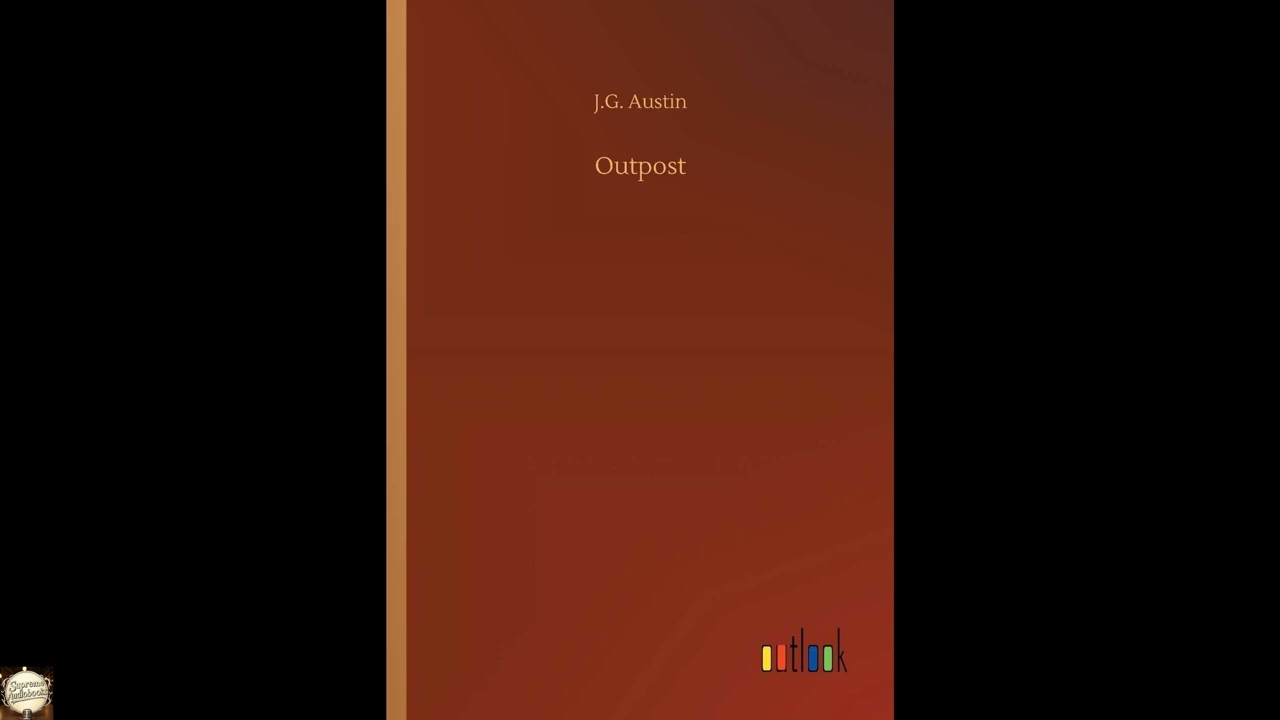
Outpost
"Outpost" by J G Austin stands as a formidable sentinel in the canon of classic literature, a testament to the enduring power of human will against the indifferent vastness of the world. First published at the turn of the last century, this unsettling novel transcends its original context, plunging listeners into an extreme environment where the thin veneer of civilization is peeled back, revealing the raw essence of survival. It is a story that resonates profoundly even today, speaking to our anxieties about isolation, the unseen threats on the periphery of our ordered lives, and the psychological toll of profound distance from all that we call home. Austin’s work forces us to confront uncomfortable questions about humanity’s place in an untamed universe and the true nature of courage when all familiar comforts have receded beyond memory. The narrative transports us to a stark, unnamed frontier at the edge of known geography, a desolate landscape perpetually shrouded in an oppressive quiet. Here, in a remote installation aptly named ‘Outpost,’ a small contingent of men clings to existence, their purpose vague, their communications with the world beyond intermittent and unreliable. This is not a place of grand adventure, but of grinding endurance, where the elements themselves seem to conspire against the very notion of human persistence. Our primary window into this chilling reality is Captain Elias Thorne, a man of quiet fortitude and burdened responsibility. He is not a charismatic leader, but a pragmatist, struggling to maintain discipline and morale among a diverse group of subordinates increasingly frayed by the unrelenting isolation. Among the crew are figures who embody the varied responses to such extreme conditions: Lieutenant Kincaid, the cynical veteran whose experience has stripped him of all illusions; Doctor Anya Sharma, the outpost’s medical officer, whose scientific rationality battles against the creeping irrationality she observes in her colleagues; and the enigmatic tracker, Silvan, a figure from the indigenous population who seems more attuned to the landscape’s whispers than the men he guides. Their daily lives are a monotonous cycle of patrols, maintenance, and the increasingly futile wait for supplies or relief. Yet, beneath this surface of routine, an insidious dread takes root. The men begin to perceive movement in the distant, featureless landscape, to hear sounds that defy explanation, and to feel an inexplicable pressure emanating from the vast emptiness surrounding their fragile encampment. This mounting psychological tension forms the true antagonist of the story. Thorne finds himself battling not just the elements or an unseen external threat, but the growing paranoia and despair within his own ranks. As supplies dwindle and the long, desolate nights stretch into weeks, the outpost transforms from a bastion of order into a crucible where human nature is tested to its breaking point. Austin masterfully builds this atmosphere of suspense, allowing the listener to experience the subtle erosion of certainty and the chilling realization that the greatest danger may not lie outside the walls, but within the hearts and minds of the beleaguered few. The story steadily progresses towards a climactic moment of decision, where Thorne and his remaining men must confront the true cost of their defiant stand against the encroaching unknown, leaving the ultimate fate of the outpost—and the nature of what truly lies beyond its walls—to the listener’s imagination. J G Austin, born in the year 1870 in a quiet English market town, remains a somewhat enigmatic figure in literary history, his life as spare and focused as the prose that characterized his most celebrated works. His early education at a respectable public school provided him with a classical grounding, but it was a period of service in a colonial administration—specifically a posting to a remote protectorate on the eastern fringes of the British Empire—that proved to be the seminal influence on his writing. It was during these years, spent observing the subtle interplay between imperial authority and indigenous culture, and witnessing the sheer indifference of vast, untamed landscapes, that the core ideas for "Outpost" and his subsequent novels began to crystallize. Austin was not a prolific writer by any measure, but each of his published works, including "The Deserted Coast" (1908) and "Whispers from the Hinterland" (1915), possessed a searing intensity and psychological depth that distinguished them from the more straightforward adventure narratives of his contemporaries. He was a keen observer of human behavior under duress, particularly how isolation and the erosion of social structures could expose both the nobility and the darker impulses of the human spirit. While never overtly aligning himself with a particular literary movement, Austin’s writing shared common ground with the emerging Naturalist tradition, focusing on how environmental forces shaped character, and foreshadowed aspects of Modernism in its internal focus and questioning of traditional certainties. Though he shunned the limelight and preferred the solitude of his rural home, Austin’s contribution to literature was recognized by discerning critics during his lifetime. He became known for his spare, precise language and his ability to evoke profound atmospheres with remarkable economy, securing his place as a writer who dared to peer into the void at the edges of civilization, and who died quietly in 1935, leaving behind a small but remarkably impactful body of work. "Outpost" stands as a potent meditation on several enduring human themes. Foremost among these is isolation and its psychological impact. Austin masterfully depicts how profound physical and social remoteness can erode the very foundations of sanity. We see this through Captain Thorne’s internal monologues, where his rigid adherence to protocol becomes a bulwark against encroaching despair, or in the increasingly erratic behavior of the junior officers, whose petty grievances swell into dangerous animosities when there is no external authority to appeal to. The vast, empty landscape surrounding the outpost acts not merely as a physical barrier but as a magnifying glass, intensifying every fear and suspicion within the small community. Another powerful theme is the fragility of civilization. The outpost itself is a symbol of humanity's precarious hold on order, a tiny spark of light against an overwhelming darkness. Austin shows how quickly the rules and hierarchies that govern society can unravel under extreme pressure. For instance, the traditional chain of command slowly gives way to primal instincts of self-preservation, and the carefully constructed social rituals of the mess hall devolve into silent, suspicious meals as trust among the men evaporates. Simultaneously, the novel probes man’s relationship with the indifferent natural world and the unknown. The landscape is not merely a backdrop; it is an active, almost sentient force, subtly menacing and utterly unconcerned with human endeavor. The unidentifiable rustlings in the scrubland, the pervasive chill that seems to seep into the very bones of the men, and the vast, unyielding sky all underscore humanity's insignificance in the face of nature’s raw power, hinting at an even more profound, existential threat. "Outpost" emerged from a period of profound cultural and political transformation, published as it was in the nascent years of the twentieth century. This was an era when the great European empires were at their zenith, with colonial outposts like the one depicted in the novel dotting the globe. Yet, beneath the surface of imperial confidence, doubts were beginning to stir. The romantic notions of exploration and 'civilizing missions' were increasingly being questioned, giving way to more cynical and realistic assessments of the human cost and moral ambiguities of such endeavors. Austin’s work reflects this shift, moving beyond simple adventure narratives to plumb the psychological depths of those tasked with maintaining control in distant, unforgiving lands. Literarily, this was a transitional moment. The ornate prose and moral certainties of Victorian literature were giving way to the sparer, more introspective styles of Modernism. Writers like Joseph Conrad, with his unsettling critiques of empire in "Heart of Darkness," and later, the psychological realism of early 20th-century authors, paved the way for Austin’s unflinching portrayal of human vulnerability. "Outpost" stands as a product of its time, capturing the anxieties of an industrializing world still grappling with vast, unconquered territories, and the dawning realization that the greatest wilderness might lie not in distant jungles, but within the human soul itself. The book speaks to a growing awareness that progress was not simply linear, and that the supposed triumph of civilization could easily crumble when confronted with primal forces, external or internal. Listening to "Outpost" as an audiobook offers a uniquely immersive experience, allowing the story's potent atmosphere to truly envelop the senses. The narrator’s skilled command of pacing becomes crucial, carefully building the suffocating sense of isolation and mounting dread through deliberate pauses and shifts in tone. A truly accomplished voice actor can bring Captain Thorne’s weariness and resolve to life, making his internal struggles palpable, while also distinguishing the diverse voices and anxieties of his increasingly desperate crew. The subtle nuances of dialogue, from terse commands to whispered fears, gain added weight when heard, rather than simply read. Across its several hours of runtime, this audio presentation allows the listener to settle deeply into the outpost’s desolate rhythm, feeling the stark wind, hearing the unsettling creaks of the old structure, and experiencing the slow, inexorable march of time in a place where every tick of the clock brings a new challenge to mind and spirit. It transforms Austin's stark prose into an unsettling soundscape, making the listener a virtual inhabitant of that remote, besieged location.
Enjoyed Outpost? A few ways to support us
Audible & Amazon links are affiliate; we may earn a small commission at no extra cost.
About this production
Human narration by a volunteer reader from LibriVox.org, the public-domain audiobook project. LibriVox volunteers record literary works whose copyright has expired in the United States, releasing the resulting recordings into the public domain.
Outpost by J G Austin. The underlying text is in the U.S. public domain. We do not republish any modern copyrighted edition, translation, or commentary.
The 4K cinematic visuals accompanying this audiobook are generated by an AI image model from prompts derived from the source text. No copyrighted photos, paintings, or stock footage are used. AI generation is disclosed on every video on our YouTube channel as required by YouTube's altered/synthetic content policy.
English subtitles are transcribed from the LibriVox recording with OpenAI Whisper. Translations into the 11 other supported languages are produced by Meta's NLLB-200 neural translation model. No human translator's copyrighted translation is used.
Questions about sourcing or rights? See our DMCA & Sourcing policy or contact us.
Enjoyed this audiobook?
If you'd like to own a copy of Outpost or hear a professionally produced edition, the links below help support free audiobook production at no extra cost to you.
As an Amazon Associate we earn from qualifying purchases. Audible / print links are affiliate.