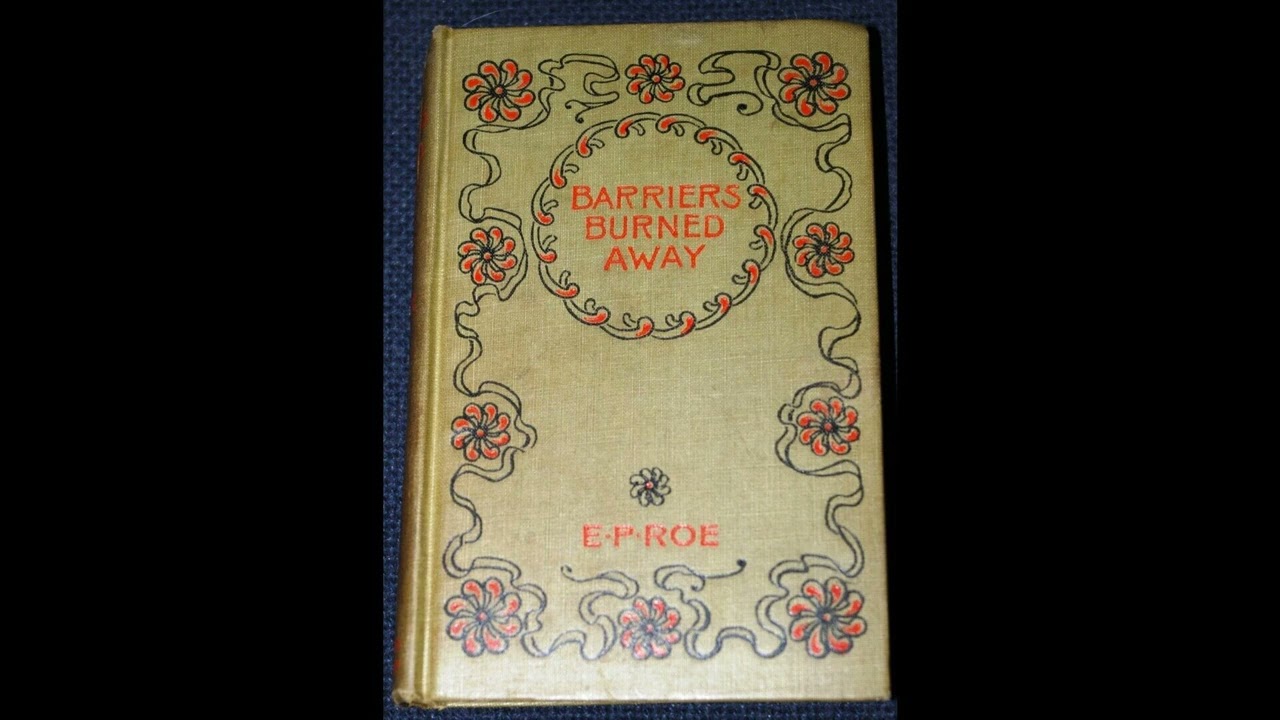
Barriers Burned Away
E. P. Roe's "Barriers Burned Away" stands as a monumental work in American literature, a novel that not only captured the spirit of its age but continues to resonate with listeners today through its powerful story of human resilience, social upheaval, and the transformative potential of disaster. Published shortly after one of America's most devastating urban tragedies, this book uses historical cataclysm as a crucible for character, challenging preconceived notions of class, pride, and destiny. It asks us to consider what remains when everything material is stripped away, revealing the fundamental bonds that connect us and the courage required to rebuild, both personally and communally. This is a story for anyone who has faced overwhelming change and sought to find meaning and connection in its wake, offering a compelling narrative that is both a historical document and a deeply personal drama. The story unfolds in the bustling, ambitious city of Chicago in the years immediately following the Civil War, a metropolis on the cusp of greatness yet still defined by rigid social hierarchies. We are introduced to Dennis Fleet, a young artist of humble origins whose talent is undeniable but whose progress is hindered by a lack of connections and the sting of social prejudice. He harbors a deep respect for his art and an equally deep cynicism toward the societal structures that limit him. His path crosses with Christine Ludolph, the proud daughter of one of Chicago's wealthiest and most influential families. Christine moves within the gilded circles of high society, initially seeing Dennis as little more than a peculiar, perhaps even presumptuous, acquaintance. Their initial interactions are marked by misunderstanding, class friction, and the unspoken tensions that exist between their very different worlds. This simmering social drama is violently interrupted by the Great Chicago Fire of 1871, a cataclysmic event that literally levels the city, reducing grand mansions and humble tenements alike to ash. In the face of widespread destruction and chaos, the barriers of wealth and status that once separated Dennis and Christine begin to crumble. Stripped of their familiar surroundings and forced to confront their shared vulnerability, they are thrown together in extraordinary circumstances. The fire forces them to see beyond superficial distinctions, revealing their true characters under immense pressure. Through acts of courage, compassion, and shared suffering, their initial animosity gives way to a complex and deepening understanding, laying the groundwork for a connection that neither could have imagined in the city's pre-fire splendor. The narrative meticulously follows their evolving relationship as they navigate the ashes of their former lives and the uncertain future of a city determined to rise again. Edward Payson Roe, the author, was a fascinating figure in American letters, born in 1838 and passing away in 1888. A Presbyterian minister, Roe's life took a significant turn when he served as a chaplain during the Civil War, an experience that profoundly shaped his moral outlook and his understanding of human suffering and resilience. After the war, he turned his hand to writing, quickly finding immense popularity with a reading public hungry for uplifting and morally resonant stories. His novels often featured compelling plots set against contemporary backdrops, imbued with a strong sense of ethical purpose. He was known for What Can She Do?, Opening a Chestnut Burr, and A Young Girl's Wooing, among others, and became one of the first American authors to sell over a million copies of his works, a testament to his widespread appeal. Roe's place in the literary canon, while perhaps not as academically studied as some of his contemporaries today, is undeniable when considering his influence on 19th-century American readers. He successfully bridged the gap between purely religious literature and popular secular fiction, crafting narratives that were both entertaining and morally instructive. His work reflected the anxieties and aspirations of a nation grappling with reconstruction, industrialization, and changing social norms, offering a sense of hope and moral clarity in a rapidly modernizing world. His literary contributions represent a significant chapter in the development of American popular fiction, demonstrating how storytelling could both entertain and affirm societal values. The novel skillfully enacts several enduring themes, foremost among them being the pervasive influence of social class and prejudice. Before the fire, Dennis Fleet's artistic aspirations are overshadowed by his lack of inherited wealth and connections, while Christine Ludolph's family views his existence as barely relevant. Their initial exchanges highlight the chasm separating the "old money" establishment from the ambitious, self-made individual. However, the story then vividly demonstrates the theme of redemption and transformation through adversity. The devastating fire acts as a great equalizer, burning away not only physical structures but also the artificial social distinctions that had previously defined the characters. In the shared struggle for survival and recovery, characters like Dennis and Christine are stripped of their pride and forced to acknowledge their common humanity, leading to profound personal growth and a re-evaluation of their values. The destructive event ironically becomes the catalyst for their ultimate salvation, both individually and as a couple. Roe’s narrative also spotlights the unwavering power of love and forgiveness, showing how these forces can emerge from the ashes of bitterness and misunderstanding. As Dennis and Christine aid each other and witness the suffering of others, their initial judgments give way to empathy and genuine affection. Forgiveness becomes a pathway to healing, not just for personal slights, but for the broader wounds inflicted by societal division. Finally, the novel touches upon the powerful theme of rebuilding, both literally and figuratively. As Chicago rises from its ruins, so too do the characters rebuild their lives and their relationships. This act of reconstruction is not merely about physical structures; it is about forging new identities and new communities, finding strength and purpose in shared effort and renewed hope for the future. "Barriers Burned Away" emerged at a pivotal moment in American history, published in 1872, just a year after the Great Chicago Fire of 1871. This was a period of intense national reconstruction following the Civil War, with widespread economic and social changes sweeping across the country. Cities like Chicago were booming, becoming centers of industry and migration, but also experiencing the growing pains of rapid urbanization, including pronounced class distinctions. The Chicago Fire was a traumatic event that captivated the nation, symbolizing both the fragility of progress and the extraordinary human capacity for resilience. Roe's decision to base his novel on this very recent and spectacular disaster tapped directly into the public consciousness, offering a timely narrative that processed collective trauma through a lens of hope and moral uplift. In a literary landscape increasingly populated by popular fiction, Roe's work appealed to a broad audience seeking stories that were both entertaining and morally sound. His novels provided a comforting narrative of order restored, of good triumphing over adversity, and of traditional values affirmed even in the face of modern challenges. This kind of inspirational fiction served as a balm for a nation grappling with its identity, offering reassurance and a blueprint for personal and societal recovery. "Barriers Burned Away" was not just a story; it was a cultural response, a way for readers to understand and process the dramatic changes unfolding around them through the familiar framework of romance and moral instruction. Listening to "Barriers Burned Away" as an audiobook offers a unique and immersive way to experience E. P. Roe's dramatic and emotionally charged prose. The narrator's voice carries you through the bustling pre-fire Chicago, vividly painting scenes of social contrast and burgeoning tension. As the narrative shifts into the terrifying reality of the fire, a skilled narrator can convey the visceral chaos and subsequent desolation with powerful emotional weight, making the experience immediate and gripping. Listen for the subtle inflections that differentiate characters like the proud Christine and the determined Dennis, and how their voices subtly change as their perspectives evolve through shared trauma. The several hours of listening time allow the story to unfold at a natural, unhurried pace, perfect for soaking in the descriptive language, the shifting atmosphere, and the poignant dialogue that drives the core of this compelling American classic.
Enjoyed Barriers Burned Away? A few ways to support us
Audible & Amazon links are affiliate; we may earn a small commission at no extra cost.
About this production
Human narration by a volunteer reader from LibriVox.org, the public-domain audiobook project. LibriVox volunteers record literary works whose copyright has expired in the United States, releasing the resulting recordings into the public domain.
Barriers Burned Away by Edward Payson Roe. The underlying text is in the U.S. public domain. We do not republish any modern copyrighted edition, translation, or commentary.
The 4K cinematic visuals accompanying this audiobook are generated by an AI image model from prompts derived from the source text. No copyrighted photos, paintings, or stock footage are used. AI generation is disclosed on every video on our YouTube channel as required by YouTube's altered/synthetic content policy.
English subtitles are transcribed from the LibriVox recording with OpenAI Whisper. Translations into the 11 other supported languages are produced by Meta's NLLB-200 neural translation model. No human translator's copyrighted translation is used.
Questions about sourcing or rights? See our DMCA & Sourcing policy or contact us.
Enjoyed this audiobook?
If you'd like to own a copy of Barriers Burned Away or hear a professionally produced edition, the links below help support free audiobook production at no extra cost to you.
As an Amazon Associate we earn from qualifying purchases. Audible / print links are affiliate.