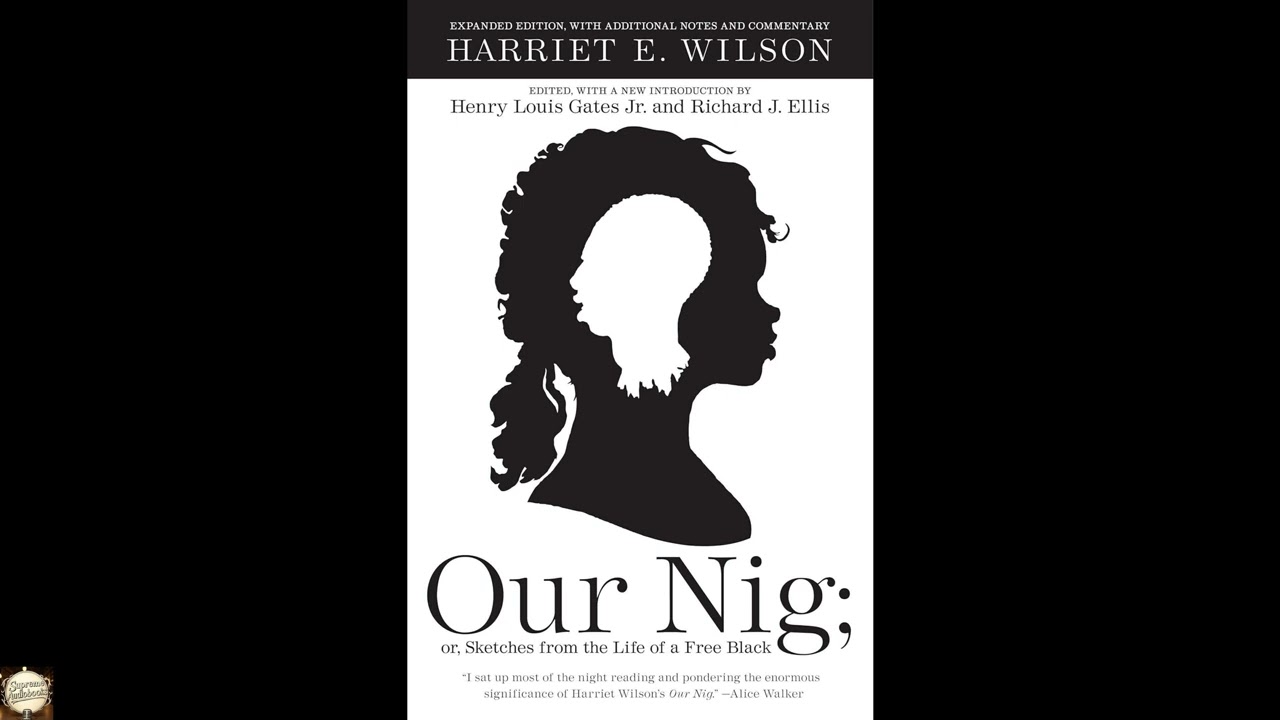
Our Nig: or, Sketches from the Life of a Free Black
Among the foundational texts of American literature stands Our Nig: or, Sketches from the Life of a Free Black, a stark and unvarnished account that holds the distinction of being the first novel published by an African American woman in North America. Published in 1859, this powerful work by Harriet E. Wilson offers a rare, intimate window into the lives of free Black individuals in the pre-Civil War North, challenging prevailing myths of the era and exposing the brutal realities of racial prejudice and economic exploitation that existed even in supposedly "free" states. For the contemporary listener, Our Nig is more than a historical document; it is a vital testament to resilience, a piercing critique of hypocrisy, and an essential piece of American identity that continues to resonate with questions of race, class, and human dignity that remain deeply relevant today. It is a voice that refused to be silenced, echoing across generations to demand recognition and understanding. The narrative introduces us to Frado, a biracial girl whose difficult life begins with the abandonment of her white mother, Mag, to the care of the Bellmont family in a rural New England town. Mag, a white woman ostracized for her relationship with a Black man and the subsequent birth of Frado, tragically leaves her daughter indentured to the Bellmonts as a domestic servant. What follows is not the benevolent apprenticeship often romanticized, but a relentless ordeal of abuse and neglect. Mrs. Bellmont, the matriarch, emerges as a figure of chilling cruelty, subjecting young Frado to arbitrary beatings, starvation, and constant psychological torment, often fueled by racial animosity. Frado's childhood is marked by this daily struggle for survival and dignity. She endures harsh physical labor beyond her years, suffers emotional isolation, and witnesses the stark contrast between her treatment and that of the Bellmonts' own children. Though she experiences brief moments of kindness from certain members of the family and neighbors, these are fleeting glimmers in an otherwise dark existence. The story meticulously details her resilience – her quiet defiance, her yearning for education, and her desperate attempts to find connection and a sense of self amidst overwhelming adversity. The narrative follows her through these early years, painting a vivid picture of the relentless challenges faced by a young, impoverished Black girl in a society that claimed freedom but often denied basic humanity. The author, Harriet E. Wilson, was born Harriet Adams around 1825 in Milford, New Hampshire, a place that, like Frado's setting, was part of the nominally free North. Her life story bears striking parallels to the fictional Frado's, suggesting a deeply autobiographical foundation for Our Nig. Wilson herself was orphaned and indentured to a white family, the Samuel Boynton family, who subjected her to years of mistreatment and harsh labor. This lived experience undoubtedly fueled the raw authenticity and emotional depth found within her novel. After leaving her indenture, Wilson worked as a domestic servant, married a Black man named Thomas Wilson, and gave birth to a son, George. Tragically, both her husband and her young son died, leaving her impoverished and alone. It was out of this profound personal hardship and a desperate need for financial support that Wilson wrote Our Nig, explicitly stating her intention to earn money from its publication. She became a lecturer and eventually a spiritualist, demonstrating a continued will to survive and make her voice heard in a world that offered few opportunities for Black women. While her immediate financial goals for the book were not fully realized, its later discovery fundamentally altered American literary history. For decades, Our Nig languished in obscurity until its rediscovery in 1982 by literary scholar Henry Louis Gates Jr. This pivotal moment led to its re-publication and established Harriet E. Wilson as the first African American woman to publish a novel in North America, predating previous assumptions. Her work is a singular voice in early African American literature, standing apart from traditional slave narratives by focusing on the unique challenges faced by so-called "free Blacks" in the North. Her placement in the literary canon now recognizes her as a vital pioneer, expanding our understanding of authorship and racial experience in the nineteenth century. Our Nig powerfully enacts several core themes, most notably the pervasive racial prejudice existing within the antebellum Northern states. Wilson meticulously dismantles the myth of the North as a pure haven for Black people, showing how Frado's biracial identity and Blackness mark her for abuse and contempt, even by those who ostensibly support abolition. Mrs. Bellmont's constant verbal degradation and physical violence, such as forcing Frado to eat scraps or enduring beatings for minor infractions, are explicitly tied to racist justifications, demonstrating how freedom on paper often did not translate to freedom in practice. Another crucial theme is the struggle for identity and belonging. Frado, as a biracial child, often finds herself in a liminal space, neither fully accepted by the white community nor necessarily integrated into the Black community. Her internal monologues reveal her questioning of her own worth and her desperate longing for a kind word or a stable home, a feeling highlighted when she attempts to learn to read and write, only to be chastised and beaten, underscoring society's efforts to deny her self-improvement and personhood. This profound sense of alienation underscores the psychological toll of her environment. The period in which Our Nig was written and published, 1859, was a tumultuous one in American history, teetering on the brink of the Civil War. The nation was fiercely divided over the issue of slavery, with the abolitionist movement gaining momentum, yet simultaneously facing backlash and increasingly stringent laws like the Fugitive Slave Act of 1850. In the literary world, sentimental novels, often penned by white women, dominated the publishing landscape, focusing on domestic virtues and morality. Slave narratives, though becoming more common, were frequently framed or edited by white abolitionists, sometimes softening the harsh realities or conforming to specific narratives to appeal to white readers. Wilson's novel emerged directly from this fraught context, offering a counter-narrative that few others dared to present. While many white Northerners prided themselves on their anti-slavery stance, Wilson bravely exposed the uncomfortable truth that racial oppression and economic exploitation were not exclusive to the South. Her personal desperation and her desire to expose the hypocrisy of those who claimed moral superiority while perpetrating abuses enabled her to produce a work that was ahead of its time, a raw, unsentimental account that directly challenged the prevailing literary and social conventions. It spoke a difficult truth that many preferred to ignore. Listening to Our Nig as an audiobook offers a uniquely intimate and powerful experience. The several hours of narrative allow for deep immersion into Frado's world, bringing her voice directly to the listener in a way that reading the printed page cannot fully replicate. A skilled narrator can capture the nuanced emotional landscape of the story – Frado's youthful vulnerability, her simmering resentment, her quiet resilience, and her yearning for dignity. Listen for the pacing that mirrors the relentless cycle of abuse, punctuated by moments of desperate hope or brief relief. The dialogue, delivered with appropriate emphasis, exposes the callous cruelty of Mrs. Bellmont and highlights the subtle acts of kindness from others. The atmospheric details of the New England setting, coupled with the emotional weight of Frado's daily struggle, become profoundly vivid, transforming this historical text into a living, breathing testament to a forgotten past and a resonant present.
Enjoyed Our Nig: or, Sketches from the Life of a Free Black? A few ways to support us
Audible & Amazon links are affiliate; we may earn a small commission at no extra cost.
About this production
Human narration by a volunteer reader from LibriVox.org, the public-domain audiobook project. LibriVox volunteers record literary works whose copyright has expired in the United States, releasing the resulting recordings into the public domain.
Our Nig: or, Sketches from the Life of a Free Black by Harriet E. Wilson. The underlying text is in the U.S. public domain. We do not republish any modern copyrighted edition, translation, or commentary.
The 4K cinematic visuals accompanying this audiobook are generated by an AI image model from prompts derived from the source text. No copyrighted photos, paintings, or stock footage are used. AI generation is disclosed on every video on our YouTube channel as required by YouTube's altered/synthetic content policy.
English subtitles are transcribed from the LibriVox recording with OpenAI Whisper. Translations into the 11 other supported languages are produced by Meta's NLLB-200 neural translation model. No human translator's copyrighted translation is used.
Questions about sourcing or rights? See our DMCA & Sourcing policy or contact us.
Enjoyed this audiobook?
If you'd like to own a copy of Our Nig: or, Sketches from the Life of a Free Black or hear a professionally produced edition, the links below help support free audiobook production at no extra cost to you.
As an Amazon Associate we earn from qualifying purchases. Audible / print links are affiliate.