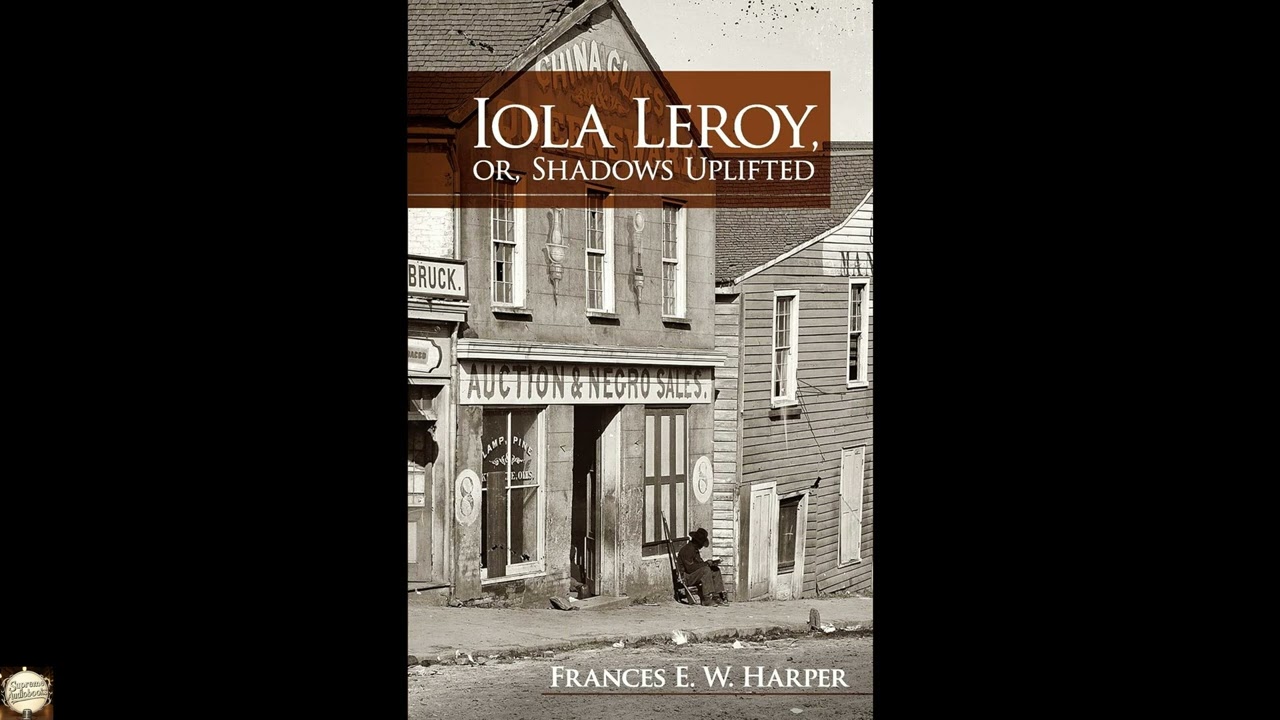
Iola Leroy, or, Shadows Uplifted
Frances Ellen Watkins Harper’s Iola Leroy, or, Shadows Uplifted stands as a pivotal achievement in American letters, a resonant voice from the late nineteenth century that continues to speak with clarity and power to our own time. Published in 1892, this novel provides an essential lens through which to view the tumultuous era following the Civil War and the enduring struggles for racial justice, identity, and the very definition of freedom. It presents a nuanced portrayal of a young woman’s fight for self-determination against a backdrop of deep societal prejudice, offering not just a historical record but a stirring testament to human resilience that challenges listeners to consider the complexities of race and belonging even today. It is a story of discovery, survival, and the persistent courage required to forge a meaningful life amidst overwhelming odds. The narrative opens in the Antebellum South, introducing us to Iola Leroy, a young woman of remarkable intelligence and grace, who has been raised in comfortable circumstances, enjoying all the privileges accorded to white society. Unaware of her true parentage, Iola possesses an exceptional education and a bright future, until a devastating revelation shatters her world. Upon her father’s death, the family secret – that her mother carried African heritage – is exposed, stripping Iola of her status and plunging her into the brutal reality of chattel slavery. This cruel turn of fate forces her to confront the profound chasm between her perceived identity and the harsh social constructs of race. Iola’s ordeal as an enslaved person tests her spirit, but never breaks it. Her experiences shed a stark light on the daily humiliations and violence inflicted upon those held in bondage, but also showcase her inner strength and unwavering dignity. With the outbreak of the Civil War, Iola’s hope for liberation ignites, and she eventually finds her way to freedom, driven by an urgent desire to reunite her scattered family members, many of whom also carry the "shadow" of racial identity that dictates their fate. Her quest takes her through the chaotic landscape of a nation in transition, from the battlefields to the bustling cities, illustrating the profound personal cost of a nation divided and then tentatively rebuilding. Throughout this arduous search, Iola dedicates herself to the cause of education and social uplift, believing firmly in the potential for progress and the necessity of empowering newly freed people to claim their rights and futures. The story follows her efforts to establish a life of purpose and to find love, all while grappling with the persistent prejudice and institutional barriers that defined the Reconstruction era and beyond. The author, Frances Ellen Watkins Harper, was an extraordinary figure whose life spanned nearly a century, from 1825 to 1911, and mirrored the dramatic changes she witnessed in American society. Born free in Baltimore, Maryland, to free Black parents, she was orphaned at a young age and raised by her aunt and uncle. Her uncle, William Watkins, was a prominent educator who ran an academy for free Black children, providing Harper with an early, rigorous education that would shape her intellectual and activist pursuits. She began her public career as an abolitionist lecturer, traveling extensively across the northern United States and Canada, becoming a powerful orator against slavery. Harper’s literary output was as prolific as her activism. Before Iola Leroy, she published several collections of poetry, including Forest Leaves (1845) and Poems on Miscellaneous Subjects (1854), which included her widely acclaimed anti-slavery poem "The Slave Mother." She also wrote the serialized novel Minnie's Sacrifice (1869) and Moses: A Story of the Nile (1869), a narrative poem retelling the biblical story with an anti-slavery subtext. Beyond her contributions to literature, Harper was a staunch advocate for women’s suffrage and temperance, working alongside figures like Susan B. Anthony and Elizabeth Cady Stanton, while also challenging them on issues of racial equality. Her place in the American literary canon is secured as a pioneering African American woman writer who skillfully wove social commentary and reformist ideals into compelling narratives, bridging the pre-Civil War abolitionist movement with the post-Reconstruction struggle for civil rights. At its core, Iola Leroy confronts the complex issue of racial identity, particularly the concept of "passing." Iola’s initial experience of being raised as white, only to be violently reclassified as Black, vividly illustrates the arbitrary yet devastating power of racial categories in American society. The novel further develops this theme through characters like Iola’s relatives, who sometimes choose to live as white to escape the burdens of prejudice, forcing the listener to consider the moral and psychological costs of such decisions, even when driven by desperation. Beyond individual identity, the book also directly addresses the enduring legacy of slavery and the profound challenges of Reconstruction. It depicts the desperate search of newly freed individuals for their families, the struggle to acquire land and education, and the systemic oppression that continued to plague African Americans even after emancipation. Scenes of former enslaved people striving to build schools and communities, only to face violence and legal setbacks, powerfully underscore the fragility of their hard-won freedom. Additionally, the novel champions themes of educated womanhood and social uplift. Iola herself is a model of intellect and moral fortitude, using her education not for personal gain but to serve her community. Her commitment to teaching and her leadership among Black women illustrate Harper’s belief in the transformative power of education and the critical role of women in shaping the future of the race. Through Iola and other female characters, the book emphasizes self-reliance, intellectual pursuit, and unwavering moral conviction as pathways to individual and collective progress, even in the face of widespread discrimination. Iola Leroy emerged from a specific, critical juncture in American history: the post-Reconstruction era of the late nineteenth century. Published in 1892, it directly responded to a period marked by the systematic dismantling of civil rights gains for African Americans. The promise of Reconstruction had faded, replaced by the rise of Jim Crow laws, increasing racial segregation, and a surge in white supremacist violence. Harper wrote her novel as an urgent counter-narrative to the prevailing racist ideologies and caricatures of Black people that dominated popular culture. She sought to present authentic, dignified, and complex African American characters who defied stereotypes, reminding a nation that seemed intent on forgetting the humanity and intellectual capabilities of its Black citizens. The book thus stands as both a historical account and a passionate plea for justice and recognition during a time when racial tensions were escalating and legal discrimination was becoming entrenched. Listening to Iola Leroy as an audiobook offers a unique and deeply immersive way to engage with this significant narrative. The spoken word brings a palpable immediacy to Harper’s powerful prose, allowing the listener to truly inhabit the historical atmosphere she meticulously renders. The narrator’s voice can convey the emotional weight of Iola’s harrowing experiences, the subtle nuances in dialogue between characters of different backgrounds, and the unwavering conviction behind Harper’s reformist vision. With a running length of several hours, this substantial novel unfolds at a deliberate pace, giving ample room for the narrative’s historical detail and moral complexity to sink in. Paying attention to the narrator’s pacing during moments of high drama and quiet reflection, or to how different characters are voiced, can deepen one's appreciation for Harper's skillful storytelling and the enduring relevance of her message. The oral delivery helps bridge the historical distance, making the struggles and triumphs of these characters feel profoundly present.
Enjoyed Iola Leroy, or, Shadows Uplifted? A few ways to support us
Audible & Amazon links are affiliate; we may earn a small commission at no extra cost.
About this production
Human narration by a volunteer reader from LibriVox.org, the public-domain audiobook project. LibriVox volunteers record literary works whose copyright has expired in the United States, releasing the resulting recordings into the public domain.
Iola Leroy, or, Shadows Uplifted by Frances E. The underlying text is in the U.S. public domain. We do not republish any modern copyrighted edition, translation, or commentary.
The 4K cinematic visuals accompanying this audiobook are generated by an AI image model from prompts derived from the source text. No copyrighted photos, paintings, or stock footage are used. AI generation is disclosed on every video on our YouTube channel as required by YouTube's altered/synthetic content policy.
English subtitles are transcribed from the LibriVox recording with OpenAI Whisper. Translations into the 11 other supported languages are produced by Meta's NLLB-200 neural translation model. No human translator's copyrighted translation is used.
Questions about sourcing or rights? See our DMCA & Sourcing policy or contact us.
Enjoyed this audiobook?
If you'd like to own a copy of Iola Leroy, or, Shadows Uplifted or hear a professionally produced edition, the links below help support free audiobook production at no extra cost to you.
As an Amazon Associate we earn from qualifying purchases. Audible / print links are affiliate.