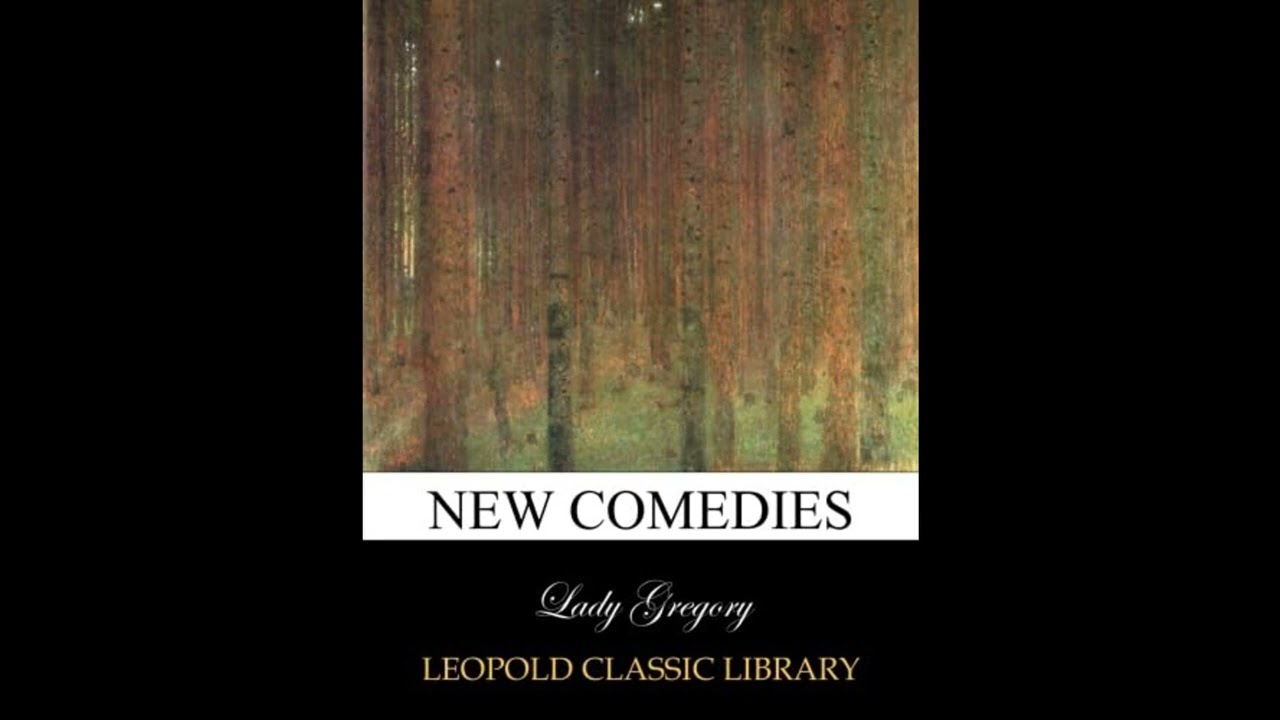
New Comedies
Lady Gregory’s New Comedies offers listeners a truly delightful entry into the unique theatrical landscape of early twentieth-century Ireland. Far from dusty historical curios, these short plays burst with an irrepressible wit and a profound understanding of human foible that rings true a century later. Here is a collection designed not just to entertain, but to gently prod at the absurdities of life, exposing the humor in our everyday deceptions, our small ambitions, and the delightful misunderstandings that shape our communities. For anyone seeking a dose of genuine laughter coupled with shrewd insight into the Irish character, or indeed, the universal human condition, these plays are as fresh and invigorating now as when they first graced the stages of the Abbey Theatre. These comedies typically unfold in the intimate, often isolated, settings of rural Ireland – a cottage hearth, a village fair, a local magistrate’s office. The characters are drawn from the heart of the community: farmers, shopkeepers, busybody women, ambitious young men, and wise, if sometimes mischievous, old-timers. They are individuals defined by their immediate surroundings, their reputations, and their often-inflated sense of self-importance. A common scenario might involve a grand scheme devised by one character, perhaps to impress a visiting official, to secure a small fortune, or to escape an unwanted marriage. This initial aspiration inevitably collides with the realities of village life, where gossip travels faster than truth and everyone has an opinion, often loudly voiced. The central conflict in many of these pieces often stems from a simple misunderstanding, a deliberate fib, or the comic ripple effect of a seemingly minor event. A rumor starts, a secret is revealed (or intentionally obscured), and the characters find themselves entangled in a web of their own making, leading to wonderfully awkward situations and frantic attempts to maintain appearances. Lady Gregory masterfully orchestrates these situations, allowing her characters to dig themselves deeper and deeper into their predicaments, often with an endearing lack of self-awareness. The arc of these stories usually involves the unraveling of the initial deception, often not through harsh judgment, but through the sheer weight of communal scrutiny and the undeniable force of common sense, albeit delivered with a healthy dose of sarcasm. The plays ultimately celebrate the resilience and good humor of ordinary people navigating the sometimes-bewildering currents of their lives, without ever fully revealing the final twist or resolution of any particular plot. The author behind these insightful plays, Augusta, Lady Gregory, stands as a towering figure in Irish literature and cultural history. Born Augusta Persse in 1852 in County Galway, Ireland, she was a woman of formidable intellect and boundless energy. Her early life was shaped by her aristocratic Anglo-Irish background, but her later years were devoted to fostering an authentically Irish cultural voice. After marrying Sir William Gregory and becoming widowed, she turned her country estate, Coole Park, into a hub for the burgeoning Irish Literary Revival, hosting and collaborating with literary luminaries like W.B. Yeats and J.M. Synge. Lady Gregory's contributions extended far beyond her own writing. She was a co-founder and director of the Abbey Theatre in Dublin, the first state-subsidized theatre in the English-speaking world, playing a crucial role in its management and its artistic direction from its inception in 1904 until her death in 1932. Her dedication saw her not only writing many of the plays performed there, including comedies, historical dramas, and adaptations of Irish myths, but also tirelessly fundraising and often acting as a bridge between the theatre's artistic vision and its practical needs. She also diligently collected and published Irish folklore, recognizing its importance in preserving a distinct national identity and providing source material for a new generation of writers. Her body of work, though sometimes overshadowed by her more famous collaborators, firmly established her as an indispensable architect of modern Irish drama. One of the prominent themes running through New Comedies is the nuanced construction of Irish identity, particularly how individuals present themselves versus their authentic selves. Characters frequently resort to elaborate storytelling, exaggeration, or even outright fabrication to gain status or sympathy within their tight-knit communities. For instance, in one play, a character might claim an illustrious, albeit invented, family history to impress a potential suitor, creating a humorous disparity between their humble reality and their grand aspirations. This often leads to situations where the community, knowing the truth, plays along with the pretense, creating a shared, unspoken joke at the character's expense, which simultaneously highlights their folly and the community's good-natured tolerance. Another central theme is the potent influence of language itself – gossip, rumor, and the art of persuasive speech – in shaping perceptions and driving events. Lady Gregory's characters are masters of rhetoric, whether for good or ill. A seemingly innocent comment can spiral into a village-wide misunderstanding, while a carefully crafted tale can sway public opinion or even alter a character’s fortune. Consider a scene where a minor official’s pronouncements are misinterpreted by eager villagers, leading to frantic preparations for an event that exists only in their collective imagination. These instances not only provide ample comedic fodder but also illustrate Lady Gregory's keen ear for the unique cadences and expressive power of rural Irish speech. These comedies emerged during a pivotal moment in Irish history, known as the Irish Literary Revival. In the late nineteenth and early twentieth centuries, Ireland was a land experiencing profound cultural and political awakening. There was a burgeoning sense of nationalism and a desire to forge a distinct Irish identity, separate from British influence. This period saw a concerted effort to promote the Irish language, collect ancient myths and folklore, and establish an authentic Irish literature and drama that reflected the lives and concerns of ordinary Irish people. Lady Gregory, alongside Yeats and Synge, was at the forefront of this movement, rejecting the prevailing Anglo-Irish theatrical tradition which often caricatured Irish characters. The establishment of the Abbey Theatre was a direct manifestation of this cultural ambition. It provided a platform for Irish playwrights to tell Irish stories, often in the vernacular, and to present characters with dignity and complexity, even when they were the subject of gentle mockery. Lady Gregory's comedies, with their focus on the everyday lives, speech patterns, and social dynamics of rural communities, perfectly fit this vision. They offered audiences a mirror to their own lives, filled with recognizable quirks and humor, contributing to a sense of national pride and artistic self-discovery at a time when political Home Rule for Ireland was also a fervent aspiration. Her plays became an essential part of shaping a dramatic tradition that resonated deeply with the Irish people. Listening to New Comedies as an audiobook offers a singular experience, bringing these theatrical pieces to life in their intended form – as spoken word. The several hours of running time provide ample opportunity to become fully immersed in the world Lady Gregory creates, allowing the listener to appreciate the rhythmic flow of her dialogue and the precision of her comedic timing. When a play is heard, rather than read, the nuanced inflections of regional accents and the unique vocal characteristics assigned to each character illuminate their personalities and their often-hilarious dilemmas. Listen carefully for the subtle pauses, the rising tension in a conversation, and the sudden bursts of laughter that punctuation Lady Gregory’s brilliant and enduring work.
Enjoyed New Comedies? A few ways to support us
Audible & Amazon links are affiliate; we may earn a small commission at no extra cost.
About this production
Human narration by a volunteer reader from LibriVox.org, the public-domain audiobook project. LibriVox volunteers record literary works whose copyright has expired in the United States, releasing the resulting recordings into the public domain.
New Comedies by Lady Gregory. The underlying text is in the U.S. public domain. We do not republish any modern copyrighted edition, translation, or commentary.
The 4K cinematic visuals accompanying this audiobook are generated by an AI image model from prompts derived from the source text. No copyrighted photos, paintings, or stock footage are used. AI generation is disclosed on every video on our YouTube channel as required by YouTube's altered/synthetic content policy.
English subtitles are transcribed from the LibriVox recording with OpenAI Whisper. Translations into the 11 other supported languages are produced by Meta's NLLB-200 neural translation model. No human translator's copyrighted translation is used.
Questions about sourcing or rights? See our DMCA & Sourcing policy or contact us.
Enjoyed this audiobook?
If you'd like to own a copy of New Comedies or hear a professionally produced edition, the links below help support free audiobook production at no extra cost to you.
As an Amazon Associate we earn from qualifying purchases. Audible / print links are affiliate.