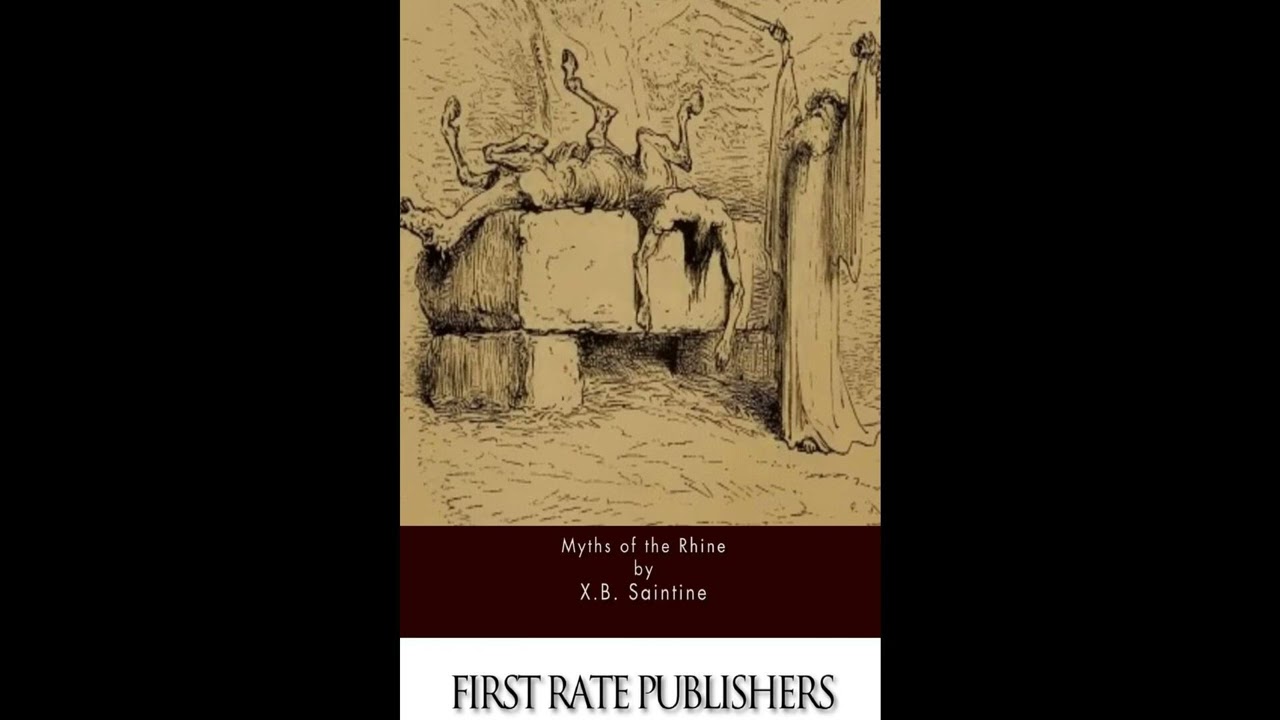
Myths of the Rhine
Imagine a river, not just a waterway, but a living artery of legends, its currents flowing with tales of knights, sirens, spirits, and gnomes. This is the Rhine, Europe's most storied river, and X.B. Saintine's Myths of the Rhine invites you into its enduring magic. More than folklore, this book is a key to understanding a profound cultural heritage, a portal to a world where ancient beliefs shaped the landscape and human spirit. Turning to these foundational narratives offers a grounding perspective, connecting us to the wellspring of imagination that continues to inspire fantasy and art. It’s a chance to hear echoes of a past still resonating. The book takes us on an enchanted tour, a literary cruise along the sinuous path of the great Rhine, from its dramatic source through the heart of Germany. Each river bend, every castle on a rocky promontory, and every vineyard-covered slope reveals new wonder, a fresh narrative from the region's oral traditions. We encounter otherworldly beings and legendary figures: the Lorelei, whose song lures sailors; mischievous gnomes inhabiting mines and forests; and fearsome dragons, whose ancient lairs still echo, as in the legend of Drachenfels. Saintine meticulously gathers these tales, presenting them as an organic part of their landscape. We read stories of heroic knights battling beasts, noblewomen transformed by tragic love, and humble villagers stumbling upon hidden treasures or offending elemental spirits. These legends often explain natural phenomena, like a rock formation's origin or a river bend's currents, imbuing the mundane with cosmic significance. Each story, while distinct, builds an atmosphere of profound antiquity and persistent enchantment that characterizes the Rhine valley. It’s a series of glimpses into a world where the veil between ordinary and supernatural is thin, where every shadow might conceal a fairy and every echo a forgotten voice. The author, X.B. Saintine (born Joseph-Xavier Boniface) in Paris on July 10, 1798, was a prolific French novelist and dramatist prominent in the 19th-century literary scene. His career began during the Romantic period, an era appreciating folklore, national identity, and imagination—all evident in Myths of the Rhine. He was a keen observer of human nature, often imbuing his narratives with moralistic or sentimental undertones. Saintine is perhaps best known for his novel Picciola (1836). This poignant story of a prisoner's spiritual transformation through cultivating a tiny flower earned him the prestigious Montyon Prize and wide acclaim. While Picciola showcased his skill in psychological drama, Myths of the Rhine, published later in 1862, highlights his broader interest in cultural heritage and European legend. He wrote numerous other works, including plays and novels, often characterized by a picturesque sensibility and a fascination with humanity's interplay with nature. Saintine's contribution to preserving and popularizing European folklore remains significant, positioning him as a distinct voice within the broader Romantic tradition. A primary theme woven through Myths of the Rhine is the enchantment of nature and the spirit of place. Saintine illustrates how the physical landscape—towering cliffs, deep forests, the rushing river—becomes imbued with personality and memory. The Lorelei legend, for example, is inextricably linked to a specific, dangerously narrow section of the Rhine, where echoes are particularly resonant. The stories are not merely set against a backdrop but arise from it, suggesting that the very stones and waters hold ancient secrets, ready to be revealed. The geological grandeur dictates the myths, making the natural world an active participant in human destiny. Another significant thread is the power of storytelling itself and the enduring legacy of oral tradition. Saintine's work serves as a literary act of preservation, capturing tales passed down vocally for generations. These myths function as cultural memory, embodying shared beliefs, moral lessons, and explanations for the inexplicable. A story of a foolish knight, tricked by a forest spirit, might serve as a cautionary tale against arrogance, while a legend about hidden treasure could speak to the hope for fortune. The collection underscores how these narratives shape identity and connect people to their ancestral past. It also touches upon humanity's enduring, often complex, relationship with the supernatural. These legends frequently depict a world where fairies, gnomes, spirits, and dragons are not distant metaphors but tangible forces intervening directly in human affairs, demanding respect, inspiring fear, or occasionally offering assistance. Myths of the Rhine emerged in 1862, a fascinating moment in European history, particularly in the German-speaking lands bordering Saintine's native France. The mid-19th century saw burgeoning nationalism across the continent, with widespread intellectual and cultural movements celebrating distinct national identities through folklore and historical narratives. The Brothers Grimm's earlier work collecting German fairy tales set a precedent, highlighting these vernacular stories as cornerstones of cultural heritage. Saintine's collection, though by a Frenchman, contributed to this broader European fascination. Furthermore, the Industrial Revolution was rapidly reshaping landscapes and traditional ways of life, creating urgency for Romantics to preserve old stories before modernization. The Rhine, historically a symbolic heartland of German identity, was also becoming a pathway for steamships and increasing economic activity. Saintine's book can therefore be seen as an act of nostalgic preservation, capturing the spiritual essence of the river and its environs before they were irrevocably altered. It represents a lingering Romantic sensibility—a reverence for nature, the past, and the mysterious—even as the literary world turned toward more realistic portrayals. For a French author to engage so deeply with German folklore also speaks to complex cultural exchange, even as tensions between the two nations simmered. To truly appreciate the oral heritage of Myths of the Rhine, experiencing it as an audiobook is ideal. A skilled narrator brings these ancient stories to life, transforming the written word back into the spoken tradition. You can hear nuanced shifts in tone as a tale moves from playful mischief to grave warning, or quiet reverence when describing a sacred spot. The rhythmic flow of the narration evokes the very currents of the Rhine, guiding you through landscapes both familiar and fantastical. With several hours of content, this audiobook becomes a perfect companion for a long drive, a walk, or quiet moments at home where you wish to transport your imagination. Let the narrator's voice be your guide, allowing descriptions of misty castles, echoing valleys, and whispers of unseen spirits to unfold directly within your mind.
Enjoyed Myths of the Rhine? A few ways to support us
Audible & Amazon links are affiliate; we may earn a small commission at no extra cost.
About this production
Human narration by a volunteer reader from LibriVox.org, the public-domain audiobook project. LibriVox volunteers record literary works whose copyright has expired in the United States, releasing the resulting recordings into the public domain.
Myths of the Rhine by X.B. Saintine. The underlying text is in the U.S. public domain. We do not republish any modern copyrighted edition, translation, or commentary.
The 4K cinematic visuals accompanying this audiobook are generated by an AI image model from prompts derived from the source text. No copyrighted photos, paintings, or stock footage are used. AI generation is disclosed on every video on our YouTube channel as required by YouTube's altered/synthetic content policy.
English subtitles are transcribed from the LibriVox recording with OpenAI Whisper. Translations into the 11 other supported languages are produced by Meta's NLLB-200 neural translation model. No human translator's copyrighted translation is used.
Questions about sourcing or rights? See our DMCA & Sourcing policy or contact us.
Enjoyed this audiobook?
If you'd like to own a copy of Myths of the Rhine or hear a professionally produced edition, the links below help support free audiobook production at no extra cost to you.
As an Amazon Associate we earn from qualifying purchases. Audible / print links are affiliate.