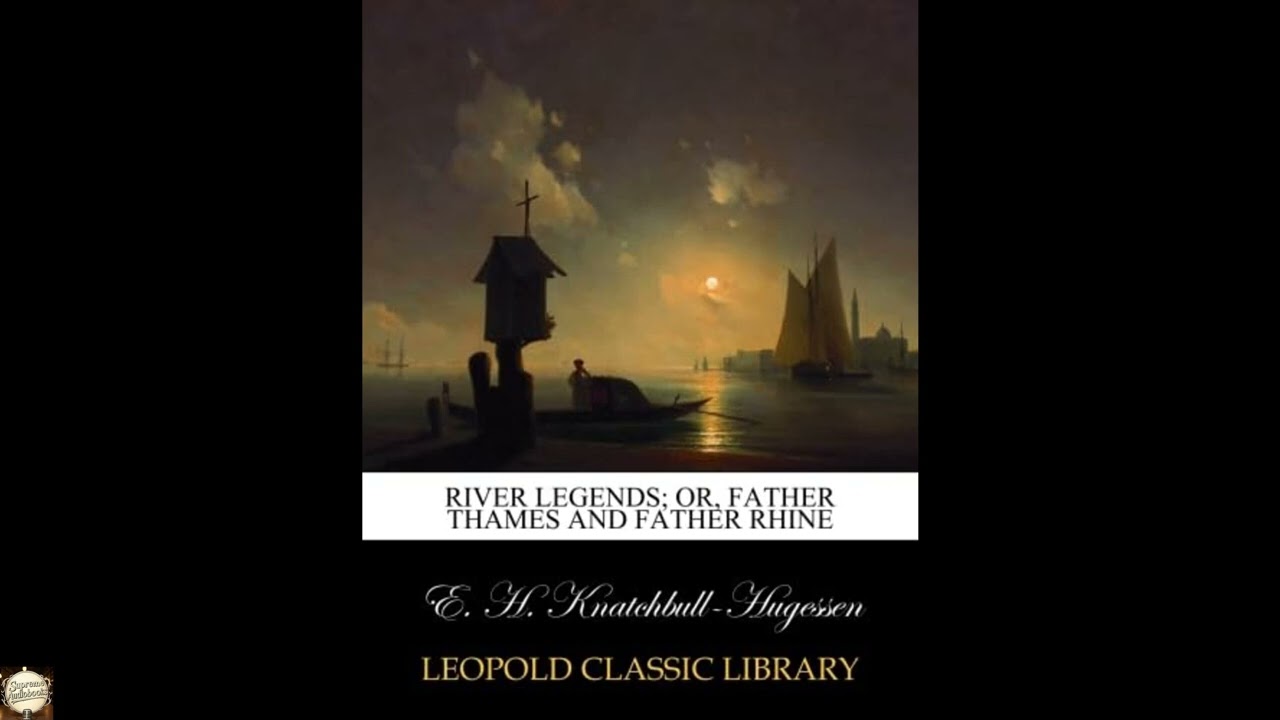
River legends; or, Father Thames and Father Rhine
Imagine two ancient rivers, the Thames and the Rhine, not merely as waterways but as living entities, whispering tales across centuries. River legends; or, Father Thames and Father Rhine invites listeners into a world where these iconic European rivers are imbued with spirits, magic, and the echoes of human experience. This collection offers more than just stories; it presents a dual portrait of cultural folklore, showing how the natural world inspires wonder and moral reflection across different lands. It's an invitation to pause, to listen, and to reconnect with the imaginative roots of storytelling, offering a respite from the modern world through the enduring power of myth and legend. The narrative current of this book flows through a series of distinct legends, each painting a picture of either the placid Thames or the dramatic Rhine. On the English side, listeners might encounter the venerable Father Thames himself, a guardian spirit overseeing the lives of those who dwell along his banks, from fishermen and ferrymen to noble lords and humble villagers. These tales often reveal the river's benevolence or, at times, its stern judgment, as ordinary individuals confront unusual circumstances. One might hear of a humble miller whose kindness to a strange creature living beneath the water brings an unexpected reward, or a boisterous youth whose disrespect for the river's power leads to a chilling encounter with its depths. The setting here is often pastoral and intimate, steeped in the green landscapes and quiet mists of rural England. Crossing the channel, the legends of Father Rhine take on a more rugged and dramatic character, reflecting the river's turbulent history and its towering castle-lined banks. Here, the listener is transported to a realm of knights, hermits, and often more formidable magical beings, where ancient curses linger and heroic deeds are remembered in stone. Tales might involve a valiant knight defending his keep against a fearsome river dragon, or a lonely maiden encountering a mysterious water spirit whose beauty hides a perilous secret. These narratives often carry a sense of grander stakes, with the fate of kingdoms or the honor of entire lineages hanging in the balance, all watched over by the majestic, sometimes unforgiving, spirit of the Rhine. Each story is a self-contained miniature, contributing to the broader sense of the rivers' distinct personalities and the rich cultural traditions that have grown up around them. The author of this intriguing collection was Edward Hugessen Knatchbull-Hugessen, later known as the 1st Baron Brabourne, a figure whose public life was as notable as his literary output. Born in 1835 into an influential Kentish family, Knatchbull-Hugessen pursued a career in politics, serving as a Liberal Member of Parliament for Sandwich from 1857 to 1880. During his time in government, he held various significant posts, including Under-Secretary of State for the Home Department and Under-Secretary of State for the Colonies, roles that positioned him at the heart of Victorian public service. His elevation to the peerage as Baron Brabourne in 1880 recognized his contributions to British political life. Yet, alongside his parliamentary duties and ministerial responsibilities, Knatchbull-Hugessen fostered a vibrant literary imagination, particularly dedicated to the creation of children's fairy tales and fantasy stories. He published several collections that became popular in his era, including Stories for My Children (1869), Moonshine (1871), and Whispers from Fairyland (1874), the same year River legends appeared. His contributions placed him firmly within the Victorian tradition of authors who sought to both entertain and gently instruct young readers through imaginative narratives. His stories often blend the whimsical with the moral, reflecting the societal values of his time while still allowing for genuine flights of fancy, securing his place as a noteworthy, if sometimes overlooked, voice in nineteenth-century juvenile literature. The stories gathered within River legends enact several central ideas that resonate across time. One prominent idea is the profound influence of nature on human life and imagination. The rivers themselves are not mere backdrops; they are often sentient forces, shaping events and revealing truths. In a tale where Father Thames intervenes to protect a humble village, the text shows how the river's mood can dictate prosperity or hardship, demonstrating the deep, ancient connection between human communities and their natural environment. Another idea is the ever-present boundary between the ordinary and the magical. Many narratives feature everyday folk—fishermen, farmers, travelers—stumbling into encounters with sprites, undines, or spectral figures. A young woman gathering reeds might find herself face-to-face with a benevolent water spirit, a scene that highlights how the unseen world can suddenly manifest within the mundane, transforming the familiar landscape into a place of wonder and possibility. Beyond the magical, the collection frequently explores themes of morality and consequence. Good deeds, kindness, and respect for nature or tradition are often rewarded, while greed, cruelty, or hubris typically invite misfortune, sometimes delivered by supernatural means. For instance, a tale about a proud nobleman who attempts to drain a sacred pool on the Rhine might illustrate a swift and fitting magical retribution, underscoring the era's belief in natural justice. Finally, by presenting legends from both the Thames and the Rhine, the book subtly addresses the idea of shared human experience and cultural heritage. Despite geographical and linguistic differences, the common fears, hopes, and moral quandaries expressed through these riverine myths reveal a universal human tendency to interpret the world through storytelling, creating a dialogue between two distinct yet interconnected cultures. The late nineteenth century, when River legends was published, marked a period of intense fascination with folklore, myth, and the supernatural in Britain and across Europe. The Victorian era, while embracing industrial progress and scientific discovery, also looked back with nostalgia and curiosity to a pre-industrial past, seeking solace and wonder in ancient tales. This was an age when collections of traditional fairy tales, like those by the Brothers Grimm and Hans Christian Andersen, were gaining widespread popularity, inspiring British authors like Knatchbull-Hugessen to create their own literary fairy tales. There was also a keen interest in comparing the cultural traditions of different nations, often driven by the expansion of empire and increasing travel. The choice to pair the Thames and the Rhine in a single volume reflects this broader cultural dialogue, inviting readers to consider the distinct characters of national mythologies while also recognizing their common threads in a world that was becoming increasingly interconnected. Listening to River legends; or, Father Thames and Father Rhine as an audiobook offers a singular opportunity to experience these stories in their most natural form: spoken aloud. The oral tradition is the very bedrock of folklore, and a skilled narrator can breathe new life into each legend, transforming mere words on a page into a vivid, immediate experience. Over its several hours of listening, the changing tones and pacing of the narration can evoke the gentle calm of the Thames or the dramatic intensity of the Rhine, guiding the listener through varied landscapes and emotions. A nuanced vocal performance will distinguish between the voices of humans and spirits, old men and young women, adding depth and character to each figure. The atmospheric quality of the narration allows the listener to truly inhabit the misty riverbanks, the grand castles, and the enchanted groves, making the magic feel tangible and the moral lessons resonate with greater impact.
Enjoyed River legends; or, Father Thames and Father Rhine? A few ways to support us
Audible & Amazon links are affiliate; we may earn a small commission at no extra cost.
About this production
Human narration by a volunteer reader from LibriVox.org, the public-domain audiobook project. LibriVox volunteers record literary works whose copyright has expired in the United States, releasing the resulting recordings into the public domain.
River legends; or, Father Thames and Father Rhine by E. H. Knatchbull-Hugessen. The underlying text is in the U.S. public domain. We do not republish any modern copyrighted edition, translation, or commentary.
The 4K cinematic visuals accompanying this audiobook are generated by an AI image model from prompts derived from the source text. No copyrighted photos, paintings, or stock footage are used. AI generation is disclosed on every video on our YouTube channel as required by YouTube's altered/synthetic content policy.
English subtitles are transcribed from the LibriVox recording with OpenAI Whisper. Translations into the 11 other supported languages are produced by Meta's NLLB-200 neural translation model. No human translator's copyrighted translation is used.
Questions about sourcing or rights? See our DMCA & Sourcing policy or contact us.
Enjoyed this audiobook?
If you'd like to own a copy of River legends; or, Father Thames and Father Rhine or hear a professionally produced edition, the links below help support free audiobook production at no extra cost to you.
As an Amazon Associate we earn from qualifying purchases. Audible / print links are affiliate.