Memoirs of Fanny Hill: A new and genuine edition from the original text London, 1749- Full Audiobook
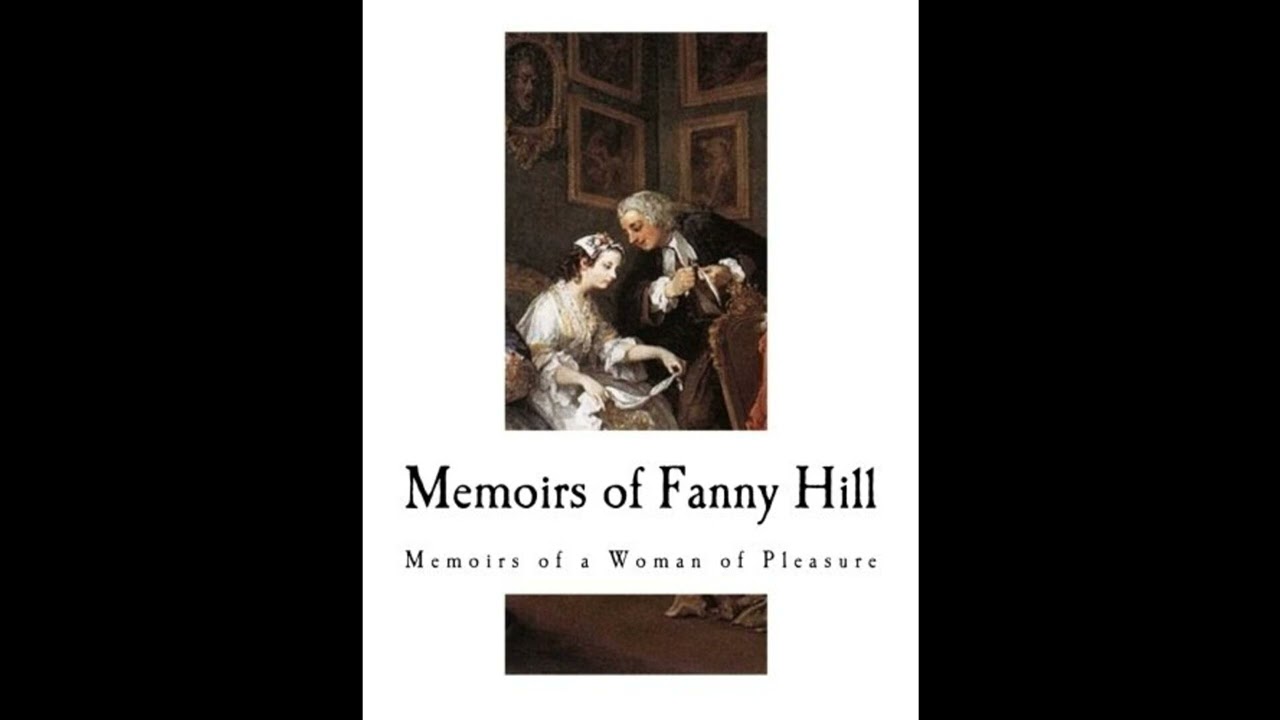
To consider John Cleland’s Memoirs of Fanny Hill is to confront one of the most celebrated, reviled, and enduring works of English literature. Published clandestinely in 1749, this novel burst onto the scene with a reputation for scandal that has followed it for centuries, often overshadowing its remarkable literary qualities. Far from a mere curiosity, it stands as a pivotal text that redefined the boundaries of prose, challenged social conventions, and offered a surprisingly nuanced look at female experience in a world often hostile to it. Today, this groundbreaking work allows us to peer into the moral anxieties and clandestine desires of Georgian London, revealing not only the evolution of the English novel but also the timeless tensions between societal expectation and individual yearning. It remains a crucial, if controversial, piece of our literary heritage, demanding consideration for its artistry and its defiant place in history. The story unfolds through the letters of Fanny Hill, a young woman who, at the tender age of fifteen, finds herself orphaned and forced to leave her rural village for the bustling, bewildering streets of London. Her initial innocence and naive hopes are quickly challenged by the harsh realities of urban life. Soon after her arrival, she falls prey to a procuress who lures her into a notorious bagnio, a house that serves as a thinly veiled brothel. It is here that Fanny’s true education begins, a rapid and often bewildering immersion into the demimonde of pleasure and commerce. Fanny's narrative details her progression through various relationships and establishments, charting her path from a reluctant virgin to an experienced woman of the world. She encounters a diverse cast of characters: the calculating madams, the various clients from different social strata, and her fellow "girls" who navigate similar circumstances with varying degrees of cynicism and resilience. Her experiences are a series of trials and transformations, each new situation presenting a fresh set of challenges and lessons in survival. Though her circumstances are often dire, Fanny develops a pragmatic outlook and a keen observational eye, narrating her experiences with a remarkable blend of frankness, wit, and a surprisingly detached perspective. Her story is one of adaptation, of learning to operate within the constraints of her environment, always maintaining a core sense of self even as her public identity shifts. While the authorship of Memoirs of Fanny Hill is officially listed as "Unknown," literary consensus overwhelmingly attributes the work to John Cleland. Born in 1707, Cleland was an Irish novelist, dramatist, and journalist from a family of modest means. His early career saw him involved in various literary and theatrical ventures, but he often struggled financially, perpetually in debt. Cleland was known for his wit and his willingness to push boundaries, publishing several works of varying success, none of which achieved the notoriety or enduring impact of Fanny Hill. After its initial clandestine publication in 1749, the novel quickly gained infamy, leading to Cleland's arrest and subsequent release after he promised not to publish future editions. Despite his pledge, the book continued to circulate widely in pirated versions. Cleland led a somewhat tumultuous life, marked by his literary ambitions and persistent financial difficulties, until his death in 1789. His other works, such as Memoirs of a Coxcomb, largely faded into obscurity, leaving Fanny Hill as his singular, unforgettable contribution to English letters, a work that both defined and overshadowed his career. One of the central themes that emerges from Fanny’s account is the precariousness of female economic independence in Georgian society. Lacking familial support or access to traditional employment, Fanny’s options are starkly limited. Her beauty becomes her only asset, and the narrative unflinchingly portrays the transactional nature of her existence, where her body becomes a commodity in a market driven by male desire. For example, her initial entry into the bagnio immediately establishes this dynamic, as she is taught the "arts" necessary to attract and please clients, directly linking her survival to her ability to perform certain roles. Another significant theme is the clash between outward social decorum and private vice. The novel frequently exposes the hypocrisy of respectable society, where gentlemen who outwardly uphold moral standards secretly frequent establishments like those Fanny inhabits. These scenes demonstrate how a veneer of piety often cloaked rampant indulgence, and Fanny’s often ironic observations underscore this societal duality. Furthermore, Memoirs of Fanny Hill also examines the development of identity through experience. Fanny begins as an innocent, easily manipulated figure, but through her various encounters, she gradually sheds her naivety. She becomes increasingly adept at reading people, understanding motivations, and navigating complex social interactions. Her growing self-awareness and her ability to adapt to radically different circumstances highlight a pragmatic form of resilience. Her descriptions of her personal feelings—the shame, the fleeting pleasures, the moments of genuine connection, and the occasional detachment—reveal a character who, despite her situation, retains a strong interior life and a keen sense of observation, making her a surprisingly articulate chronicler of her own story. The novel appeared at a fascinating juncture in English history, the mid-18th century, a period often referred to as the Georgian era. London was rapidly expanding, a bustling metropolis teeming with new opportunities and new dangers. This was the age of Enlightenment thought, but also a time of rigid social hierarchies and strict moral codes, particularly concerning female conduct. The novel itself was still a relatively young literary form, and authors were experimenting with its possibilities, pushing against traditional boundaries of genre and subject matter. The burgeoning print culture meant that books, both legitimate and illicit, could reach a wider audience than ever before, creating a fertile ground for works like Fanny Hill to emerge. Its clandestine publication reflects the era's severe censorship laws and public anxieties about morality, especially concerning sexually explicit material. Yet, its enduring popularity also speaks to a societal undercurrent of curiosity and a willingness to confront uncomfortable truths, even if through veiled or scandalous means. Listening to Memoirs of Fanny Hill as an audiobook offers a unique and intimate way to experience this foundational, yet often misunderstood, work. The novel’s first-person, epistolary structure—Fanny's reflections presented as letters—lends itself perfectly to the spoken word, creating a direct connection between her voice and the listener. A skilled narrator can bring out the nuanced tones in Fanny’s prose: her initial timidity, her developing wit, her occasional irony, and the underlying pragmatism that defines her character. The several hours of narration allow ample time to settle into the rhythms of 18th-century English, to appreciate the period language, and to fully immerse oneself in the atmosphere of Georgian London. The pacing of the narration can highlight Fanny’s detailed descriptions of her surroundings and her internal monologues, making her journey of experience and self-discovery all the more palpable.
Enjoyed Memoirs of Fanny Hill: A new and genuine edition from the original text London, 1749- Full Audiobook? A few ways to support us
Audible & Amazon links are affiliate; we may earn a small commission at no extra cost.
About this production
Human narration by a volunteer reader from LibriVox.org, the public-domain audiobook project. LibriVox volunteers record literary works whose copyright has expired in the United States, releasing the resulting recordings into the public domain.
Memoirs of Fanny Hill: A new and genuine edition from the original text London, 1749- Full Audiobook by John Cleland. The underlying text is in the U.S. public domain. We do not republish any modern copyrighted edition, translation, or commentary.
The 4K cinematic visuals accompanying this audiobook are generated by an AI image model from prompts derived from the source text. No copyrighted photos, paintings, or stock footage are used. AI generation is disclosed on every video on our YouTube channel as required by YouTube's altered/synthetic content policy.
English subtitles are transcribed from the LibriVox recording with OpenAI Whisper. Translations into the 11 other supported languages are produced by Meta's NLLB-200 neural translation model. No human translator's copyrighted translation is used.
Questions about sourcing or rights? See our DMCA & Sourcing policy or contact us.
Enjoyed this audiobook?
If you'd like to own a copy of Memoirs of Fanny Hill: A new and genuine edition from the original text London, 1749- Full Audiobook or hear a professionally produced edition, the links below help support free audiobook production at no extra cost to you.
As an Amazon Associate we earn from qualifying purchases. Audible / print links are affiliate.