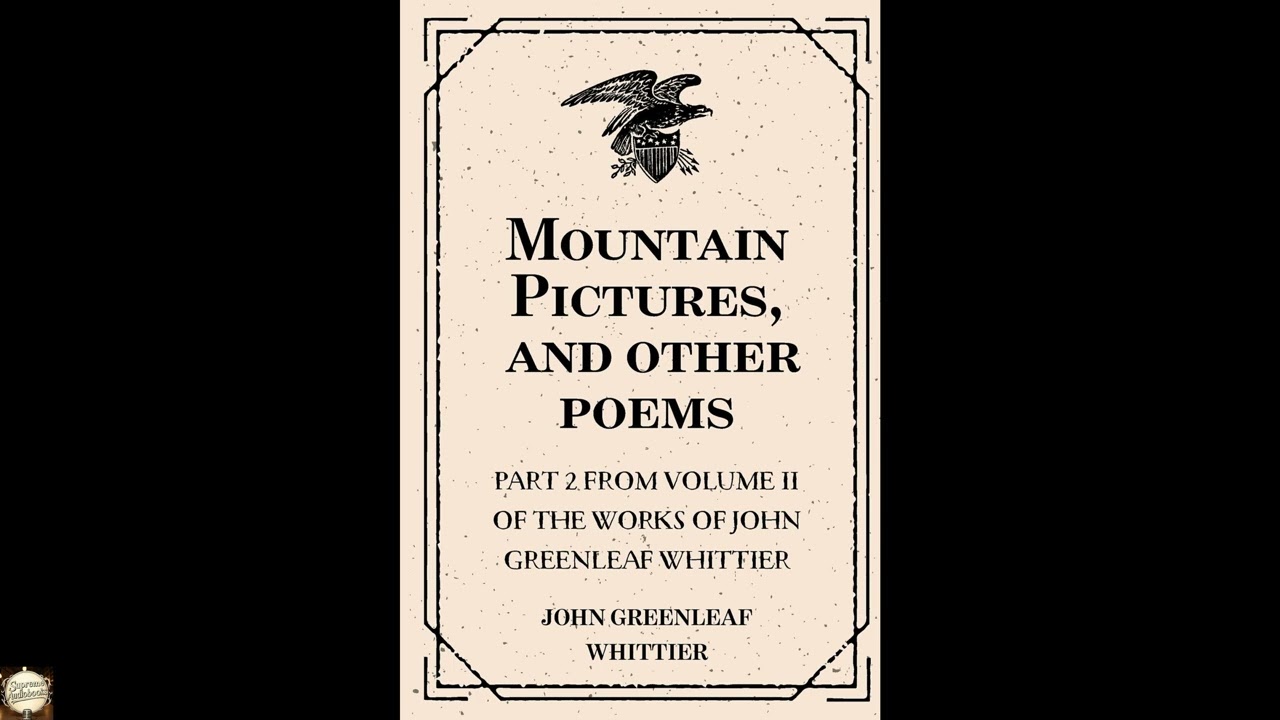
Mountain Pictures, and other poems : Part 2 From Volume II of The Works of John Gre
Imagine standing at the foot of an ancient peak, the wind whispering secrets through pine needles, the sun painting shifting patterns on a granite face. This is the profound invitation extended by Mountain Pictures, and other poems : Part 2 From Volume II of The Works of John Gre. While presented as a segment of a larger collection, this audiobook stands alone as a gateway into a world of natural majesty and deep human reflection. It offers a sustained engagement with poetry that finds solace and grandeur in the wilderness, inviting modern listeners to pause, breathe, and connect with the enduring power of the earth and the lyrical expression of the soul. In an age of constant digital noise, these verses provide an essential counterpoint, a call to quiet contemplation that remains as relevant today as when they were first conceived. The collection, beginning with the evocative "Mountain Pictures," opens a window onto landscapes both awe-inspiring and intimately observed. The setting is primarily the rugged, untamed world of mountains—not merely as backdrops, but as characters in themselves, sculpted by time and elemental forces. Listeners will find themselves transported to precipitous heights, deep valleys, and glacial streams, where the air is crisp and the views stretch to eternity. There is no single human protagonist here in the traditional sense; rather, the central consciousness is the poetic speaker, whose sensibilities absorb and interpret the natural world. The "conflict" is not external but internal: the human mind grappling with the sublime indifference of nature, striving to find meaning, beauty, and a sense of belonging within its vastness. As the "Mountain Pictures" unfold, the poems may trace the seasonal changes across a particular range—the stark beauty of winter snows giving way to the fleeting blossoms of spring, the vibrant greens of summer, and the fiery hues of autumn. The verses might pit the ephemeral nature of human life against the geological permanence of stone, or compare the quiet persistence of a mountain stream to the restless currents of human ambition. The "other poems" that follow likely broaden this scope, perhaps moving from purely descriptive natural scenes to more personal meditations, philosophical inquiries, or even narrative vignettes inspired by encounters with the wild. The arc of the collection thus becomes a thematic one: a movement from outward observation to inward contemplation, from the specific imagery of peaks and forests to the universal questions they provoke about existence, solitude, and connection. While the specific identity of "John Gre" remains a subject of historical literary inquiry, and the exact publication date of these collected works has faded into the archival mists, the very existence of "The Works of John Gre" points to a poet esteemed enough in his own era to merit such a comprehensive compilation. This suggests a figure likely active during a period when nature poetry held significant cultural sway, perhaps in the late eighteenth or early nineteenth century, or even stretching into the Victorian age. The practice of collecting a writer's entire output was often reserved for those who had made a substantial contribution to the literary landscape, whose verses resonated with a broad public or offered profound insights into the human condition. It's not uncommon for the precise biographical details of such poets to become obscured over time, especially if they preferred a quiet life of contemplation or if their work was primarily disseminated through literary journals and then later gathered by devoted editors and publishers. We can surmise that "John Gre" likely operated within a tradition of poets who found inspiration and spiritual sustenance in the natural world, perhaps aligning with the Romantic emphasis on emotion and individualism, or the Victorian sensibility for moral reflection through nature. This collection, therefore, represents a fragment of a larger literary legacy, a voice from a bygone era whose enduring power lies in its ability to articulate universal human experiences through the lens of specific, vivid imagery. The "Unknown" authorship for this particular part adds a layer of quiet mystery, allowing the words themselves to speak without the full weight of a biographical narrative, inviting the listener to connect directly with the pure poetic voice. Several core themes emerge powerfully from this kind of poetry. Foremost among them is the Sublime and the Picturesque: the awe-inspiring terror and beauty of nature's vastness, juxtaposed with its more gentle, aesthetically pleasing aspects. A poem might describe the terrifying rumble of an avalanche in one stanza, evoking the sublime, then shift to the delicate beauty of alpine wildflowers, embodying the picturesque. Another prominent theme is Humanity's Place in Nature, often framed as a search for connection and meaning in a world that predates and will outlast human endeavors. A verse might contrast the fleeting ambition of a climber striving for a peak with the ancient, unmoving stone, hinting at humility and perspective. We also find strong currents of Solitude and Contemplation. The quiet grandeur of the mountains often serves as a catalyst for deep introspection, prompting the speaker to ponder questions of existence, memory, and spiritual connection. A section might describe a lone figure gazing at a starlit sky from a mountain ridge, allowing the vastness above to trigger thoughts on mortality or the infinite. Finally, the theme of Time and Impermanence is frequently woven into the verse. The erosion of rock, the cycle of seasons, and the brevity of a human lifespan against the backdrop of geological ages provide fertile ground for reflection on change, loss, and the eternal. A line might compare a rushing mountain torrent to the swift passage of youth, or the slow carving of a canyon to the relentless march of history. This kind of nature poetry emerged most prominently during a period of significant societal change, roughly spanning the late eighteenth through the mid-nineteenth centuries. The Industrial Revolution, with its burgeoning cities and mechanical advancements, led many to seek refuge and spiritual renewal in the perceived purity and grandeur of the natural world. Poets like William Wordsworth and Lord Byron in Britain, and later figures in America's Transcendentalist movement, championed nature as a source of moral truth, aesthetic beauty, and divine inspiration. The concept of the "sublime"—an aesthetic quality characterized by feelings of awe, terror, and exaltation in the face of nature's vast power—was particularly influential, shaping how poets perceived and described mountains and wild landscapes. This literary moment was also marked by a growing interest in individual emotion and subjective experience, making poetry a natural vehicle for expressing personal encounters with the natural world, as "Mountain Pictures" clearly aims to do. The collection itself, presented as part of "The Works of John Gre," speaks to a broader trend of literary consolidation, where publishers sought to gather and preserve the output of esteemed authors for an increasingly literate public, enshrining their contributions within the evolving canon of classic literature. Listening to Mountain Pictures, and other poems as an audiobook offers a unique and deeply personal way to encounter these verses. The oral presentation of poetry brings it back to its roots; the cadence and rhythm of a skilled narrator can unlock layers of meaning and emotion that might be missed on the silent page. With a runtime of several hours, this audiobook provides an extended period of meditative listening, ideal for long walks, quiet evenings, or moments of focused reflection. Listen for the narrator's pacing, how they allow certain lines to breathe, or how their voice subtly shifts to convey the raw power of a storm or the delicate beauty of a flower. The chosen voice can enhance the atmosphere, evoking the solitude of a mountain path or the quiet wonder of a starlit night. It transforms the act of reading into an experience of being read to, inviting a deeper, more immersive connection with the words and the profound insights they offer into humanity's relationship with the natural world.
Enjoyed Mountain Pictures, and other poems : Part 2 From Volume II of The Works of John Gre? A few ways to support us
Audible & Amazon links are affiliate; we may earn a small commission at no extra cost.
About this production
Human narration by a volunteer reader from LibriVox.org, the public-domain audiobook project. LibriVox volunteers record literary works whose copyright has expired in the United States, releasing the resulting recordings into the public domain.
Mountain Pictures, and other poems : Part 2 From Volume II of The Works of John Gre by John Greenleaf Whittier. The underlying text is in the U.S. public domain. We do not republish any modern copyrighted edition, translation, or commentary.
The 4K cinematic visuals accompanying this audiobook are generated by an AI image model from prompts derived from the source text. No copyrighted photos, paintings, or stock footage are used. AI generation is disclosed on every video on our YouTube channel as required by YouTube's altered/synthetic content policy.
English subtitles are transcribed from the LibriVox recording with OpenAI Whisper. Translations into the 11 other supported languages are produced by Meta's NLLB-200 neural translation model. No human translator's copyrighted translation is used.
Questions about sourcing or rights? See our DMCA & Sourcing policy or contact us.
Enjoyed this audiobook?
If you'd like to own a copy of Mountain Pictures, and other poems : Part 2 From Volume II of The Works of John Gre or hear a professionally produced edition, the links below help support free audiobook production at no extra cost to you.
As an Amazon Associate we earn from qualifying purchases. Audible / print links are affiliate.
More by John Greenleaf Whittier
More Audiobooks
Among the Hills, and other poems : Part 5 From Volume I of The Works of John Greenle- Full Audiobook
Religious Poems, Part 2.. Part 6 From Volume II of The Works of John Greenleaf Whit
Rose and Roof-Tree — Poems
Bay of Seven Islands, and other poems. Part 7 From Volume I of The Works of John Gre- Full Audiobook