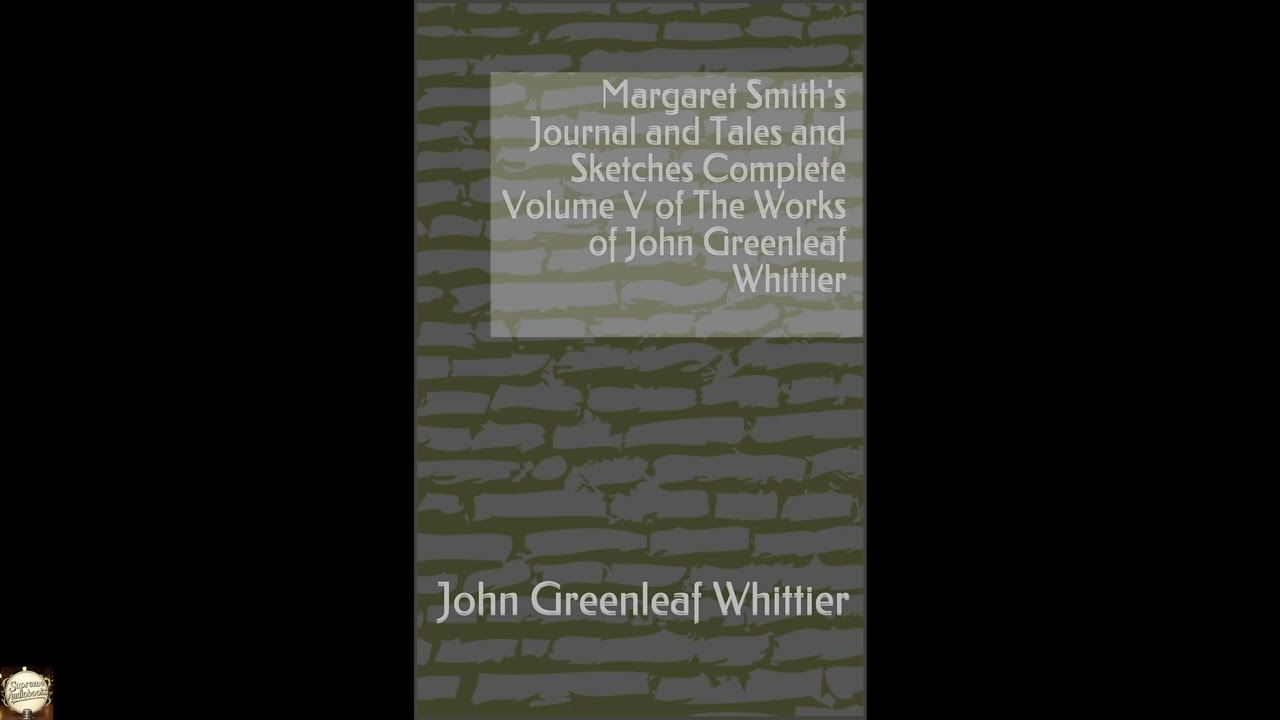
Margaret Smith's Journal and Tales and Sketches Complete Volume V of The Works of J
Step into a private world, a collection of observations and reflections that offers an unparalleled window into a bygone era. Margaret Smith's Journal and Tales and Sketches is far more than a simple diary; it is a meticulously preserved record, presented here as Volume V of the collected Works of J, that transports the listener to a time of intricate social customs, personal introspection, and keen societal observation. This volume invites you not just to read history, but to live it alongside Margaret Smith, an acute and eloquent voice who captured the essence of her daily life and the broader world around her. In an age dominated by grand narratives, this intimate collection reminds us of the power of individual experience to illuminate universal truths, making it a compelling listen for anyone seeking connection with the human story across the centuries. The setting for much of Margaret Smith's journal entries appears to be a quiet corner of England or Scotland during what we can discern as the late seventeenth or early eighteenth century. Her entries paint a vivid picture of rural gentry life, detailing the rhythms of the seasons, the domestic duties of a woman of her standing, and the constant flow of interactions with family, neighbors, and servants. Margaret herself emerges as a thoughtful, often witty observer, whose prose belies a sharp intellect and a sensitive spirit. We find her grappling with the mundane — the weather, the price of goods, the health of her household — alongside the more profound considerations of faith, friendship, and the passage of time. Her narrative isn't driven by a single, overarching conflict in the traditional sense, but rather by the ongoing, internal struggle to comprehend her place in the world and to make sense of the human dramas unfolding around her. Beyond the personal entries, the "Tales and Sketches" component of this volume broadens Margaret’s scope considerably. These are not merely factual records but crafted narratives, mini-dramas and character studies drawn from her observations. One might encounter a poignant tale of local hardship, a humorous sketch of a village eccentric, or a cutting commentary on the affectations of a visiting dignitary. These segments allow Margaret to step slightly outside her own direct experience, using the framework of her journal to present more formalized literary compositions. The arc of the volume, therefore, is less about a rising action and climax, and more about the unfolding of a life through its daily minutiae and moments of insightful reflection, punctuated by these expertly rendered glimpses into the lives of others, all seen through her unique, perceptive lens. The author of this remarkable volume is identified only through the fictional persona of "Margaret Smith" and the editorial hand of "J." This attribution strategy was not uncommon in earlier literary periods, where the line between fact and fiction, author and editor, was often intentionally blurred. Many authors in the seventeenth and eighteenth centuries chose to publish anonymously or pseudonymously, sometimes to circumvent social conventions regarding women authors, sometimes to lend an air of authenticity to a fictional narrative by presenting it as a "found" document, and sometimes simply to protect their privacy. The very existence of this work as "Volume V of The Works of J" suggests a deliberate editorial project, perhaps undertaken long after Margaret Smith herself might have lived, or perhaps orchestrated by "J" as a sophisticated literary device, using the journal as a framework for their own creative output. Such literary framing devices allowed for a powerful synthesis of observational realism and imaginative storytelling, a tradition that includes figures who published letters, travelogues, and memoirs under various guises. The compiler or editor "J" could have been a true individual, carefully curating and presenting what they believed to be a genuine historical document, or "J" might have been the original creator of the entire "Margaret Smith" narrative. This uncertainty adds a layer of intellectual intrigue to the text, inviting listeners to ponder the nature of authorship and the construction of literary identity during a period when print culture was rapidly evolving and new forms of expression were being forged. Whether an authentic historical voice or a brilliant literary construct, "Margaret Smith's Journal" stands as a testament to the enduring power of intimate narrative forms. Among the central themes running through Margaret Smith's Journal is the intricate nature of domestic life and the female experience in a specific historical context. Margaret’s detailed accounts of household management, from supervising servants and preparing meals to attending to social calls and managing family relationships, offer a tangible sense of the responsibilities and constraints placed upon women of her class. We see this, for instance, in an entry detailing a frantic day preparing for an unexpected visit from distant relatives, where Margaret candidly describes the pressures of upholding social appearances while managing the practical chaos of her home. Another prominent theme is social observation and critique. Margaret possesses a sharp eye for human foibles and societal hypocrisies, often rendering humorous or gently satirical portraits of her neighbors and acquaintances. One particularly memorable sketch might describe a local dignitary’s pompous speech at a community gathering, where Margaret’s understated yet precise description of his gestures and inflated rhetoric speaks volumes about her critical perception. The collection also engages with the theme of truth and fiction, especially in the interplay between the journal entries and the "tales and sketches." Margaret often muses on the stories she hears versus the reality she perceives, questioning how narratives are shaped and reshaped by individual biases and community gossip. This meta-commentary, subtly woven into her entries, makes the listener question the very nature of the "truths" presented. Finally, the journal serves as a vital piece of historical documentation, offering an unfiltered, personal perspective on the customs, anxieties, and daily realities of a specific time. Details about period clothing, popular amusements, agricultural practices, or even anxieties surrounding political shifts become tangible through her direct accounts. For example, a passage might describe the impact of a specific famine or a local political dispute, lending a human dimension to historical events often studied in abstract terms. This genre of personal journal, augmented by discrete "tales and sketches," emerged during a period of significant cultural and literary transformation, likely spanning the late seventeenth to the early nineteenth centuries. The Enlightenment encouraged individual introspection and the methodical recording of observations, fostering a climate where personal narratives gained intellectual currency. Simultaneously, the rise of the novel as a literary form was creating a demand for stories rooted in everyday reality, rather than purely fantastical or epic tales. Authors and publishers began to recognize the appeal of "authentic" voices and records, leading to the publication of real and fictionalized journals, letters, and memoirs. Such works provided intimate access to minds and manners, appealing to a growing literate public eager for both entertainment and instruction. The turbulent political landscapes of the period, marked by revolutions and shifting monarchies, also made individual perspectives on the world particularly valuable, as they offered a grounding in the personal amidst grand historical upheavals. The collection’s structure reflects a literary evolution, moving from the raw, immediate experience of the journal to more refined, often fictionalized, observations of human behavior. Listening to Margaret Smith's Journal and Tales and Sketches as an audiobook offers a singular, immersive experience. The narrator's voice becomes the conduit to Margaret's inner world, lending a unique authenticity to her reflective prose. Listeners will appreciate how the narrator distinguishes between the more direct, personal tone of the journal entries and the slightly more detached, narrative voice employed for the "tales and sketches." This nuanced performance can highlight Margaret’s wit, her occasional melancholy, and her keen observational skills, drawing you deeper into her character. The pacing allows for contemplation, echoing the rhythm of a life lived deliberately, with moments of quiet reflection balanced by vivid descriptions of social interactions. Dialogue, even within a journal, comes alive as the narrator gives voice to the various characters Margaret encounters, from gossiping neighbors to philosophical friends. The atmospheric rendering through voice and tone evokes the specific historical period, allowing you to inhabit Margaret’s world with all its subtle sounds and societal expectations, making the experience far more personal and immediate than reading the printed page.
Enjoyed Margaret Smith's Journal and Tales and Sketches Complete Volume V of The Works of J? A few ways to support us
Audible & Amazon links are affiliate; we may earn a small commission at no extra cost.
About this production
Human narration by a volunteer reader from LibriVox.org, the public-domain audiobook project. LibriVox volunteers record literary works whose copyright has expired in the United States, releasing the resulting recordings into the public domain.
Margaret Smith's Journal and Tales and Sketches Complete Volume V of The Works of J by John Greenleaf Whittier. The underlying text is in the U.S. public domain. We do not republish any modern copyrighted edition, translation, or commentary.
The 4K cinematic visuals accompanying this audiobook are generated by an AI image model from prompts derived from the source text. No copyrighted photos, paintings, or stock footage are used. AI generation is disclosed on every video on our YouTube channel as required by YouTube's altered/synthetic content policy.
English subtitles are transcribed from the LibriVox recording with OpenAI Whisper. Translations into the 11 other supported languages are produced by Meta's NLLB-200 neural translation model. No human translator's copyrighted translation is used.
Questions about sourcing or rights? See our DMCA & Sourcing policy or contact us.
View 10 famous quotes from this book →
Enjoyed this audiobook?
If you'd like to own a copy of Margaret Smith's Journal and Tales and Sketches Complete Volume V of The Works of J or hear a professionally produced edition, the links below help support free audiobook production at no extra cost to you.
As an Amazon Associate we earn from qualifying purchases. Audible / print links are affiliate.
More by John Greenleaf Whittier
Among the Hills, and other poems : Part 5 From Volume I of The Works of John Greenle- Full Audiobook
Mountain Pictures, and other poems : Part 2 From Volume II of The Works of John Gre

Poems in Wartime. Part 4 From Volume III of The Works of John Greenleaf Whittie