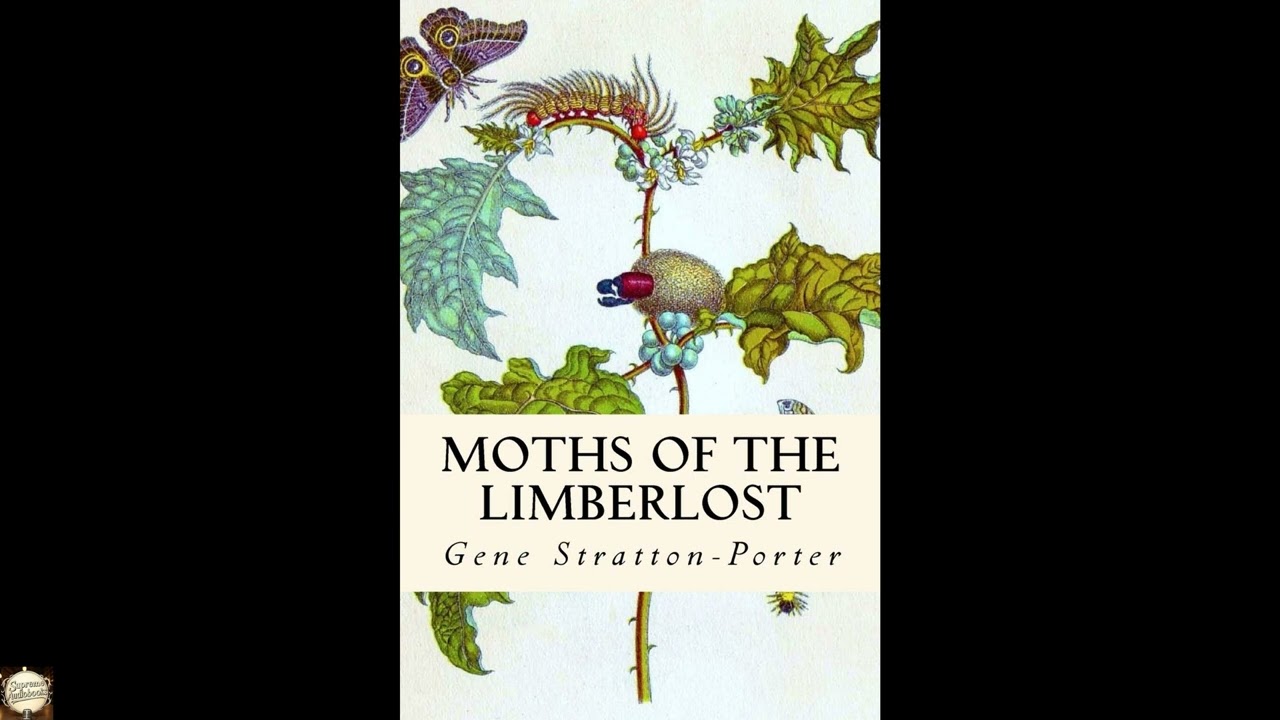
Moths of the Limberlost: A Book About Limberlost Cabin
Step into a world where the quiet hum of wings and the rustle of reeds speak volumes, where a rustic cabin serves as both a sanctuary and a laboratory for the soul. Gene Stratton-Porter’s Moths of the Limberlost: A Book About Limberlost Cabin invites you to experience nature with an intensity and intimacy rarely found in print. This is more than a book about insects; it is a profound meditation on observation, a deeply personal account of a life lived in harmony with the wild, and a poignant reminder of the fragile beauty of our natural world. For today’s listener, it offers a vital connection to a simpler time, a powerful message of environmental stewardship, and the enduring solace of the natural world, all seen through the eyes of one of America's most beloved naturalists and storytellers. The "Limberlost Cabin" at the heart of this work is not just a dwelling; it is a portal to the teeming life of the Limberlost Swamp in northern Indiana, a vast wetland that, in Stratton-Porter's time, was a wilderness waiting to be understood and documented. The narrative unfolds not with a conventional plot or a dramatic human struggle, but through the patient, dedicated gaze of an observer attuned to every flutter and bloom. The central focus is on the nocturnal beauties of the moth world. Listeners are introduced to an array of species – the majestic Luna moth with its ethereal green wings, the dramatic Io moth sporting large, staring eyespots, and the sturdy Polyphemus moth, masters of camouflage – each presented with a blend of scientific accuracy and poetic reverence. The arc of the story follows the rhythm of the seasons, from the first hopeful emergence of spring insects to the last, fading flights of autumn, all witnessed from the unique vantage point of the cabin. The "plot" truly lies in the quest for knowledge and understanding, the patient hours spent waiting, watching, and documenting. We learn alongside the author about the life cycles of these fascinating creatures, their delicate dance of survival, and their vital place in the ecosystem. Beyond the moths, the cabin itself becomes a character, its windows framing a living diorama of the swamp, its walls absorbing the sounds of frogs, birds, and the whispering wind. There’s a quiet determination in the narrative as the author strives to photograph and record these fleeting moments of natural splendor, aware that the very landscape she cherishes is facing threats from human encroachment and drainage efforts. The story becomes one of profound connection – a human spirit fully integrated into the wild, finding wonder in every leaf and wingbeat. Gene Stratton-Porter, born in Wabash County, Indiana, in 1863, cultivated an intimate relationship with nature from her earliest days. Growing up in a log cabin on the edge of the Wildcat Reserve, she developed a keen observational eye and a deep love for the natural world that would define her life and career. She was largely self-taught in the fields of ornithology and entomology, combining the meticulous rigor of a scientist with the expressive gifts of an artist. After her marriage to Charles Dorwin Porter, she eventually built her dream home, the "Limberlost Cabin," near the Limberlost Swamp, a place that became both her muse and her laboratory. It was here that she conducted much of her groundbreaking field research, photographing and writing about the birds and insects she observed, often venturing deep into the swamp to capture rare specimens and document vanishing habitats. Stratton-Porter was an astonishingly prolific and popular author, her books selling in the millions during her lifetime, a testament to her ability to blend compelling narratives with her passion for nature. Her other notable works, such as Freckles, A Girl of the Limberlost, and The Harvester, captured the imagination of a generation, often featuring protagonists deeply connected to the wilderness and embodying virtues of resilience and moral fortitude. She became a powerful voice for conservation long before it was a mainstream concept, using her platform to advocate for the preservation of wild places, lamenting the destruction of ecosystems like the Limberlost Swamp itself, which was eventually drained. Her work stands as a unique blend of regionalist fiction, natural history, and a nascent environmentalism, securing her place as one of America's most influential and cherished literary figures of the early 20th century before her untimely death in a traffic accident in Los Angeles in 1924. At its core, Moths of the Limberlost champions the theme of nature's wonder and spiritual solace. The precise and often lyrical descriptions of a Luna moth’s first flight or the subtle patterns on a Polyphemus wing are not merely scientific observations; they are presented as moments of pure revelation, offering a profound sense of peace and connection to something larger than oneself. Stratton-Porter conveys how immersion in the wilderness can restore the spirit and offer perspective amidst life's complexities. This theme is vividly enacted as the narrative takes us through the quiet moments of observation, where the simple act of watching a moth emerge from its cocoon becomes an almost spiritual experience, a testament to the cycles of life and regeneration. A second powerful theme running through the work is conservation and the fragility of ecosystems. While the text celebrates the beauty of the Limberlost, it does so with an undercurrent of sorrow for its impending destruction. Stratton-Porter’s detailed accounts of specific habitats and species serve as an unspoken plea for their preservation. For instance, her devoted efforts to document every moth, bird, and plant illustrate her understanding that these creatures and their homes were precious and vulnerable, facing irreversible change. The very act of recording their lives from the Limberlost Cabin becomes a form of protest, a dedication to remembering what was, and a warning about what would be lost. The book also implicitly celebrates self-reliance and a life lived in harmony with nature, as the author describes the practicalities and joys of dwelling in her rustic cabin, finding sustenance and meaning in the wild surroundings. When Moths of the Limberlost emerged in the early 20th century, America was undergoing profound changes. The nation was rapidly industrializing and urbanizing, a shift that increasingly separated people from the natural world. Simultaneously, there was a growing awareness, championed by figures like President Theodore Roosevelt, of the need for conservation, spurred by the visible destruction of forests and wilderness areas. In the literary world, while realism and naturalism gained ground, there remained a strong appetite for works that offered escape, sentiment, and a renewed connection to nature. Stratton-Porter’s work spoke directly to this cultural moment, offering both a nostalgic look at a disappearing rural America and a forward-thinking call to protect what remained. Her detailed nature writing, often interwoven with personal experience, tapped into a national longing for authenticity and the regenerative power of the wild, standing as a beloved counterpoint to the rush of modern life. Listening to Moths of the Limberlost as an audiobook offers a uniquely immersive experience, allowing the descriptive prose to truly transport you to the heart of the Indiana swamp. The narration, ideally delivered with a measured and observant pace, can enhance the sense of intimacy and discovery central to the book. As you listen, pay attention to the rich, sensory language that paints vivid pictures of iridescent wings, the rustle of leaves, and the elusive calls of nocturnal creatures. The absence of visual distractions allows the author's precise observations and her deep affection for the natural world to resonate more profoundly, drawing you into the peaceful solitude of the Limberlost Cabin and its vibrant, ephemeral world. This run of several hours is perfectly suited for thoughtful contemplation, whether during a quiet evening at home, a long walk, or simply as a gentle companion through your day.
Enjoyed Moths of the Limberlost: A Book About Limberlost Cabin? A few ways to support us
Audible & Amazon links are affiliate; we may earn a small commission at no extra cost.
About this production
Human narration by a volunteer reader from LibriVox.org, the public-domain audiobook project. LibriVox volunteers record literary works whose copyright has expired in the United States, releasing the resulting recordings into the public domain.
Moths of the Limberlost: A Book About Limberlost Cabin by Gene Stratton-Porter. The underlying text is in the U.S. public domain. We do not republish any modern copyrighted edition, translation, or commentary.
The 4K cinematic visuals accompanying this audiobook are generated by an AI image model from prompts derived from the source text. No copyrighted photos, paintings, or stock footage are used. AI generation is disclosed on every video on our YouTube channel as required by YouTube's altered/synthetic content policy.
English subtitles are transcribed from the LibriVox recording with OpenAI Whisper. Translations into the 11 other supported languages are produced by Meta's NLLB-200 neural translation model. No human translator's copyrighted translation is used.
Questions about sourcing or rights? See our DMCA & Sourcing policy or contact us.
Enjoyed this audiobook?
If you'd like to own a copy of Moths of the Limberlost: A Book About Limberlost Cabin or hear a professionally produced edition, the links below help support free audiobook production at no extra cost to you.
As an Amazon Associate we earn from qualifying purchases. Audible / print links are affiliate.