Monks, Popes and Their Political Intrigues
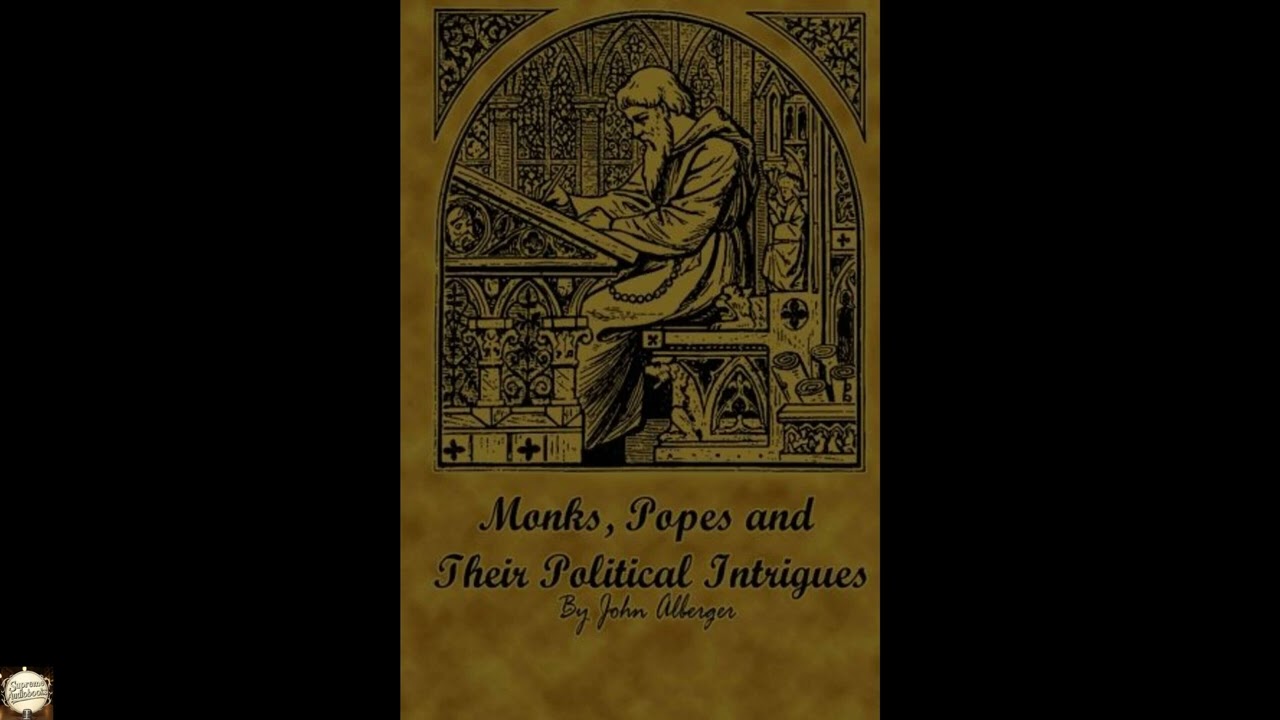
Throughout history, few institutions have wielded as much spiritual and temporal authority as the Catholic Church, and few figures have exerted such profound influence as its popes and the leaders of its monastic orders. John Alberger's "Monks, Popes and Their Political Intrigues" pulls back the ecclesiastical curtain, revealing the relentless human ambition, the strategic machinations, and the often brutal power struggles that shaped not only the Church itself but the very course of Western civilization. Far from a dry theological treatise, this book is a compelling examination of power dynamics, demonstrating how individuals cloaked in divine authority frequently pursued intensely earthly ends. It is a story for anyone fascinated by the intersection of faith and politics, by the enduring drama of institutional power, and by the timeless lessons that ancient conflicts offer to our present world. Alberger sets his stage across centuries of European history, from the early medieval period, when the Church was solidifying its spiritual dominance, through the Renaissance and beyond, as its worldly influence reached its zenith and began to face new challenges. The narrative centers on a dramatic succession of prominent figures: not just the pontiffs who sat on the Throne of Saint Peter, but also powerful abbots, shrewd cardinals, and ambitious monastic reformers. These are the central characters in Alberger's grand historical theater, each portrayed with their unique blend of piety and pragmatism, spiritual conviction and personal ambition. The central conflict of the narrative constantly oscillates between the Church's stated mission of divine salvation and its often naked pursuit of land, wealth, and political leverage over secular rulers. The story progresses by dissecting key periods and pivotal events. We witness, for instance, the foundational struggles for papal supremacy, where an ascendant papacy grappled with emperors and kings for ultimate authority, sometimes through excommunication, sometimes through military alliances. Alberger traces the evolution of monastic orders from austere spiritual havens to land-rich political players, showing how their very success often bred internal divisions and external conflicts. The arc of the narrative is less about a single climactic event and more about the relentless, continuous ebb and flow of power, as each generation of Church leaders and their rivals plays a new round in a very old game. It presents a panorama of alliances forged and broken, doctrines interpreted to suit political convenience, and the relentless pressure of worldly concerns impinging on what was purportedly a spiritual enterprise, all without revealing the ultimate conclusions or specific turns of events in the specific historical incidents it recounts. John Alberger, a figure whose intellectual curiosity was keenly attuned to the historical shifts of his epoch, developed a reputation as a incisive commentator on institutional power. Writing in a period marked by burgeoning historical research and a more critical approach to traditional narratives, Alberger brought a discerning eye to subjects often viewed through a lens of unquestioning reverence. His methods involved a meticulous sifting through historical records and a careful reconstruction of the human motivations that drove seemingly divine pronouncements or crusading fervor. Though specific dates for his life and other publications are not readily available, his prose style suggests an individual deeply educated in classical rhetoric and a master of clear, persuasive argument. Alberger's literary contributions were shaped by a broader intellectual movement that sought to demystify historical figures and institutions, presenting them not as abstract forces but as products of human decision-making and circumstance. He was part of a cohort of writers who, through rigorous scholarship and engaging narrative, aimed to make complex historical dynamics accessible to a wider reading public. His work stood as a testament to the idea that understanding the past required confronting uncomfortable truths, even when those truths concerned institutions held sacred by many. He possessed a particular gift for illuminating the personalities and political acumen that lay beneath the vestments and titles of power. "Monks, Popes and Their Political Intrigues" effectively brings to life several important themes. One primary theme is the nature of power and its inherent corrupting influence, even within institutions dedicated to spiritual ideals. Alberger illustrates this by showing how a given pontiff, initially driven by piety, might gradually leverage the immense moral authority of his office for distinctly temporal gains, such as territorial expansion or the subjugation of secular rulers. We see countless instances where the pursuit of spiritual authority becomes inextricably linked with the accumulation of worldly influence, leading to compromises and often overt conflict. Another significant theme is the tension between spiritual ideals and worldly realities. Alberger often contrasts the ascetic vows taken by monastic orders, such as poverty and humility, with the immense wealth and political sway these very orders often accrued over centuries. For instance, he might detail how a monastery founded on principles of withdrawal and simple living eventually became a major landowner and a political force, its abbots advising kings and commanding armies. This disparity highlights the profound challenge of maintaining spiritual purity within a world of human striving and institutional growth, a dynamic that recurs throughout the book. Furthermore, the book consistently examines human ambition as a driving force behind major historical events, showing how personal aspirations for prestige or influence often dictated major policy decisions within the Church, alongside and sometimes overshadowing genuine religious conviction. Finally, Alberger critiques the mechanisms of institutional self-preservation, demonstrating how established systems, even when flawed, develop powerful means to maintain their authority and resist challenges from within or without. When Alberger produced this work, the intellectual climate favored historical scholarship that questioned established narratives and sought deeper, more sociological explanations for historical phenomena. The latter part of the nineteenth century and the early twentieth century saw a growing secularization of thought in many Western societies, which encouraged a more critical examination of religious institutions and their historical roles. There was a rising interest in realpolitik and the practical application of power, moving away from more romanticized or hagiographic accounts of historical figures. This period also witnessed the expansion of historical methodologies, with scholars increasingly looking beyond official chronicles to a wider array of primary sources, allowing for a more nuanced and sometimes less flattering portrayal of powerful figures and organizations. Alberger's book emerged from this fertile ground, offering a clear, analytical, and unsentimental look at the very human drama unfolding within sacred walls, appealing to an audience ready for a more grounded understanding of history. Listening to "Monks, Popes and Their Political Intrigues" as an audiobook offers a singular opportunity to immerse oneself in this sprawling historical narrative. A skilled narrator brings the complex cast of historical figures and their intricate dealings to life, lending gravitas to Alberger's meticulously researched prose. The several hours of content allow for a sustained engagement with the material, giving the listener ample time to absorb the nuances of each historical period and the motivations of its players. The pacing of the narration can effectively underscore the weighty implications of a papal decree, the hushed tension of a political negotiation, or the solemnity of a council meeting. The subtle shifts in voice can help differentiate the various historical "characters" Alberger discusses, even in a work of historical analysis, making the personalities and their rivalries more distinct. The atmosphere created by the spoken word transports the listener directly into the cloistered halls, the grand cathedrals, and the war camps where the fate of empires and souls was decided.
Enjoyed Monks, Popes and Their Political Intrigues? A few ways to support us
Audible & Amazon links are affiliate; we may earn a small commission at no extra cost.
About this production
Human narration by a volunteer reader from LibriVox.org, the public-domain audiobook project. LibriVox volunteers record literary works whose copyright has expired in the United States, releasing the resulting recordings into the public domain.
Monks, Popes and Their Political Intrigues by John Alberger. The underlying text is in the U.S. public domain. We do not republish any modern copyrighted edition, translation, or commentary.
The 4K cinematic visuals accompanying this audiobook are generated by an AI image model from prompts derived from the source text. No copyrighted photos, paintings, or stock footage are used. AI generation is disclosed on every video on our YouTube channel as required by YouTube's altered/synthetic content policy.
English subtitles are transcribed from the LibriVox recording with OpenAI Whisper. Translations into the 11 other supported languages are produced by Meta's NLLB-200 neural translation model. No human translator's copyrighted translation is used.
Questions about sourcing or rights? See our DMCA & Sourcing policy or contact us.
Enjoyed this audiobook?
If you'd like to own a copy of Monks, Popes and Their Political Intrigues or hear a professionally produced edition, the links below help support free audiobook production at no extra cost to you.
As an Amazon Associate we earn from qualifying purchases. Audible / print links are affiliate.