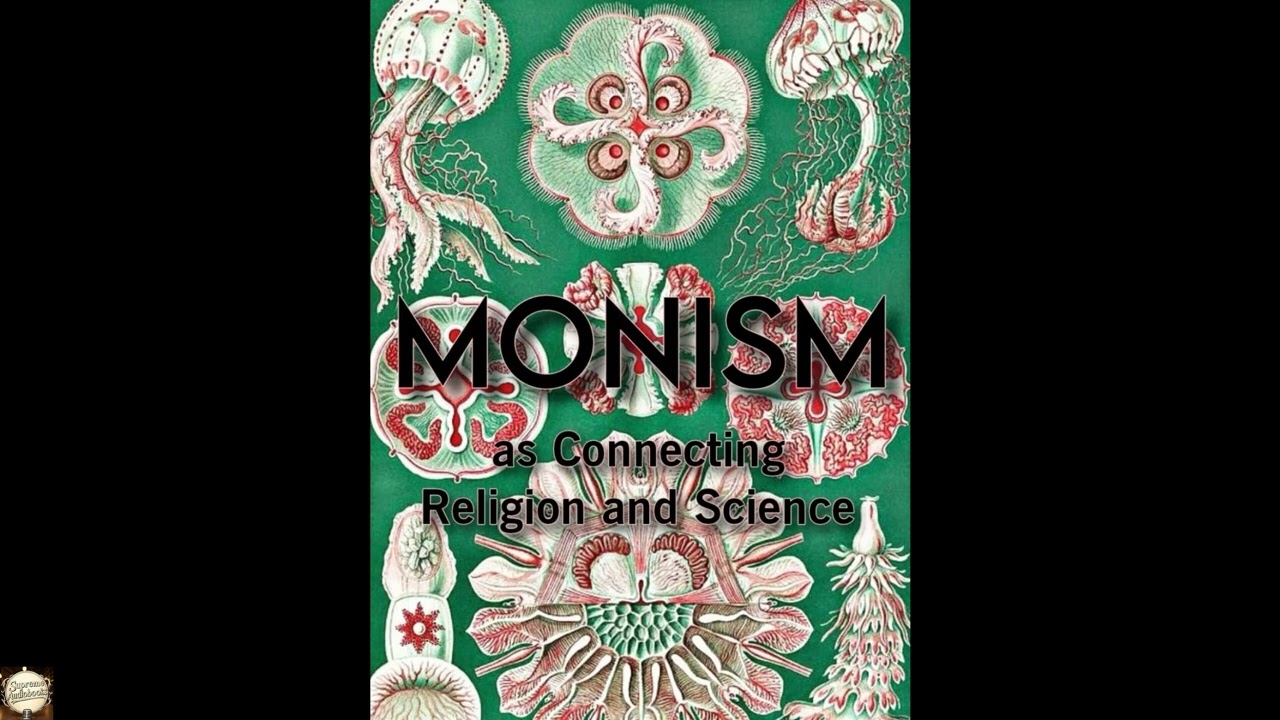
Monism as Connecting Religion and Science: The Confession of Faith
For generations, humanity has grappled with the seeming chasm between scientific understanding and spiritual conviction. Is the universe a cold, mechanical interplay of forces, or does it hold a deeper, transcendent meaning? Can the empirical methods of the laboratory coexist with the faith of the sanctuary? This profound and historically significant text, "Monism as Connecting Religion and Science: The Confession of Faith," offers a compelling and deeply personal attempt to bridge this divide. It is not merely a philosophical treatise; it is the heartfelt testament of an individual wrestling with the most fundamental questions of existence, seeking a unified worldview where reason and reverence might finally embrace. Its arguments, born from a specific intellectual moment yet echoing through the ages, resonate powerfully today as we continue to navigate a world where scientific discovery often challenges—or seems to challenge—traditional belief systems. The book lays out a grand intellectual quest, inviting the listener to witness the systematic construction of a monistic philosophy. Our central guide in this endeavor is the authorial voice himself, a figure who deliberately identifies as "a Man of Science." He begins by articulating the dilemma that so many thoughtful individuals have faced: the disquieting conflict between the increasingly precise, often materialistic explanations offered by science, and the persistent human need for spiritual meaning, purpose, and a sense of belonging within a larger cosmic order. The initial landscape of the narrative is thus one of intellectual fragmentation, a world seemingly split between two irreconcilable modes of knowing and experiencing. As the argument unfolds, "a Man of Science" does not shy away from the rigor of scientific inquiry, nor does he dismiss the profound insights of religious experience. Instead, he meticulously examines the core tenets of both, seeking common ground not in compromise, but in a deeper, underlying unity. He dissects scientific principles, exploring the atomic structure of matter, the laws of physics, and the emergent complexities of life itself, always with an eye toward revealing a singular, pervasive force or principle. Simultaneously, he engages with religious doctrines, not to affirm them dogmatically, but to distill their essential spiritual truths and to see if these might find a coherent expression within a scientifically informed worldview. The central conflict, therefore, is ultimately an internal one—the author's struggle to forge a cohesive understanding of reality for himself and to offer it as a potential path for others who feel similarly torn. He moves from the initial premise of a divided world towards the articulation of monism, proposing that all phenomena—physical and spiritual—are manifestations of a single, ultimate substance or principle. The author, who chose to present his profound reflections simply as "a Man of Science," remains an anonymous figure, a decision that speaks volumes about the nature of his work. Rather than rooting his arguments in personal authority or academic credentials, he allows the ideas themselves to stand on their own merit, presented through the clear, rational lens of a scientific mind. This anonymity, coupled with the work's historical context, suggests the author was likely a product of the late nineteenth or early twentieth century, an era marked by intense intellectual ferment and profound shifts in both scientific understanding and religious thought. During this period, thinkers across Europe and America grappled with the implications of Darwinian evolution, the new physics, and emerging psychological theories, often finding traditional theological frameworks strained or insufficient. This lack of specific biographical detail compels us to view the "author" not as a historical individual with a birthdate and place, but as a symbolic figure—the archetypal earnest inquirer, deeply learned in the scientific discourse of his day, yet equally sensitive to the enduring human longing for the sacred. He represents a significant current within intellectual history: those who sought to reconcile the disparate domains of human knowledge, rather than allowing them to drift into isolated, or worse, antagonistic, spheres. This work, then, should be understood as a testament to the persistent human drive to find coherence, to construct a worldview that honors both empirical observation and spiritual intuition, emerging from a period when such grand syntheses were both desperately needed and intellectually ambitious. At its core, "Monism as Connecting Religion and Science" grapples with several enduring themes. Primarily, it champions the reconciliation of seemingly opposite forces, presenting science and religion not as enemies, but as complementary avenues to understanding reality. The text enacts this theme by meticulously analyzing the language and methodologies of both fields, demonstrating how concepts often seen as exclusive—such as causality in physics and divine will in theology—can be reinterpreted through a unifying philosophical lens. Another significant theme is the search for unity, or monism itself. The author repeatedly returns to the idea that beneath the apparent diversity of the cosmos, there lies a single, fundamental reality. He illustrates this by showing how, for example, the laws governing the smallest particles might also reflect principles at play in human consciousness or the perceived spiritual realm, weaving together disparate observations into a coherent, interconnected whole. A third theme is the nature of reality, urging listeners to question conventional dualisms and consider the possibility of a universe that is fundamentally one—be it an all-encompassing spirit, a universal mind, or an energetic substrate from which both matter and consciousness emerge. The book’s historical significance lies in its articulation of these themes during a time of immense intellectual upheaval. It stands as a powerful example of the kind of intellectual courage required to forge new paths when old ones seem insufficient. It offered a different perspective to those caught between the dogmatic certainties of some religious institutions and the burgeoning materialism of scientific thought. This period, roughly from the mid-19th to the early 20th century, saw the widespread impact of Charles Darwin's theories, which fundamentally altered humanity's understanding of its place in the natural world. Concurrently, advances in physics and chemistry began to unravel the universe's mechanical workings with unprecedented detail. In this environment, many traditional religious explanations felt increasingly challenged. "Monism as Connecting Religion and Science" emerged as a direct response to this intellectual tension, representing a profound and earnest effort to construct a philosophical framework that could accommodate these new scientific truths without sacrificing the profound spiritual needs of humanity. It sought to provide intellectual solace and a coherent worldview for those who felt adrift between two powerful, yet seemingly opposed, cultural currents. Listening to "Monism as Connecting Religion and Science" as an audiobook offers a unique and particularly fitting experience. The carefully constructed arguments, the gradual unveiling of the author's monistic vision, and the thoughtful progression of his "confession of faith" are wonderfully suited to the spoken word. A skilled narrator brings a consistent, measured tone to the complex philosophical discussions, allowing the listener to absorb the intricate reasoning at a natural, reflective pace. The several hours of listening time provide ample opportunity for immersion, allowing the density of the ideas to unfold without the hurried feel of scanning text. You can truly settle into the author's intellectual world, allowing his voice—interpreted by the narrator—to guide you through his profound meditations on science, religion, and the search for a unified understanding of existence. It is an experience that encourages contemplation, inviting you to engage with ideas that remain as relevant and provocative today as they were when first penned by "a Man of Science."
Enjoyed Monism as Connecting Religion and Science: The Confession of Faith? A few ways to support us
Audible & Amazon links are affiliate; we may earn a small commission at no extra cost.
About this production
Human narration by a volunteer reader from LibriVox.org, the public-domain audiobook project. LibriVox volunteers record literary works whose copyright has expired in the United States, releasing the resulting recordings into the public domain.
Monism as Connecting Religion and Science: The Confession of Faith by a Man of Scie. The underlying text is in the U.S. public domain. We do not republish any modern copyrighted edition, translation, or commentary.
The 4K cinematic visuals accompanying this audiobook are generated by an AI image model from prompts derived from the source text. No copyrighted photos, paintings, or stock footage are used. AI generation is disclosed on every video on our YouTube channel as required by YouTube's altered/synthetic content policy.
English subtitles are transcribed from the LibriVox recording with OpenAI Whisper. Translations into the 11 other supported languages are produced by Meta's NLLB-200 neural translation model. No human translator's copyrighted translation is used.
Questions about sourcing or rights? See our DMCA & Sourcing policy or contact us.
Enjoyed this audiobook?
If you'd like to own a copy of Monism as Connecting Religion and Science: The Confession of Faith or hear a professionally produced edition, the links below help support free audiobook production at no extra cost to you.
As an Amazon Associate we earn from qualifying purchases. Audible / print links are affiliate.