History Of The Conflict Between Religion And Science
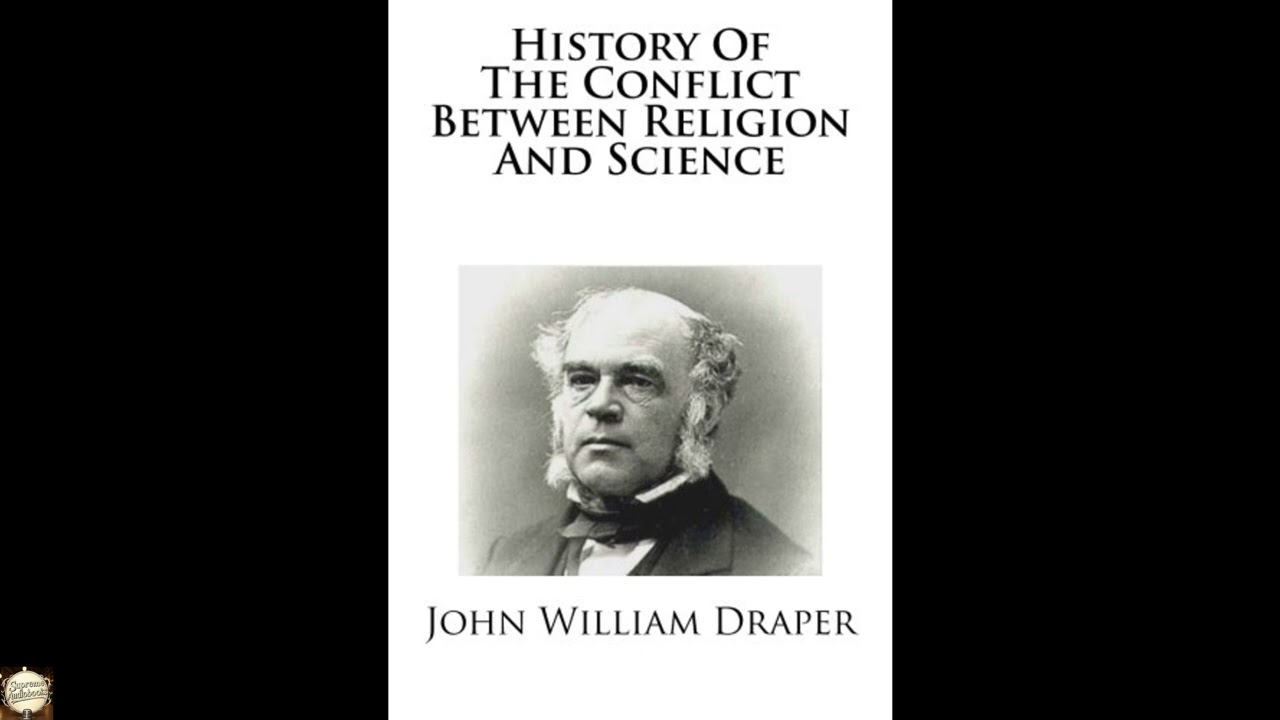
The ongoing tension between faith and reason, between established dogma and challenging scientific discovery, defines much of human intellectual history. John William Draper's "History Of The Conflict Between Religion And Science," first published in 1874, remains a foundational text for understanding this profound and often fraught relationship. Far from a dusty historical relic, its central argument — that scientific progress has consistently battled and overcome religious obstruction — continues to resonate with contemporary debates about education, public policy, and the very nature of truth. For anyone seeking to comprehend the deep roots of today's discussions surrounding science, religion, and their place in society, this seminal work offers a stark, unflinching, and intensely influential perspective. Draper’s magisterial work is not a fictional narrative, but rather a grand historical argument, unfolding across millennia. He systematically constructs a case for an inherent and irreconcilable conflict between what he defines as immutable theological decrees and the ever-evolving spirit of scientific inquiry. The book establishes its setting across the sweep of Western civilization, from the intellectual ferment of ancient Greece and Rome, through the rise of Christianity and the perceived suppression of rational thought during the Middle Ages, into the reawakening of the Renaissance, and ultimately to the scientific revolutions that culminated in the author's own era. His "main characters," then, are not individuals, but rather these two titanic forces: organized religion, primarily epitomized by the Roman Catholic Church, and the relentless, often defiant, march of scientific progress. The central conflict is precisely what the title declares: a sustained, bitter struggle for intellectual supremacy. Draper meticulously chronicles specific historical confrontations, detailing how the pursuit of empirical knowledge and logical deduction often met with fierce resistance, condemnation, and even persecution from religious authorities. He traces the historical arc from the early Christian rejection of pagan scientific advancements, through the intellectual stagnation he attributes to the medieval Church's dominance, to pivotal moments like the challenges posed by Copernicus and Galileo, and the seismic shifts initiated by geological discoveries and Darwinian evolution. Through this chronological recounting, Draper constructs an escalating narrative where science, despite initial setbacks, continually asserts its validity, pushing back against the perceived constraints of religious dogma and ultimately fostering human advancement. The story he tells is one of the human intellect gradually emancipating itself from superstition. John William Draper (1811-1882) was a figure of truly remarkable breadth and intellect, a genuine polymath who left an indelible mark across multiple fields. Born near St. Helens, England, he emigrated to the United States in 1832, where his career blossomed. He served as a distinguished professor of chemistry and physiology at New York University, leaving a lasting legacy in both academia and scientific research. Draper was not only a pioneering scientist but also a formidable historian and a key figure in the early development of photography, credited with producing one of the first clear photographs of a human face and making groundbreaking advancements in daguerreotype portraiture. His contributions extended beyond the laboratory and the lecture hall. Draper was a prolific author, known not only for the work presented here but also for his significant contributions to the understanding of plant physiology, such as "A Treatise on the Forces Which Produce the Organization of Plants," and for his multi-volume "History of the American Civil War." He was a leading voice of the Victorian era's scientific naturalism, advocating passionately for the power of reason and empirical observation. His place in the literary and scientific canon is secure as one of the most eloquent and forceful proponents of the "conflict thesis"—the idea that science and religion are fundamentally at odds—a perspective that shaped intellectual discourse for generations. The book enacts several profound themes that resonate deeply even today. Foremost among them is, of course, the inherent conflict between religion and science. Draper does not argue for mere disagreement but rather for a fundamental, irreconcilable antagonism, where religious institutions, clinging to immutable tenets, consistently attempt to stifle scientific inquiry. He provides concrete examples throughout, such as the Church's condemnation of heliocentrism, as famously demonstrated in Galileo Galilei's trial, where observational astronomy challenged scriptural interpretations. Similarly, he points to the resistance faced by early anatomists and physicians whose empirical study of the human body contradicted established theological views on the sanctity of life or the nature of disease. Another key theme is the relentless march of human reason and scientific progress. Draper portrays science not merely as a collection of facts, but as a dynamic, self-correcting method that, despite opposition, ultimately propels humanity forward. He champions science as the primary engine of societal advancement, continually dispelling ignorance and superstition. This is inextricably linked to the theme of intellectual freedom versus authoritarian control. Draper vividly illustrates the struggles of individual thinkers and burgeoning scientific communities against the repressive power of established religious authority, advocating fiercely for the unhindered pursuit of knowledge. Finally, the book implicitly raises fundamental questions about the nature of truth and its ultimate source, asking whether truth resides in revealed dogma or in the verifiable evidence of the natural world. When "History Of The Conflict Between Religion And Science" was published in 1874, the intellectual landscape of the Western world was undergoing profound upheaval. Charles Darwin's "On the Origin of Species" had appeared fifteen years prior, shaking the foundations of traditional religious understandings of creation and humanity's place in the natural world. The mid-to-late 19th century was an era of intense debate over evolution, geology, and the authority of the Church in an increasingly secularizing society. Scientific discoveries were challenging long-held biblical interpretations at an unprecedented pace, leading to widespread anxiety and fervent discussions among both academics and the general public. Draper’s book emerged directly from this cultural ferment. It was a powerful, polemical statement that encapsulated the anxieties and aspirations of an age grappling with the implications of scientific naturalism. Alongside Andrew Dickson White's "A History of the Warfare of Science with Theology in Christendom," Draper's work became a canonical text for what became known as the "conflict thesis," offering a historical framework for understanding the perceived clash between traditional faith and modern science. It gave voice to a growing sentiment that human progress was intimately tied to the emancipation of reason from religious constraint, solidifying its place as a significant document of Victorian intellectual thought. Listening to "History Of The Conflict Between Religion And Science" as an audiobook offers a unique advantage for engaging with its dense historical arguments. The narrative, spanning several hours, benefits immensely from a clear, articulate voice that can guide the listener through Draper's intricate chronological framework and his carefully constructed case. A skilled narrator transforms what might otherwise feel like a challenging academic text into an accessible, compelling historical lecture. The pacing allows for absorption of the significant events and intellectual shifts Draper describes, while the narration's tone can convey the gravitas and intellectual rigor inherent in such a pivotal work. This allows the listener to fully appreciate the sweep of history and the relentless intellectual battle Draper so passionately portrays, creating an immersive experience akin to sitting in on a pivotal university course led by a master historian.
Enjoyed History Of The Conflict Between Religion And Science? A few ways to support us
Audible & Amazon links are affiliate; we may earn a small commission at no extra cost.
About this production
Human narration by a volunteer reader from LibriVox.org, the public-domain audiobook project. LibriVox volunteers record literary works whose copyright has expired in the United States, releasing the resulting recordings into the public domain.
History Of The Conflict Between Religion And Science by John William Draper. The underlying text is in the U.S. public domain. We do not republish any modern copyrighted edition, translation, or commentary.
The 4K cinematic visuals accompanying this audiobook are generated by an AI image model from prompts derived from the source text. No copyrighted photos, paintings, or stock footage are used. AI generation is disclosed on every video on our YouTube channel as required by YouTube's altered/synthetic content policy.
English subtitles are transcribed from the LibriVox recording with OpenAI Whisper. Translations into the 11 other supported languages are produced by Meta's NLLB-200 neural translation model. No human translator's copyrighted translation is used.
Questions about sourcing or rights? See our DMCA & Sourcing policy or contact us.
Enjoyed this audiobook?
If you'd like to own a copy of History Of The Conflict Between Religion And Science or hear a professionally produced edition, the links below help support free audiobook production at no extra cost to you.
As an Amazon Associate we earn from qualifying purchases. Audible / print links are affiliate.