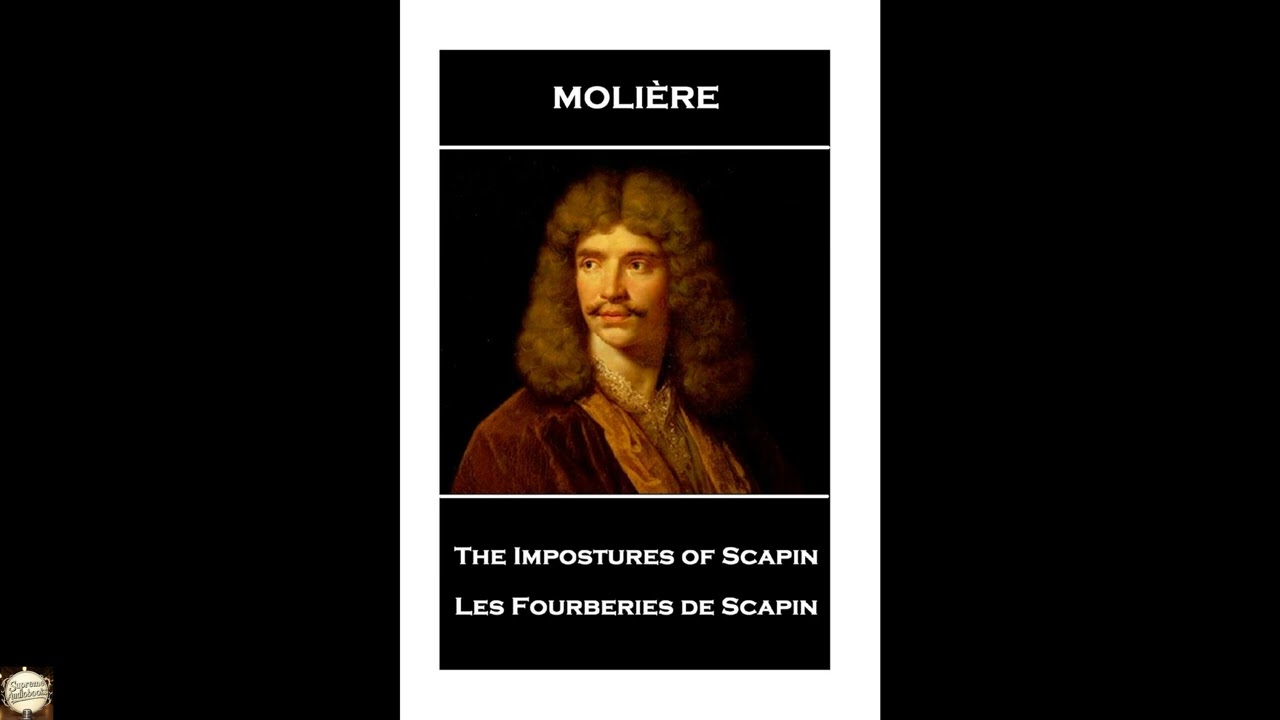
Moliere - The Impostures of Scapin: Les Fourberies de Scapin
Step into the raucous, sun-drenched streets of Naples with Molière's uproarious farce, The Impostures of Scapin. This rollicking comedy, a staple of French theater for centuries, skewers human vanity and exposes the timeless folly of miserly parents and overly-bold youth. It is a play that proves wits, not wealth, win the day, and that a truly cunning servant can turn the world upside down for love and a good laugh. Its relentless energy, clever wordplay, and ingenious schemes resonate just as powerfully today, reminding us that the universal absurdities of life—and the lengths people go to for affection or money—are perennially amusing. If you enjoy quick wit, physical comedy, and the satisfaction of seeing the arrogant brought low by a trickster, this play offers pure, unadulterated entertainment. The play unfolds in the bustling port city of Naples, a perfect backdrop for confusion and clandestine activities. We meet two wealthy, aging fathers, Argante and Géronte, who have recently returned home to discover their sons, Octave and Léandre, have each fallen passionately in love while their fathers were away. Octave has secretly married the impoverished Hyacinthe, a young woman of unknown origins, while Léandre has become entangled with Zerbinette, a spirited Romani girl. Both fathers, however, have their own rigid plans for their sons' futures, having arranged respectable and financially advantageous marriages that clash spectacularly with the young men's romantic attachments. Faced with their fathers' predictable outrage and refusal to bless their unions, the desperate sons turn to Scapin, Léandre's quick-witted and notoriously mischievous servant. Scapin, a character of boundless ingenuity and impudence, relishes the challenge. He pledges to help the lovers, not only by outwitting their stingy fathers but also by extracting the necessary funds to secure the marriages. What follows is a whirlwind of deceptions, disguises, and outrageous lies, as Scapin orchestrates a series of increasingly elaborate schemes designed to manipulate the two fathers. From fabricating fantastic tales of danger and ransom to staging elaborate ruses, Scapin keeps everyone, especially the audience, on the edge of their seats, leading to a grand, farcical climax where all deceptions unravel, promising an unexpected, yet satisfying, resolution for the young lovers and a final, comic comeuppance for the avaricious fathers. The genius behind this enduring comedy was Jean-Baptiste Poquelin, better known by his stage name, Molière. Born in Paris in 1622, the son of a prosperous upholsterer and royal valet, Molière initially pursued a legal education but soon abandoned it for the lure of the theater. In 1643, he founded the "Illustre Théâtre" company, which, despite its promising name, soon faced bankruptcy. This early setback led Molière and his troupe to tour the provinces of France for over a decade, honing their craft and developing the keen observational skills that would define his later work. Upon returning to Paris in 1658, Molière quickly gained the patronage of King Louis XIV, securing his company a prominent place on the Parisian stage. Molière himself was a gifted actor, often performing leading roles in his own plays, even while suffering from a chronic lung condition. His life was intensely devoted to the stage; he famously collapsed and died in 1673 shortly after performing in The Imaginary Invalid. His impressive canon includes some of the most celebrated comedies in literary history: Tartuffe, a biting satire on religious hypocrisy; The Misanthrope, a witty examination of social honesty; The School for Wives, which challenged conventional views on education and marriage; and The Miser, a sharp look at avarice. Molière’s contributions established him as the foremost writer of French comedy, influencing generations of playwrights and leaving an indelible mark on global theater. The Impostures of Scapin brilliantly enacts several enduring human themes. Foremost among them is the theme of deception and trickery, personified by the titular servant. Scapin is a master manipulator, lying with casual ease and crafting elaborate scenarios. A prime example is his famous "Turkish galley" ruse, where he convinces Géronte that his son Léandre has been abducted by Turkish pirates and requires a hefty ransom for his release. He further illustrates this when he persuades Géronte to hide inside a sack, claiming imaginary assailants are nearby, only to "beat" Géronte with a stick, supposedly protecting him from various figures. This scene, a marvel of physical comedy, highlights Scapin's audacity and the gullibility of his targets. The play also directly addresses the tension between parental authority and youthful desire. The fathers, Argante and Géronte, represent rigid, traditional power structures attempting to dictate their children's happiness based on social standing and wealth. The sons, Octave and Léandre, embody the yearning for autonomy and love. Their appeals to Scapin are a direct rebellion against this parental tyranny, reflecting a timeless conflict. Another central theme is that of money and greed. The fathers' miserliness is not just a character trait; it is a primary engine of the plot, creating the initial conflict and driving Scapin's schemes to extract funds. Argante's constant lament about expenses and Géronte's fear of any financial outlay make them ripe for Scapin’s deceptions, particularly those involving "ransom" or "debts." The play subtly satirizes the pretensions of the upper class and the absurdity of valuing wealth over genuine affection or happiness. Molière, through Scapin, gleefully exposes these societal flaws, often to the delight of audiences who recognize these universal follies in their own world. Molière penned The Impostures of Scapin in 1671, during the dazzling reign of King Louis XIV, a period often referred to as France's Golden Age. This era was characterized by an absolute monarchy, strict social hierarchies, and a blossoming of arts and letters, with theater enjoying significant royal patronage. However, this patronage came with expectations, and Molière, despite his success, had faced censorship for more controversial plays like Tartuffe. In this context, Scapin emerged as a pure farce, drawing heavily from the traditions of Italian commedia dell'arte with its stock characters, improvised scenes, and emphasis on physical comedy and elaborate plots. It was a play designed for laughter, a lighthearted diversion that provided a counterpoint to Molière's more serious character studies. The French audiences, accustomed to both high tragedy and popular street theater, readily embraced the boisterous energy and the clever wit, appreciating how Molière infused these traditional forms with his own distinct comedic genius and sharp social commentary, albeit in a more disguised fashion for a farce. Listening to The Impostures of Scapin as an audiobook offers a unique opportunity to immerse oneself in the play’s kinetic energy without the visual distractions of a stage production. A skilled narrator will differentiate characters not just through voice, but through rhythm and intonation, bringing Scapin's cunning charm, the fathers' blustering indignation, and the lovers' frantic anxieties vividly to life. Pay close attention to the pacing; the schemes build in complexity and speed, creating a sense of escalating chaos that the narration should perfectly capture. The dialogue, even in translation, maintains Molière’s signature wit, and a good narrator will highlight the comedic timing and the cleverness of Scapin’s improvised lines. You will feel transported to the sun-drenched squares and backrooms of Naples, experiencing the conspiratorial whispers and the booming pronouncements that fuel this delightful theatrical romp, all unfolding across several hours of engaging narrative.
Enjoyed Moliere - The Impostures of Scapin: Les Fourberies de Scapin? A few ways to support us
Audible & Amazon links are affiliate; we may earn a small commission at no extra cost.
About this production
Human narration by a volunteer reader from LibriVox.org, the public-domain audiobook project. LibriVox volunteers record literary works whose copyright has expired in the United States, releasing the resulting recordings into the public domain.
Moliere - The Impostures of Scapin: Les Fourberies de Scapin by The Impostures of Scapin: Les Fourberies de Scapin. The underlying text is in the U.S. public domain. We do not republish any modern copyrighted edition, translation, or commentary.
The 4K cinematic visuals accompanying this audiobook are generated by an AI image model from prompts derived from the source text. No copyrighted photos, paintings, or stock footage are used. AI generation is disclosed on every video on our YouTube channel as required by YouTube's altered/synthetic content policy.
English subtitles are transcribed from the LibriVox recording with OpenAI Whisper. Translations into the 11 other supported languages are produced by Meta's NLLB-200 neural translation model. No human translator's copyrighted translation is used.
Questions about sourcing or rights? See our DMCA & Sourcing policy or contact us.
Enjoyed this audiobook?
If you'd like to own a copy of Moliere - The Impostures of Scapin: Les Fourberies de Scapin or hear a professionally produced edition, the links below help support free audiobook production at no extra cost to you.
As an Amazon Associate we earn from qualifying purchases. Audible / print links are affiliate.