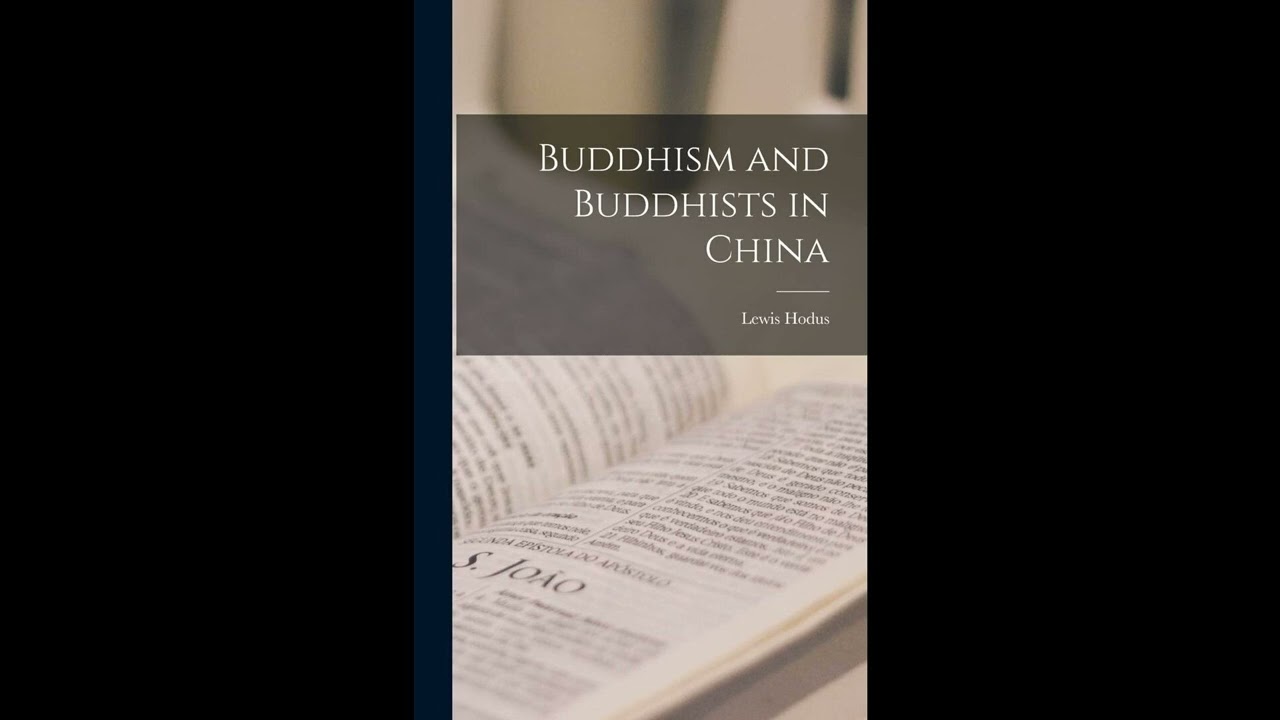
Buddhism and Buddhists in China
Step into a world where a profound spiritual tradition meets an ancient civilization, where the wisdom of the East takes root and flowers in unexpected ways. Lewis Hodus's "Buddhism and Buddhists in China" offers a rare window into this monumental cultural and religious intersection. Far from a mere historical recounting, this work provides a detailed yet accessible understanding of how Buddhism, originating in India, became inextricably woven into the fabric of Chinese society, thought, and daily life. It is an essential listening experience for anyone seeking to comprehend the deep currents that shaped one of the world's most enduring cultures, and to appreciate the transformative power of ideas across centuries. Hodus lays out a comprehensive picture of Buddhism’s arrival in China, tracing its initial reception, often with suspicion or misunderstanding, through its periods of rapid growth and widespread acceptance. He describes the arduous work of early translators who bridged the vast linguistic and conceptual gaps between Sanskrit and Chinese, slowly making profound Buddhist scriptures available to Chinese thinkers. The story unfolds as Buddhism is gradually domesticated, shedding some of its Indian characteristics and adopting forms more resonant with the existing philosophical landscape of Confucianism and Taoism. Listeners will gain insight into the emergence of distinctly Chinese schools of thought, such as Chan Buddhism—better known in the West by its Japanese name, Zen—which prioritized meditation and direct experience over scripture study. The description then moves beyond mere doctrine to illuminate the lived experience of Chinese Buddhists. Hodus details monastic life, from the austere practices of reclusive monks to the communal routines of larger monasteries, which often served as centers of learning, art, and charity. He shows how Buddhist rituals, festivals, and practices permeated village life, offering solace, structure, and a framework for understanding existence and death. The listener will encounter descriptions of grand temple complexes, the creation of iconic statuary, and the rich tradition of Buddhist painting, all testaments to the religion's profound influence on Chinese aesthetics. Hodus carefully elucidates the social and political roles Buddhism played, sometimes enjoying imperial patronage and at other times facing severe persecution, highlighting the dynamic tension between spiritual aspiration and worldly power. Lewis Hodus dedicated a significant portion of his life to understanding and communicating the nuances of Chinese culture and religion to a Western audience. Though precise dates of his life and work are not widely recorded, his scholarly output suggests he was a figure active during a period of intense Western academic and missionary engagement with China. Individuals like Hodus often served as cultural conduits, immersing themselves in foreign languages, customs, and religious practices to produce authoritative texts that informed generations of Western students and scholars. His background likely involved extensive fieldwork and study within China itself, granting him a firsthand perspective on the traditions he documented. Such scholars were instrumental in establishing the foundations of what would become the academic field of Sinology, translating complex ideas and presenting them with clarity and insight. The significance of Hodus's contribution lies in his meticulous approach to a subject that, at the time, was still largely unfamiliar to many outside of specialist circles. He was part of an important intellectual movement that sought to move beyond simplistic or ethnocentric views of Eastern cultures, aiming instead for genuine understanding. His works, including this notable study, became foundational texts for anyone seeking a serious introduction to Chinese religious life, positioning him as a respected voice in the burgeoning discourse on comparative religion and cross-cultural studies. His writings are characterized by a profound respect for the subject matter, coupled with a rigorous academic methodology designed to inform and enlighten. One of the central ideas presented within "Buddhism and Buddhists in China" is the concept of cultural assimilation and adaptation. Hodus powerfully illustrates how Buddhism, a foreign import, did not simply replace existing Chinese belief systems but rather entered into a complex dialogue with them. For example, he shows how Buddhist concepts of filial piety were reinterpreted to align with deeply ingrained Confucian ethics, or how Taoist ideas of naturalness and spontaneity found echoes in Chan Buddhist thought. Another prominent idea is that of religious transformation and innovation. Hodus details how Chinese Buddhists developed unique schools and practices, such as the Pure Land school, which offered a simplified path to enlightenment accessible to a wider populace, or the aforementioned Chan tradition, with its emphasis on sudden awakening. These developments were not mere imitations but truly indigenous creative responses to the challenges and opportunities of a new cultural landscape. Furthermore, Hodus’s observations underscore the enduring power of religious belief to shape societal structures and individual lives. He provides many illustrations of how Buddhist principles influenced Chinese art, literature, governance, and even everyday courtesies. Listeners will hear accounts of the popular veneration of Bodhisattvas, the role of temples as community centers, and the way Buddhist cosmology offered a framework for understanding suffering and seeking liberation. His careful attention to the evolution of these aspects across centuries serves to demonstrate the dynamic nature of faith and its capacity to sustain and reshape a culture over millennia, showcasing the profound impact of spiritual thought on the material world. This detailed examination emerged during a historical period of heightened global exchange and scrutiny. The late nineteenth and early twentieth centuries saw an increasing presence of Western scholars, missionaries, and diplomats in China, leading to a surge in attempts to document and interpret Chinese culture for Western audiences. It was a time when academic disciplines like oriental studies and comparative religion were being formally established, driven by a growing desire to understand non-Western civilizations in their own terms, rather than through purely colonial lenses. Hodus's work reflects this shift, contributing to a body of literature that sought to bridge understanding between East and West, often challenging prevailing stereotypes and promoting a more nuanced view of China’s spiritual heritage. Such works were vital in shaping early Western perceptions of Asian cultures and laid the groundwork for future generations of scholars. Listening to "Buddhism and Buddhists in China" as an audiobook offers a singular opportunity to engage with this foundational text. The spoken word allows the intricate details of Chinese history, philosophy, and religious practice to unfold at a contemplative pace. The narrator's clear articulation and measured delivery will ensure that even complex terms and concepts are absorbed with ease, inviting a deeper immersion into the subject. Running for several hours, this allows listeners the flexibility to absorb the material in focused sessions, perhaps during daily commutes or quiet evenings, without feeling rushed. It is an ideal format for reflecting on the author’s insightful observations, for following the historical narrative, and for appreciating the cultural specificities that Hodus so carefully illuminates.
Enjoyed Buddhism and Buddhists in China? A few ways to support us
Audible & Amazon links are affiliate; we may earn a small commission at no extra cost.
About this production
Human narration by a volunteer reader from LibriVox.org, the public-domain audiobook project. LibriVox volunteers record literary works whose copyright has expired in the United States, releasing the resulting recordings into the public domain.
Buddhism and Buddhists in China by Lewis Hodus. The underlying text is in the U.S. public domain. We do not republish any modern copyrighted edition, translation, or commentary.
The 4K cinematic visuals accompanying this audiobook are generated by an AI image model from prompts derived from the source text. No copyrighted photos, paintings, or stock footage are used. AI generation is disclosed on every video on our YouTube channel as required by YouTube's altered/synthetic content policy.
English subtitles are transcribed from the LibriVox recording with OpenAI Whisper. Translations into the 11 other supported languages are produced by Meta's NLLB-200 neural translation model. No human translator's copyrighted translation is used.
Questions about sourcing or rights? See our DMCA & Sourcing policy or contact us.
Enjoyed this audiobook?
If you'd like to own a copy of Buddhism and Buddhists in China or hear a professionally produced edition, the links below help support free audiobook production at no extra cost to you.
As an Amazon Associate we earn from qualifying purchases. Audible / print links are affiliate.