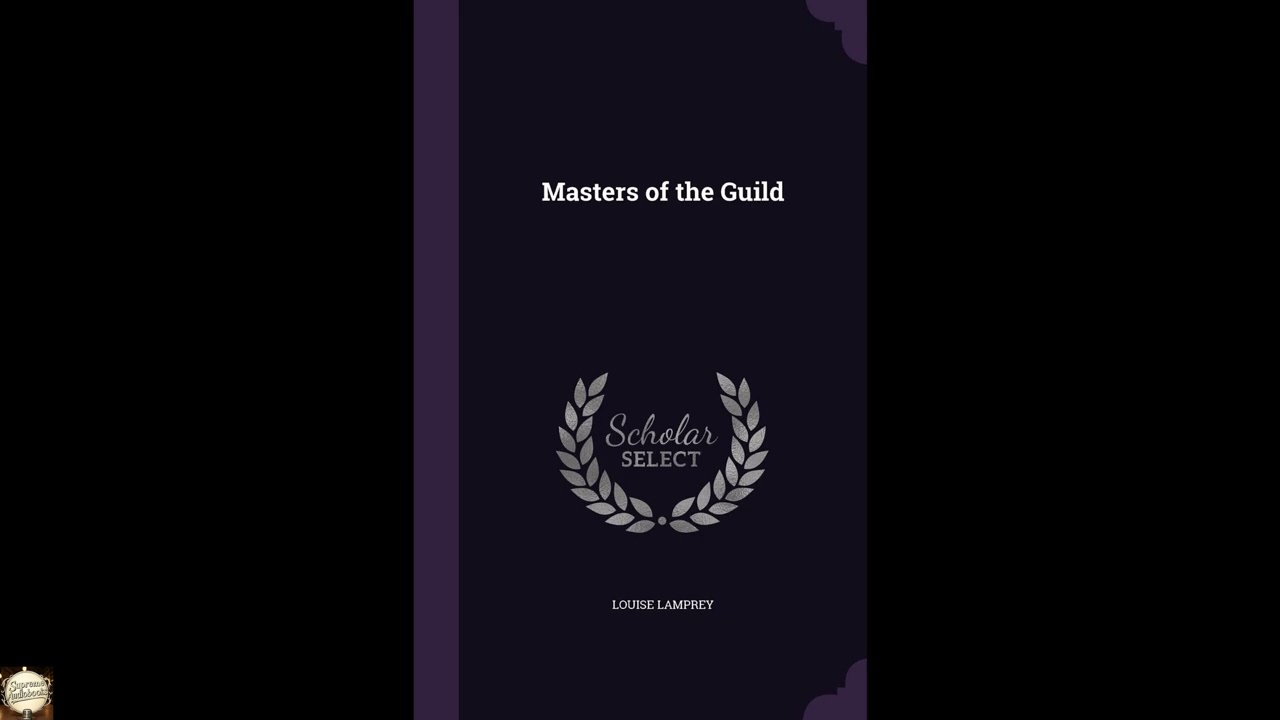
Masters of the Guild
"Masters of the Guild" by Louise Lamprey is more than just a historical novel; it's a resonant echo from a bygone era that speaks directly to the modern quest for purpose and skill. Set against the backdrop of bustling medieval European towns, this book immerses the listener in a world where meticulous craftsmanship, ancient traditions, and fierce ambition define one's place. It asks enduring questions about true excellence: Is it inherited talent, diligent practice, or something more profound? For anyone who has striven for mastery or wondered about the daily lives of those who built the world centuries ago, Lamprey's narrative offers a reflection on this universal pursuit. The story unfolds within the often-rigid world of a powerful medieval guild, which governed everything from apprentice training to finished goods. Young Peter, an eager and gifted orphan, arrives at the workshop of Master Wolfram, a renowned silversmith known for exacting standards. Peter’s aspiration is clear: to learn the artistry of metalwork, earn his place, and eventually create a masterpiece granting him master status. His early days are filled with the drudgery and painstaking repetition essential to true apprenticeship, testing his patience and dexterity. As Peter progresses, he encounters varied personalities in the workshop and wider guild community, including the kind Dame Elara and the jealous apprentice Matthias, whose resentment creates friction. The central conflict intensifies as Peter approaches his "masterpiece" — the creation required for entry into the highest ranks. He faces technical challenges, internal struggles of self-doubt, and external pressures from rival factions within the guild. The narrative builds towards Peter's ultimate test, detailing his creative process and political maneuvers threatening his efforts. His journey confronts personal limitations and formidable societal structures, as he seeks to prove his worth as both craftsman and man. Louise Lamprey (1869-1951) was an American author whose genius lay in making history accessible and engaging, often for younger readers, but with broad appeal. Born in Massachusetts, Lamprey spent much of her career as an educator and writer, bringing the distant past to vivid life through narrative. Her work spanned the early 20th century, a time of growing interest in educational reform and new approaches to teaching history. Lamprey's method immersed readers in the daily lives and challenges of historical periods, evident in collections like "Days of the Discoverers" and "Children of Ancient Britain." She skillfully researched historical details, weaving them into compelling stories, fostering deeper appreciation for the past. While not associated with a single literary movement like modernism, Lamprey occupied a significant niche within American letters as a purveyor of well-researched historical fiction. Her contributions helped shape a generation's understanding of history, solidifying her place as an author valued for educational content and narrative charm. "Masters of the Guild" stands as a testament to her skill in rendering a distant era with accuracy and imaginative flair. "Masters of the Guild" thoughtfully addresses several enduring themes, foremost among them craftsmanship and the pursuit of excellence. Through Peter's laborious apprenticeship and dedication, the book illustrates the profound satisfaction derived from skilled labor and the value of perfecting one's art. Scenes of clinking hammers and meticulous polishing underscore the dignity of honest work and the demanding path to proficiency. Peter spends weeks on minuscule imperfections, demonstrating that mastery builds on relentless attention to detail and a refusal to compromise. Another significant theme is the tension between tradition and innovation. The guild system, with its strict rules, represents the powerful pull of historical practices. Yet, Peter, while respecting these traditions, brings his own vision and subtle innovations, suggesting true progress often comes from a respectful push against the past. Guild politics highlight this, as older masters cling to familiar ways while others acknowledge new approaches. The narrative also examines mentorship and the passing of knowledge, as Master Wolfram guides Peter through technical challenges and life lessons, shaping both artisan and character. Louise Lamprey published "Masters of the Guild" in the early 20th century, a period of rapid American industrialization. As factories and mass production became the norm, a cultural nostalgia for pre-industrial eras grew, particularly for the idealized craftsmanship and community spirit of medieval Europe. The Arts and Crafts movement, originating in Britain, echoed strongly in America, advocating for a return to handcrafted goods and valuing the artisan's touch over factory labor. This cultural backdrop provided fertile ground for historical fiction celebrating earlier skills and traditions. Lamprey's work emerged from this confluence, offering readers an escape into a world where skill was paramount and quality a source of communal pride. Her narratives served as a quiet commentary on virtues seemingly eroding amidst modern progress. "Masters of the Guild," with its focus on an artisan's dedication within a structured, tradition-bound system, encapsulates this societal yearning for historical craft and the dignity of manual labor. Listening to "Masters of the Guild" as an audiobook offers a uniquely immersive experience, allowing the listener to truly inhabit Lamprey's carefully constructed world. The story, running for several hours, invites sustained engagement. A skilled narrator can bring Peter's youthful determination, Master Wolfram's gruff wisdom, and Matthias's simmering envy to life through distinct vocalizations, making characters feel immediate. The narration's pacing can match the deliberate nature of the silversmith's work, building atmosphere through measured descriptions of guild life and workshop sounds. Dialogue, rendered with careful attention to inflection and tone, deepens understanding of social hierarchies and personal motivations, transforming a written account into a sonic landscape of medieval artistry and ambition.
Enjoyed Masters of the Guild? A few ways to support us
Audible & Amazon links are affiliate; we may earn a small commission at no extra cost.
About this production
Human narration by a volunteer reader from LibriVox.org, the public-domain audiobook project. LibriVox volunteers record literary works whose copyright has expired in the United States, releasing the resulting recordings into the public domain.
Masters of the Guild by Louise Lamprey. The underlying text is in the U.S. public domain. We do not republish any modern copyrighted edition, translation, or commentary.
The 4K cinematic visuals accompanying this audiobook are generated by an AI image model from prompts derived from the source text. No copyrighted photos, paintings, or stock footage are used. AI generation is disclosed on every video on our YouTube channel as required by YouTube's altered/synthetic content policy.
English subtitles are transcribed from the LibriVox recording with OpenAI Whisper. Translations into the 11 other supported languages are produced by Meta's NLLB-200 neural translation model. No human translator's copyrighted translation is used.
Questions about sourcing or rights? See our DMCA & Sourcing policy or contact us.
Enjoyed this audiobook?
If you'd like to own a copy of Masters of the Guild or hear a professionally produced edition, the links below help support free audiobook production at no extra cost to you.
As an Amazon Associate we earn from qualifying purchases. Audible / print links are affiliate.