Cymbeline
Step into a world where ancient Britain grapples with the might of imperial Rome, where royal courts seethe with ambition and deceit, and where the most steadfast love is tested by cruel slanders. Cymbeline is one of those rare tales that defies easy categorization, blending the sweep of historical legend with the intense emotional drama of personal betrayal and astonishing coincidences. It is a story that resonates powerfully today because it speaks to the enduring human experiences of loyalty and suspicion, the agony of false accusation, and the ultimate triumph of truth and reconciliation. This is a narrative that asks us to consider what we truly value: reputation or integrity, power or peace, vengeance or forgiveness—questions as urgent now as they were in the dawn of recorded history. Our story begins in a Britain ruled by King Cymbeline, a monarch caught between the demands of his kingdom and the tempestuous relationships within his own family. His beloved daughter, Imogen, has secretly wed Posthumus, a virtuous but low-born gentleman, much to the fury of Cymbeline, who had intended her for his stepson, the boorish and self-serving Cloten. As punishment, Posthumus is banished to Rome, leaving Imogen heartbroken and exposed to the machinations of her stepmother, the Queen, and Cloten, who plot to eliminate her and seize the throne. It is in Rome that Posthumus, in a moment of misguided pride, falls prey to the cunning Iachimo, who wagers that he can compromise Imogen's honor. Iachimo travels to Britain and employs a devious scheme of deception, planting false evidence that convinces Posthumus of Imogen's infidelity. Overwhelmed by a vengeful rage, Posthumus sends a letter commanding Imogen's servant to murder her. However, the loyal servant, Pisanio, reveals the plot to Imogen, who, desperate and disguised as a young man named Fidele, flees into the wilderness. Her perilous journey leads her to a remote cave inhabited by Belarius, an exiled nobleman, and his two adoptive sons, Guiderius and Arviragus, who are, unbeknownst to them, Cymbeline's own long-lost sons, stolen in infancy. As Britain teeters on the brink of war with Rome over tribute payments, the forces of destiny draw all these characters, with their hidden identities and entangled fates, towards a complex and dramatic confrontation, where old wrongs must be righted and true loves rediscovered. The very concept of an "author" as we understand it today—a single named individual creating a work from scratch—is a relatively recent invention. For much of human history, stories like Cymbeline arose from a collective consciousness, evolving through oral traditions, passed down from generation to generation by bards, poets, and storytellers. These narratives were not fixed texts but living entities, adapted and reshaped with each retelling to suit new audiences or underscore prevailing moral lessons. The specific Cymbeline we know may have been refined and formalized at certain points, perhaps by early chroniclers or scribes, but its foundational elements likely existed long before, forming part of a cultural heritage shared across communities. To speak of a singular "biography" for the author of such a work is to misunderstand its nature. Instead, we can think of the "author" as the collective voice of countless individuals over centuries, all contributing to the preservation and embellishment of a foundational legend. These storytellers, whoever they were and whenever they lived, helped to shape the identity of a people by recounting their myths of origin, their heroes, and their trials. They operated not for personal fame, but for the perpetuation of cultural memory, ensuring that the wisdom, warnings, and wonders of the past continued to inform the present. Such works sit at the heart of the canon not because of a single genius, but because they represent the enduring power of human storytelling itself. At its core, Cymbeline enacts the profound theme of virtue tested by adversity. Imogen stands as a beacon of unwavering loyalty and purity, even as she is slandered, falsely accused, and condemned to death by her own husband. Her steadfastness in the face of such overwhelming injustice—witnessed particularly in her disguise as Fidele and her resilience in the wild—highlights how true character shines brightest when stripped of reputation and comfort. A related theme is the deceptive nature of appearances. Iachimo's elaborate trickery, designed to convince Posthumus of Imogen's infidelity, relies entirely on creating misleading visual cues. Similarly, the royal princes, Guiderius and Arviragus, grow up in a rustic cave, appearing as common woodsmen, yet their inherent nobility and courage betray their royal lineage, illustrating that true worth resides not in outward show but in intrinsic spirit. The narrative also powerfully conveys the theme of reconciliation and forgiveness. Despite the immense suffering and betrayals, the story ultimately moves towards a grand coming together where grievances are aired, truths revealed, and forgiveness extended. Posthumus’s bitter repentance for his rash condemnation of Imogen, and Cymbeline’s eventual acceptance of his children and former adversaries, demonstrate the profound human capacity for overcoming anger and error. Finally, the tale underlines the concept of providential order and the restoration of balance. Though chaos and injustice reign for much of the story, there is a sense that a higher force guides events. Prophecies and dreams, often present in ancient tales, point towards an eventual harmonious resolution, suggesting that wrongs will be righted and true order will inevitably be restored, even if through intricate and circuitous paths. The legends surrounding Cymbeline and his era are steeped in the historical and political realities of ancient Britain, a period roughly coinciding with the rise of the Roman Empire and its eventual presence on the British Isles. Culturally, this was a time of tribal kingdoms, strong warrior traditions, and an oral storytelling tradition that preserved history, lineage, and moral instruction. Such narratives often served a crucial political function, establishing the legitimacy of rulers, justifying alliances or conflicts, and reinforcing a sense of national identity against external threats, most notably the encroaching Roman power. Works like Cymbeline likely emerged as a way to understand and interpret these monumental shifts—the clash of civilizations, the loyalties owed to king and country, and the trials faced by heroes and heroines caught in the maelstrom of history. They reflected the values of their time: honor, courage, fidelity, and the importance of familial and dynastic continuity. The weaving of personal drama with grand historical events would have made these stories deeply resonant, offering both entertainment and a framework for understanding the complex world in which their audiences lived, making sense of a past that shaped their present. To experience Cymbeline as an audiobook is to truly immerse oneself in the grandeur and intimacy of its narrative. The several hours of listening time are ideal for a story of this scope, allowing listeners to fully sink into its unfolding drama during commutes, while tackling household tasks, or simply relaxing after a long day. A skilled narrator breathes life into each character, making the devious Iachimo's whispers feel truly insidious, Imogen's despair palpable, and the eventual reunions profoundly moving. Listen for the subtle shifts in vocal tone that delineate the court's scheming from the raw emotion of the lovers, or the plain-spoken wisdom of the cave dwellers. The pacing can build tension during moments of peril and allow for thoughtful contemplation during passages of lyrical beauty or emotional depth, ensuring that every twist and turn of this extraordinary tale is rendered with dramatic clarity and emotional power.
Enjoyed Cymbeline? A few ways to support us
Audible & Amazon links are affiliate; we may earn a small commission at no extra cost.
About this production
Human narration by a volunteer reader from LibriVox.org, the public-domain audiobook project. LibriVox volunteers record literary works whose copyright has expired in the United States, releasing the resulting recordings into the public domain.
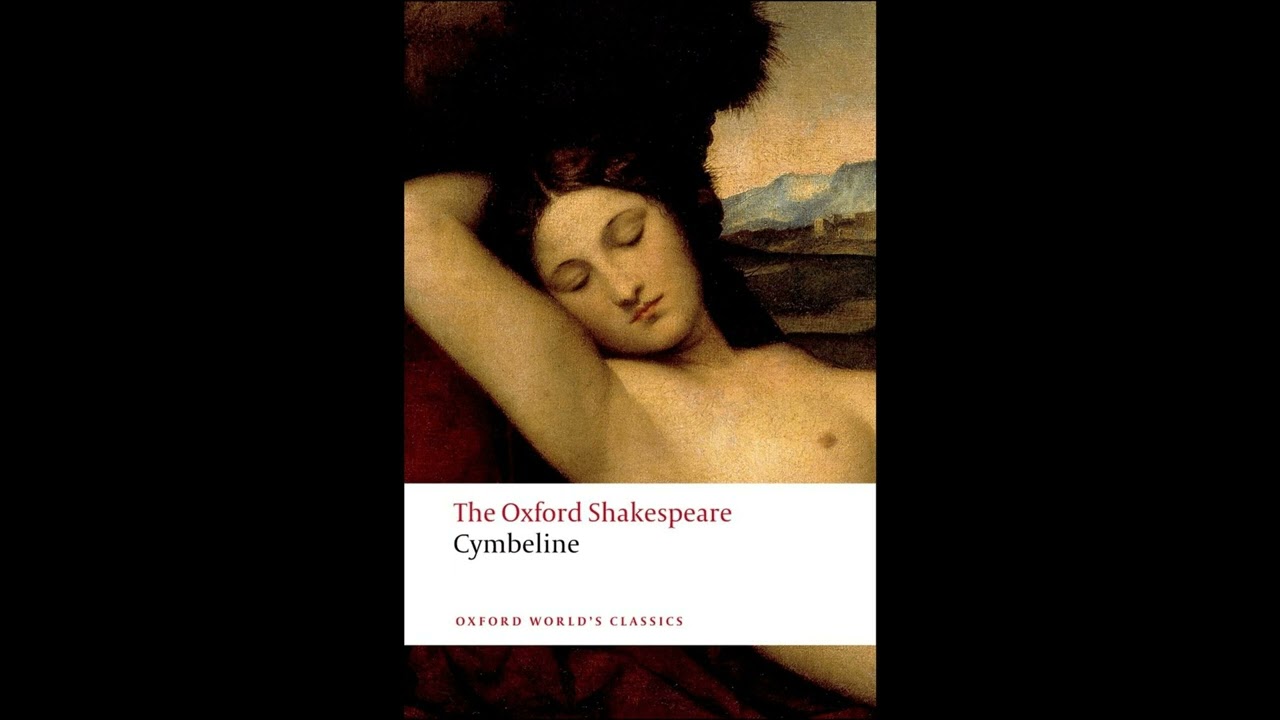
Cymbeline by William Shakespeare. The underlying text is in the U.S. public domain. We do not republish any modern copyrighted edition, translation, or commentary.
The 4K cinematic visuals accompanying this audiobook are generated by an AI image model from prompts derived from the source text. No copyrighted photos, paintings, or stock footage are used. AI generation is disclosed on every video on our YouTube channel as required by YouTube's altered/synthetic content policy.
English subtitles are transcribed from the LibriVox recording with OpenAI Whisper. Translations into the 11 other supported languages are produced by Meta's NLLB-200 neural translation model. No human translator's copyrighted translation is used.
Questions about sourcing or rights? See our DMCA & Sourcing policy or contact us.
Enjoyed this audiobook?
If you'd like to own a copy of Cymbeline or hear a professionally produced edition, the links below help support free audiobook production at no extra cost to you.
As an Amazon Associate we earn from qualifying purchases. Audible / print links are affiliate.