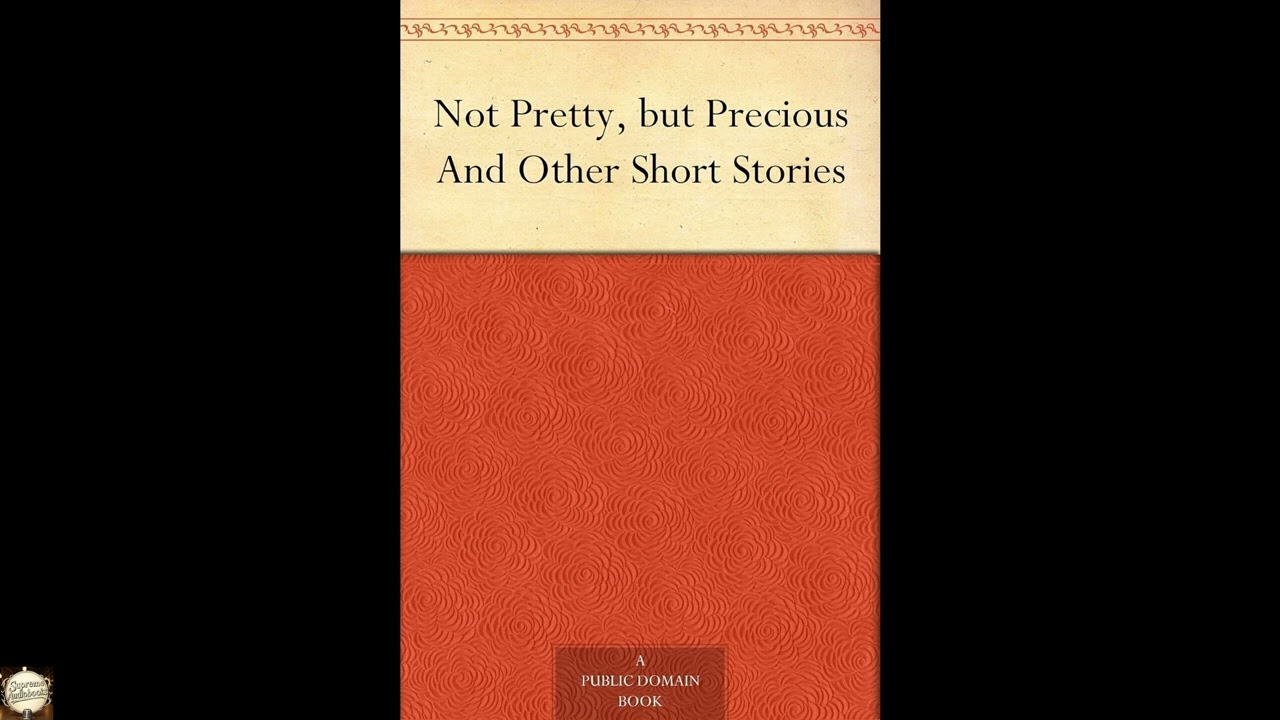
Not Pretty, but Precious And Other Short Stories
Some books whisper their truths rather than shouting them, and Margret Field's "Not Pretty, but Precious And Other Short Stories" stands as a quiet testament to this power. This collection offers listeners a window into lives often overlooked, moments usually dismissed, and beauty residing in the most unexpected corners of human experience. It is a work that reminds us that true worth isn't always found in the grand or the glamorous, but in the resilient spirit, the everyday kindness, and the profound dignity of ordinary people. Field's observations, sharp yet empathetic, resonate today as strongly as when they were first penned, inviting us to find the sacred in the mundane and to appreciate the profound value of lives lived without fanfare. Across these several hours of narrative, Field transports us to a world shaped by circumstance and quiet aspiration, often set in the constrained social landscapes of late nineteenth or early twentieth-century life. We might encounter a young woman named Elara, whose days are spent in the laborious rhythm of a textile mill, her hands coarsened by work, her dreams seemingly fading with each passing year. Yet, through Field’s sensitive lens, Elara’s precise stitching on a worn sampler, a small act of creative defiance in her meager room, becomes a potent symbol of her uncrushable spirit. Her interactions with a terse, but ultimately decent, foreman reveal the subtle complexities of class and expectation, painting a picture where genuine human connection can bloom in barren ground, much like a tenacious wildflower pushing through pavement cracks. Another story might introduce us to Mr. Finch, an aging widower residing in a cramped city apartment, his life seemingly reduced to routine and regret after the loss of his beloved wife. His solitary existence is punctuated by the arrival of a chirping spatch of robins on his window ledge, a small, insistent burst of life against the gray of his days. What begins as an annoyance slowly transforms into a fragile source of wonder, pulling him out of his self-imposed isolation. Field excels at showing how these seemingly insignificant events—a bird's song, a shared glance, a whispered memory—can ripple through a life, offering solace and an unexpected glimmer of hope, demonstrating that even in the quietest lives, profound transformations are possible. Margret Field, a literary figure emerging in the twilight years of the Victorian era and continuing into the early twentieth century, quietly carved out a distinctive niche in the literary landscape. Though perhaps not as widely canonized as some of her more flamboyant contemporaries, Field was a keen observer of societal shifts and the human heart. Her work is often associated with a realist tradition, focusing on the domestic sphere, the intricacies of social manners, and the unvarnished realities faced by women and working-class individuals of her time. Her origins, likely rooted in a modest background, informed her deeply empathetic portrayal of characters whose lives were far from the privileged salons or grand estates often depicted in popular fiction. Field's prose, characterized by its clarity and understated elegance, garnered a loyal following among readers who appreciated her honest, unsentimental approach to storytelling. She was known to reside for much of her life in modest circumstances, drawing inspiration directly from the everyday interactions and struggles she witnessed in her local communities. Her literary output, while not voluminous, consistently maintained a high standard of craftsmanship, often appearing in popular literary magazines of the period before being collected into volumes like this one. She stands as an important voice for a particular kind of quiet social realism, capturing the zeitgeist of an age undergoing significant social redefinition. At its core, "Not Pretty, but Precious" champions the theme of dignity in quiet lives. Field repeatedly demonstrates how individuals, regardless of their social standing or external circumstances, possess an inherent worth that shines through their actions and resilience. For instance, in the story of Elara, her painstaking care for her sampler, an object with no market value, speaks volumes about her inner world and refusal to be defined solely by her toil. This is not a story about grand protests or heroic acts, but about the quiet assertion of self in the face of adversity. Field also vividly portrays the subjective nature of perception, showing how something initially dismissed as "not pretty"—like Mr. Finch's unwanted bird visitors or the weariness in Elara’s eyes—can, through a shift in perspective, reveal its "precious" essence. The world, Field suggests, is full of hidden wonders for those willing to look beyond the superficial. Another prominent theme running through Field’s collection is the resilience of the human spirit. Her characters face genuine hardships—poverty, loneliness, societal judgment—yet they consistently find small ways to endure, to hope, and to connect. There’s a quiet strength in their perseverance, an affirmation of life even when circumstances are challenging. Finally, the collection highlights the theme of the power of small moments. Field understands that life-altering revelations often don’t come from monumental events but from fleeting instances: a shared smile, a sudden ray of light, a remembered melody. These small, seemingly insignificant moments are often the catalysts for profound change or deeper understanding in her narratives. The late nineteenth and early twentieth centuries, the likely period of Field's most active writing, witnessed profound shifts in Western society. Industrialization had transformed landscapes and social structures, creating new urban centers and an increasingly defined working class. Traditional gender roles were beginning to be questioned, though subtly, and the literary world itself was moving away from overt romanticism towards more realistic and naturalistic portrayals of life. Field's work emerged within this context, a direct response to the need for literature that reflected the everyday experiences of ordinary people, not just the elite. It was a time when the short story form gained immense popularity, serving as a powerful medium for capturing vignettes of modern life, offering concise yet potent insights into character and societal dynamics. "Not Pretty, but Precious" speaks to this era’s burgeoning interest in social realism, providing a vital counterpoint to more idealized narratives by focusing on authenticity and the often-unseen struggles and triumphs of common individuals. Listening to "Not Pretty, but Precious And Other Short Stories" as an audiobook offers a uniquely intimate experience, perfectly suited to Field’s delicate observations and character-driven narratives. The narrator’s voice becomes the conduit for these quiet revelations, allowing the subtle shifts in tone, the unspoken emotions in dialogue, and the evocative descriptions of setting to truly come alive. The pacing, often gentle and reflective, invites you to slow down and savor each story, making it an ideal companion for a quiet evening at home, a contemplative walk, or a daily commute where you seek thoughtful reflection. The spoken word adds a layer of warmth and immediacy to Field's prose, transforming the experience from merely reading words on a page to sharing in a series of deeply human confidences, bringing the precious, if not always pretty, truths of these lives directly into your consciousness.
Enjoyed Not Pretty, but Precious And Other Short Stories? A few ways to support us
Audible & Amazon links are affiliate; we may earn a small commission at no extra cost.
About this production
Human narration by a volunteer reader from LibriVox.org, the public-domain audiobook project. LibriVox volunteers record literary works whose copyright has expired in the United States, releasing the resulting recordings into the public domain.
Not Pretty, but Precious And Other Short Stories by Margret Field. The underlying text is in the U.S. public domain. We do not republish any modern copyrighted edition, translation, or commentary.
The 4K cinematic visuals accompanying this audiobook are generated by an AI image model from prompts derived from the source text. No copyrighted photos, paintings, or stock footage are used. AI generation is disclosed on every video on our YouTube channel as required by YouTube's altered/synthetic content policy.
English subtitles are transcribed from the LibriVox recording with OpenAI Whisper. Translations into the 11 other supported languages are produced by Meta's NLLB-200 neural translation model. No human translator's copyrighted translation is used.
Questions about sourcing or rights? See our DMCA & Sourcing policy or contact us.
Enjoyed this audiobook?
If you'd like to own a copy of Not Pretty, but Precious And Other Short Stories or hear a professionally produced edition, the links below help support free audiobook production at no extra cost to you.
As an Amazon Associate we earn from qualifying purchases. Audible / print links are affiliate.