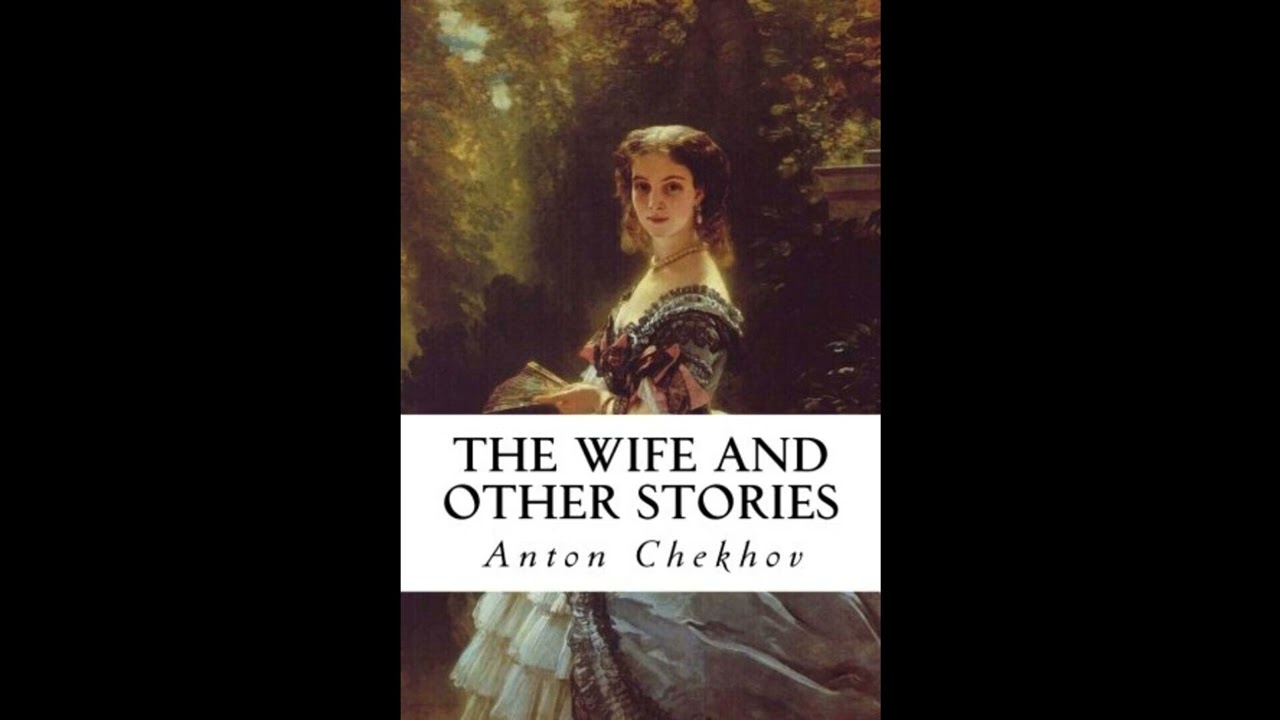
The Wife and Other Stories
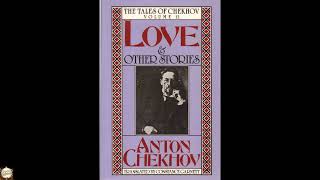
Anton Chekhov’s "The Wife and Other Stories" offers a window into the everyday tragedies and comedies of late 19th-century Russia, presenting human nature in all its flawed, aspirational, and often poignant reality. This collection serves as a testament to Chekhov’s enduring power as a writer who found profound meaning in the seemingly mundane, illuminating the quiet desperation, unspoken desires, and moral compromises that shape our lives. Listeners who appreciate incisive character studies, psychological depth, and narratives that reveal rather than declare will find themselves utterly absorbed, recognizing echoes of their own experiences and the universal struggles that transcend time and place. These narratives hold up a mirror, asking us to consider the hidden currents beneath polite conversation, the dreams deferred, and the constant, often futile, search for purpose. In the titular story, "The Wife," we meet Pavel Andreitch, a man who dedicates himself to what he perceives as a noble cause: aiding peasants during a time of famine. He lives on an estate, ostensibly sharing his life with his estranged wife, Sofia, though their marriage has long since dissolved into a landscape of mutual resentment and unspoken accusations. Pavel, an intellectual with grand humanitarian ideals, finds himself increasingly frustrated by his wife’s perceived lack of sympathy and her own withdrawn nature. The narrative unfolds against the backdrop of suffering villagers, yet much of the real drama plays out within the confines of Pavel’s own mind and the cold, formal interactions he shares with Sofia. He grapples with the disparity between his high-minded aspirations and the messy realities of his personal life, convinced that his wife is an impediment to his charitable work and his intellectual pursuits. The tension between them is palpable, a slow-burning fire of passive aggression and misunderstanding. Sofia remains a largely enigmatic figure, her quiet suffering and inner world mostly glimpsed through Pavel’s often self-serving perspective. He sees her as frivolous, indifferent, and an obstacle to his higher calling, while she appears trapped in a gilded cage of her own making or his. The story masterfully portrays the dynamics of a broken marriage, where two people, once perhaps drawn to each other, now exist in a state of quiet warfare, each convinced of their own righteousness and the other's failings. This domestic conflict subtly reflects broader societal tensions, with the characters representing different attitudes towards responsibility, compassion, and the pursuit of meaning in a changing world. Anton Pavlovich Chekhov, born in 1860 in Taganrog, Russia, led a life that profoundly shaped his literary output. The grandson of a serf who bought his family's freedom, Chekhov experienced both hardship and the upward mobility offered by education. He initially pursued medicine at Moscow University, a profession he continued to practice sporadically throughout his life, famously declaring, "Medicine is my lawful wife, and literature is my mistress." This dual career provided him with invaluable insights into human suffering, social conditions, and the complex inner lives of people from all walks of life—observations he meticulously integrated into his fiction. His early writing began as humorous sketches to support his family, but quickly evolved into the poignant, psychologically rich short stories and plays for which he is renowned. Chekhov’s later years were marked by a struggle with tuberculosis, which eventually led him to move to the warmer climate of Yalta in Crimea. Despite his declining health, he produced some of his most celebrated works during this period. His groundbreaking plays, including The Seagull, Uncle Vanya, Three Sisters, and The Cherry Orchard, revolutionized dramatic writing by focusing on mood, subtext, and the inner lives of characters rather than overt plot. Alongside these theatrical triumphs, his short stories—such as "Ward No. 6," "The Black Monk," and "The Lady with the Dog"—solidified his reputation as a master of the form, recognized for their understated realism and profound emotional resonance. He passed away in 1904, leaving behind a legacy that transformed both the short story and modern drama. A central theme running through Chekhov's stories, including "The Wife," is the pervasive sense of disillusionment and unfulfilled lives. His characters often inhabit a world of squandered potential, missed opportunities, and dreams that remain forever out of reach. Pavel Andreitch, for example, for all his intellectual posturing and humanitarian zeal, is ultimately a deeply unhappy and ineffective man, his grand visions undermined by his personal failings and inability to connect authentically with others, especially his wife. This theme is echoed in stories like "Gooseberries," where a character builds an artificial idyll, completely disconnected from the suffering around him, finding contentment in a superficial fantasy while real life passes by. Chekhov shows us how individuals often construct elaborate self-deceptions to cope with the emptiness of their existence. Another significant theme is social hypocrisy and the critique of the Russian intelligentsia. Many of Chekhov’s characters, particularly the educated gentry or aspiring intellectuals, are depicted as eloquent talkers full of abstract ideals, but utterly ineffective or hypocritical in practice. Pavel Andreitch’s efforts to aid the peasants, while seemingly noble, are presented with a subtle irony; his motivations appear to be as much about his own self-image and intellectual pride as genuine compassion. He preaches charity and progress but cannot resolve the bitterness within his own home. Chekhov also touches upon the futility of communication, as characters frequently talk past each other, their true thoughts and feelings remaining unspoken, leading to tragic misunderstandings and isolation. The dialogue in "The Wife" exemplifies this, with words acting more as barriers than bridges between Pavel and Sofia. The late 19th and early 20th centuries in Russia were a period of immense social and political ferment, a turbulent backdrop against which Chekhov’s stories emerged. The abolition of serfdom in 1861 had dramatically reshaped the social landscape, leading to the decline of the old aristocracy and the rise of a new class of intellectuals and professionals. This era was marked by a pervasive sense of intellectual searching, often accompanied by a profound feeling of malaise and a questioning of traditional values. Many intellectuals grappled with how to improve the lives of the Russian people, leading to both earnest reform efforts and a great deal of philosophical debate that sometimes lacked practical application—a dynamic Chekhov keenly observed and often satirized. His stories captured the spirit of a society grappling with change, struggling to reconcile grand aspirations with the often harsh realities of daily life, and the existential angst that comes with living in a transitional period. Listening to "The Wife and Other Stories" as an audiobook offers a uniquely intimate and immersive experience, allowing Chekhov's subtle genius to unfold directly in your imagination. The narrator's voice becomes crucial in capturing the author’s distinctive tone—a blend of melancholy, understated humor, and profound insight. Pay close attention to the pacing, which often mirrors the quiet, deliberate unfolding of Chekhov’s narratives, allowing the listener to absorb the nuances of character and situation. The vocal interpretations of dialogue will reveal the unspoken tensions and emotional currents flowing beneath the surface of seemingly ordinary conversations. With several hours of content, this audiobook provides ample opportunity to truly settle into Chekhov's world, appreciating the delicate atmosphere he creates and the way he uses the spoken word to reveal the hidden complexities of human nature, making the emotional landscape of each story deeply felt.
Enjoyed The Wife and Other Stories? A few ways to support us
Audible & Amazon links are affiliate; we may earn a small commission at no extra cost.
About this production
Human narration by a volunteer reader from LibriVox.org, the public-domain audiobook project. LibriVox volunteers record literary works whose copyright has expired in the United States, releasing the resulting recordings into the public domain.
The Wife and Other Stories by Anton Chkhov (. The underlying text is in the U.S. public domain. We do not republish any modern copyrighted edition, translation, or commentary.
The 4K cinematic visuals accompanying this audiobook are generated by an AI image model from prompts derived from the source text. No copyrighted photos, paintings, or stock footage are used. AI generation is disclosed on every video on our YouTube channel as required by YouTube's altered/synthetic content policy.
English subtitles are transcribed from the LibriVox recording with OpenAI Whisper. Translations into the 11 other supported languages are produced by Meta's NLLB-200 neural translation model. No human translator's copyrighted translation is used.
Questions about sourcing or rights? See our DMCA & Sourcing policy or contact us.
Enjoyed this audiobook?
If you'd like to own a copy of The Wife and Other Stories or hear a professionally produced edition, the links below help support free audiobook production at no extra cost to you.
As an Amazon Associate we earn from qualifying purchases. Audible / print links are affiliate.