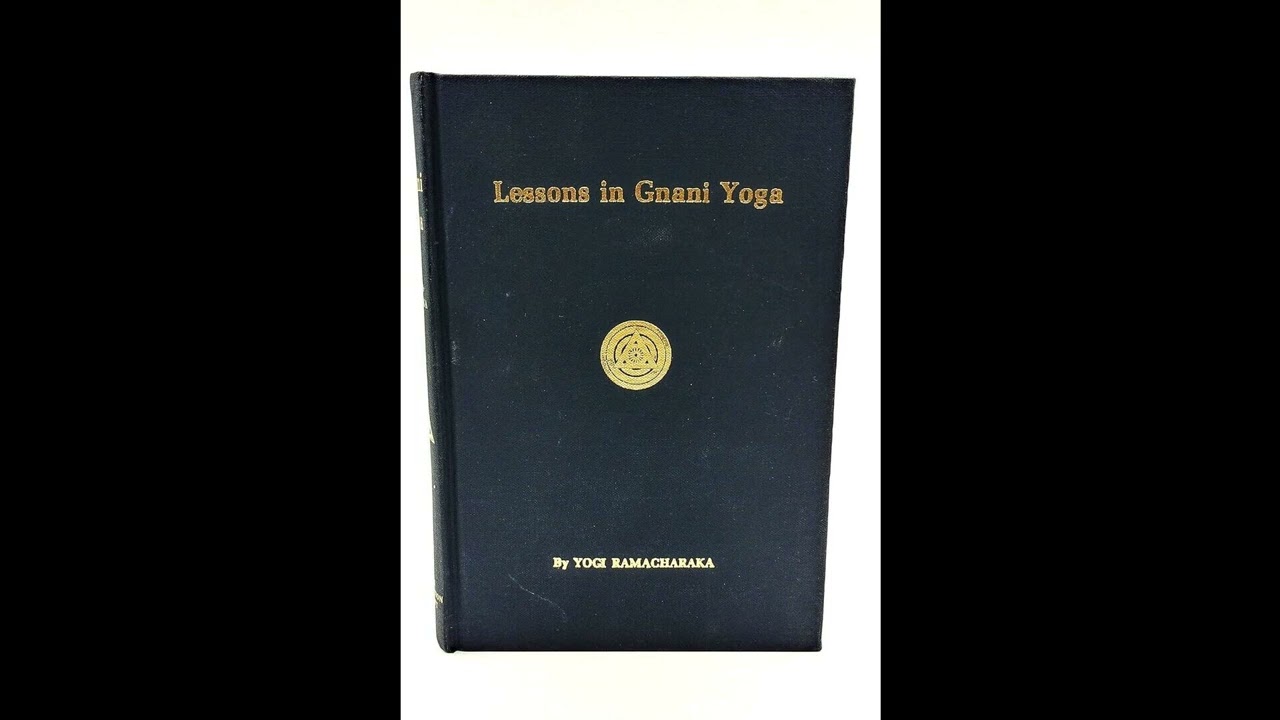
Lessons in Gnani Yoga: The Yoga of Wisdom
"Lessons in Gnani Yoga: The Yoga of Wisdom" presents a direct, systematic approach to spiritual and philosophical understanding, offering a path often considered the most challenging yet profoundly rewarding within the spectrum of yogic disciplines. This seminal text invites the listener to move beyond physical postures and breath control, focusing instead on the cultivation of pure intellect and the discernment of ultimate truth. For anyone seeking clarity amidst modern complexities, or for those who sense a deeper reality beneath the surface of everyday life, this work remains a potent guide. It is a call to awaken the dormant powers of perception and reason, leading the student towards an experiential understanding of the self and the cosmos, an insight as relevant and urgent now as it was at its original publication. The work lays out a clear progression for the aspiring student of Gnani Yoga, beginning with foundational philosophical concepts that challenge conventional notions of existence. The initial chapters establish the setting for this mental training: the individual mind, often clouded by desires, illusions, and sensory data. Here, the student is gently introduced to Maya, the grand illusion that veils true reality, presenting an argument that much of what we perceive as real is transient. The main characters in this intellectual drama are the teachings, presented as logical steps, and the student's own consciousness, guided through introspection. The central conflict is the human struggle against ignorance – the conditioned mind's resistance to shedding preconceptions. Ramacharaka systematically dismantles these barriers, posing questions and offering answers designed to dislodge fixed viewpoints. As the lessons progress, the focus sharpens on distinguishing the impermanent ego from the eternal essence within each individual. The arc, while instructional, functions as a story of awakening, where each chapter builds upon the last, guiding the listener towards a deeper understanding of their own being and its relation to the absolute. Listeners are led from understanding thought and perception to grappling with the Universal Mind and the true Self, or Atman. The text provides not just theory, but also practical mental exercises and meditations to aid in this intellectual and spiritual distillation. It equips the student with tools to continue their personal quest for wisdom, emphasizing that true knowledge is an ongoing process of realization. "Ramacharaka" is the celebrated nom de plume of William Walker Atkinson, a towering figure in the New Thought movement who brought Eastern philosophy to a Western audience at the turn of the 20th century. Born in Baltimore, Maryland, in 1862, Atkinson's early career as a lawyer and businessman was marked by significant personal struggle, culminating in a severe physical and mental breakdown in the late 1880s. This crisis became a pivotal moment, leading him to discover the transformative power of New Thought principles, emphasizing positive thinking and the divine nature of humanity. From roughly 1900 until his passing in 1932, he penned an astonishing number of books and articles under his own name and various pseudonyms, including Yogi Ramacharaka, through which he introduced Western readers to various branches of Yoga philosophy. Atkinson’s contributions extended beyond simply popularizing Eastern ideas; he meticulously synthesized complex philosophical concepts into accessible, practical lessons. His vast output includes influential titles like Thought-Force in Business and Everyday Life and the enduring esoteric classic The Kybalion. His place in the literary canon is that of a pivotal bridge-builder, democratizing spiritual wisdom and laying much of the groundwork for modern self-help and personal development. He demonstrated how ancient philosophical systems could offer tangible benefits for personal growth and mental well-being, making him an influential voice in early 20th-century spiritual literature. "Lessons in Gnani Yoga" concerns itself with fundamental themes that resonate across cultures. A central theme is the Nature of Reality and Illusion (Maya). Ramacharaka demonstrates how our sensory perceptions and intellectual constructs often obscure ultimate truth, presenting the "veil of Maya" as a limited framework one can learn to see beyond. He guides the reader through thought experiments that challenge the solidity of matter and linear time, urging a direct apprehension of underlying unity. This systematic approach contributes significantly to its literary standing as a clear, foundational text. Another profound theme is Self-Realization and the True Self (Atman), systematically distinguishing the transient ego-personality from the eternal, unchanging spiritual essence within each individual. The book suggests that by stripping away layers of identification with the physical body, emotions, and thoughts, one can arrive at an understanding of the true Atman, inherently divine and connected to the Universal Spirit. This ties into Mind Control and Mental Discipline, where the author provides explicit instruction on how to focus the mind and cultivate concentration. Lastly, Universal Unity and Oneness (Brahman) underpins all the teachings, asserting a singular, undifferentiated reality. The work’s significance lies in its lucid, systematic presentation, making complex ideas approachable for a Western audience. When "Lessons in Gnani Yoga" was first published around 1906, the Western world saw a burgeoning interest in Eastern philosophies. Figures like Swami Vivekananda and the Theosophical Society had spurred a hunger for alternatives to traditional Western religious dogma, seeking spiritual understanding beyond materialistic scientific paradigms. This period marked a turning point, acknowledging a deeper, unseen reality. The emergence of this work, and William Walker Atkinson’s Ramacharaka series, was a direct response to this intellectual curiosity. People sought practical methods for self-improvement and spiritual awakening. The New Thought movement, emphasizing individual empowerment, provided fertile ground, allowing Ramacharaka's books to translate dense philosophical concepts into clear, digestible lessons for a broad readership eager for ancient wisdom applied to modern life. To truly grasp the profound teachings within "Lessons in Gnani Yoga," listening to its narration offers a distinct advantage. The several hours of content are best absorbed when the voice itself becomes a steady guide, allowing the listener to engage with complex concepts without the visual distraction of text. A skilled narrator's pacing can lend gravitas and clarity to the philosophical arguments, giving the listener ample time to reflect on each idea before moving to the next. The calm, measured delivery inherent in such a reading creates an atmosphere conducive to introspection and contemplation, turning the act of listening into a meditative experience. This format encourages repeated engagement, enabling the student to return to particular sections and deepen their understanding with each hearing, letting the wisdom permeate more fully than a quick read might allow.
Enjoyed Lessons in Gnani Yoga: The Yoga of Wisdom? A few ways to support us
Audible & Amazon links are affiliate; we may earn a small commission at no extra cost.
About this production
Human narration by a volunteer reader from LibriVox.org, the public-domain audiobook project. LibriVox volunteers record literary works whose copyright has expired in the United States, releasing the resulting recordings into the public domain.
Lessons in Gnani Yoga: The Yoga of Wisdom by Ramacharakav. The underlying text is in the U.S. public domain. We do not republish any modern copyrighted edition, translation, or commentary.
The 4K cinematic visuals accompanying this audiobook are generated by an AI image model from prompts derived from the source text. No copyrighted photos, paintings, or stock footage are used. AI generation is disclosed on every video on our YouTube channel as required by YouTube's altered/synthetic content policy.
English subtitles are transcribed from the LibriVox recording with OpenAI Whisper. Translations into the 11 other supported languages are produced by Meta's NLLB-200 neural translation model. No human translator's copyrighted translation is used.
Questions about sourcing or rights? See our DMCA & Sourcing policy or contact us.
Enjoyed this audiobook?
If you'd like to own a copy of Lessons in Gnani Yoga: The Yoga of Wisdom or hear a professionally produced edition, the links below help support free audiobook production at no extra cost to you.
As an Amazon Associate we earn from qualifying purchases. Audible / print links are affiliate.
More Audiobooks
A Series Of Lessons In Raja Yoga
Hindu Tales from the Sanskrit
Wisdom of the East - Buddhist Psalms - Translated from the Japanese of Shinran Shoni- Full Audiobook
Mystic Christianity, Or the Inner Teachings of the Master