A Series Of Lessons In Raja Yoga
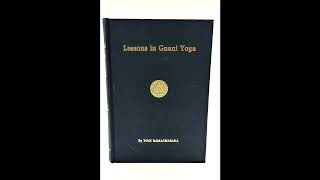
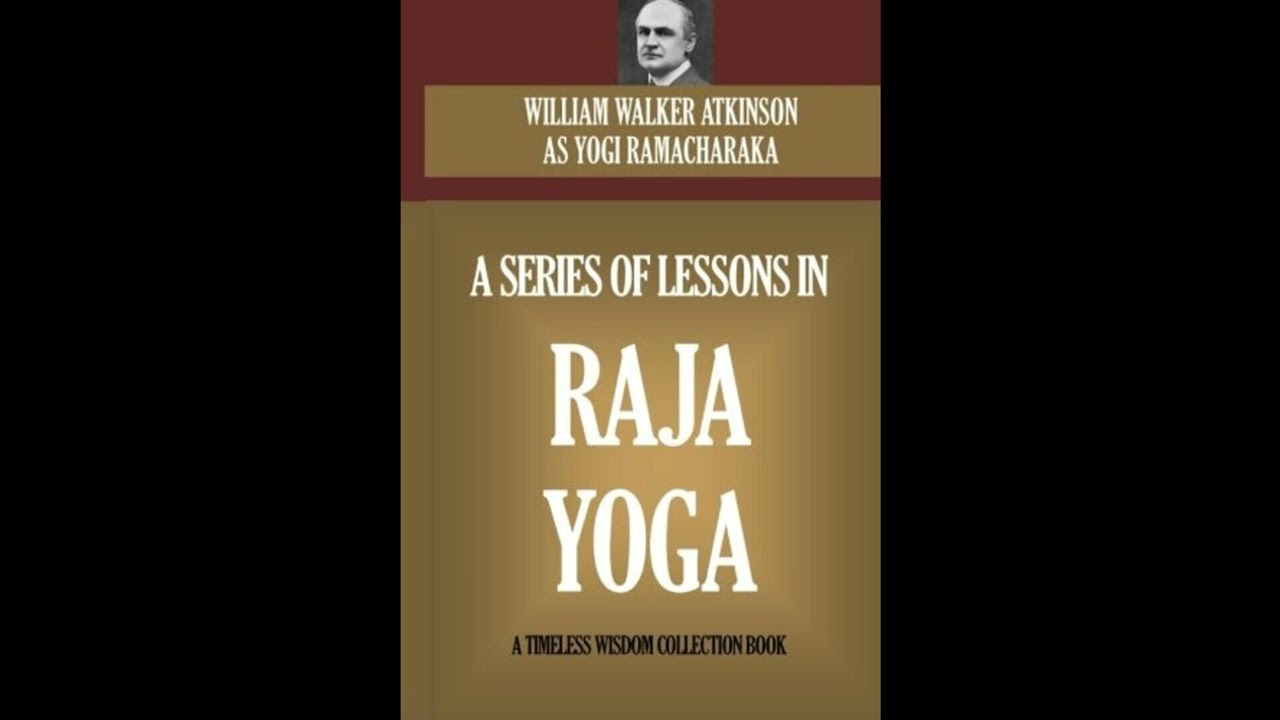
Within the often chaotic clamor of modern life, a quiet revolution of the self remains perennially appealing. William Walker Atkinson’s A Series Of Lessons In Raja Yoga offers a precise and systematic guide to this inner transformation, presenting ancient Eastern wisdom in a remarkably accessible form for Western audiences. First published when the new century was still nascent, these lessons propose that true power resides not in external circumstances, but in the disciplined command of one’s own mind. For anyone seeking clarity, focus, and a profound sense of inner peace in a world that constantly vies for their attention, Atkinson’s methodical instruction provides a blueprint for mental mastery that feels as relevant and urgent today as it did over a hundred years ago. It’s an invitation to cultivate an unshakable inner foundation, a practice for discerning the signal from the noise and achieving a heightened state of awareness. The book is structured not as a narrative in the traditional sense, but as a progressive curriculum, guiding the student through a series of exercises and philosophical insights aimed at developing mental and spiritual faculties. Each lesson builds upon the last, beginning with foundational concepts of the mind and consciousness, gently introducing the seeker to the principles of self-observation and introspection. The initial chapters illuminate the vast potential of the human mind, explaining the mechanisms of thought and perception before moving into practical methods for their regulation. There is no external antagonist here; the primary challenge lies in overcoming the distractions and undisciplined habits of one's own intellect, with the ultimate goal of achieving a state of profound mental serenity and expanded consciousness. As the lessons progress, the scope widens, gradually introducing advanced techniques for concentration, meditation, and the development of willpower. Atkinson meticulously outlines how to control the breath, still the agitated mind, and direct mental energy with purpose. He provides clear, actionable steps for cultivating these abilities, ensuring that the theoretical understanding is always grounded in practical application. The arc of the instruction moves from the basic understanding of mental processes to the conscious manipulation and ultimate transcendence of ordinary thought, leading the dedicated practitioner toward a deeper understanding of their true self and their place in the cosmos. It’s a carefully charted course designed to gradually awaken latent inner abilities, promising an expansion of perception and a greater capacity for self-determination without revealing the full extent of the wisdom gained in the final stages. William Walker Atkinson, born in Baltimore, Maryland in 1862, was a central and remarkably prolific figure in the New Thought movement that gained traction in the late nineteenth and early twentieth centuries. Originally a lawyer and businessman, Atkinson faced a personal crisis that led him to seek answers in the burgeoning philosophical and spiritual currents of his time. He became deeply involved with the teachings of Phineas Quimby and other early New Thought proponents, eventually becoming a leading voice himself. His life saw a profound shift from the material pursuits of law to an intense dedication to writing and lecturing on mental science, spiritual development, and Eastern philosophies. Throughout his career, Atkinson authored literally hundreds of books and pamphlets, often under various pseudonyms, most famously "Yogi Ramacharaka" for his works on yoga and Eastern mysticism. These works, including Thought Vibration or the Law of Attraction in the Thought World, The Secret of Mental Magic, and Practical Mind-Reading, solidified his reputation as a pioneering self-help author. He served as editor for several influential New Thought magazines, including New Thought and Advanced Thought, further shaping the discourse of the movement. Atkinson’s distinct contribution lay in his ability to distill complex spiritual and psychological concepts into straightforward, actionable advice, making profound ideas accessible to a wide general readership eager for personal empowerment and spiritual insight. He passed away in 1932, leaving behind a vast body of literature that continues to influence modern self-development practices. Atkinson’s A Series Of Lessons In Raja Yoga enacts several significant themes. A primary one is mental discipline, evident in the systematic instructions for breath control (pranayama) and focused meditation. For instance, the lessons don’t merely suggest concentration; they provide exercises like holding a single thought without deviation, or observing an object without judgment, thereby training the mind like a muscle. Another crucial theme is self-mastery, which the text approaches through the concept of controlling one's own "mental states." Atkinson demonstrates this by teaching how to consciously shift out of negative emotional patterns, advocating for an active rather than passive relationship with one's internal experience. Beyond individual control, the book frequently returns to the theme of spiritual enlightenment or self-realization. While not explicitly religious in a dogmatic sense, the lessons consistently point towards an awareness beyond the superficial self, often referencing the idea of an underlying universal consciousness. The text moves past mere self-improvement to suggest a deeper connection to a larger reality, implying that mastery of the mind is a stepping stone to understanding the true nature of existence. Finally, ethical living emerges as a foundational principle. Atkinson doesn't present Raja Yoga as solely a personal mental exercise; he often grounds its practices in the importance of truthfulness, non-violence, and selflessness as necessary precursors to genuine spiritual advancement, showing how inner peace is inextricably linked with outward conduct. This work emerged during a fascinating period of cultural and intellectual ferment in the Western world, particularly in the United States around the turn of the 20th century. The late 1800s saw a growing disillusionment with traditional religious dogma, spurred partly by scientific advancements and Darwinian theories, creating a vacuum that new spiritual and philosophical movements rushed to fill. There was a burgeoning interest in Eastern philosophies, spiritualism, and occult practices, as well as the nascent fields of psychology and mental science. The New Thought movement, of which Atkinson was a key proponent, offered a pragmatic, often optimistic, approach to spirituality, emphasizing the power of mind over matter, positive thinking, and the direct application of spiritual laws for personal betterment. Against this backdrop, A Series Of Lessons In Raja Yoga resonated deeply with an audience eager for practical methods to improve their lives and understand themselves within a rapidly changing world. The period was marked by significant societal shifts—industrialization, urbanization, and a general sense of accelerating progress—which often left individuals feeling disconnected or overwhelmed. Atkinson's teachings offered a path to inner stability and personal agency, presenting ancient yogic principles not as exotic curiosities, but as universal tools for mental development, perfectly suited to a population searching for meaning and control in an increasingly complex and modern landscape. Listening to A Series Of Lessons In Raja Yoga as an audiobook offers a unique and highly effective way to absorb its transformative teachings. The spoken word naturally lends itself to the contemplative nature of the material, allowing the listener to absorb complex ideas at a thoughtful pace without the visual distraction of text. A skilled narrator can bring clarity and a sense of calm authority to Atkinson’s precise instructions, guiding the mind through the breathing exercises and meditative techniques with a steady, encouraging tone. The several hours of content can be segmented into digestible lessons, making it ideal for daily practice, perhaps during a commute or a dedicated meditation session. Pay attention to the pacing of the narration, as it often mirrors the measured rhythm of the practices themselves, providing an atmospheric backdrop for internal reflection and focused study, allowing the listener to truly integrate these profound principles into their daily life.
Enjoyed A Series Of Lessons In Raja Yoga? A few ways to support us
Audible & Amazon links are affiliate; we may earn a small commission at no extra cost.
About this production
Human narration by a volunteer reader from LibriVox.org, the public-domain audiobook project. LibriVox volunteers record literary works whose copyright has expired in the United States, releasing the resulting recordings into the public domain.
A Series Of Lessons In Raja Yoga by William Walker Atkinson. The underlying text is in the U.S. public domain. We do not republish any modern copyrighted edition, translation, or commentary.
The 4K cinematic visuals accompanying this audiobook are generated by an AI image model from prompts derived from the source text. No copyrighted photos, paintings, or stock footage are used. AI generation is disclosed on every video on our YouTube channel as required by YouTube's altered/synthetic content policy.
English subtitles are transcribed from the LibriVox recording with OpenAI Whisper. Translations into the 11 other supported languages are produced by Meta's NLLB-200 neural translation model. No human translator's copyrighted translation is used.
Questions about sourcing or rights? See our DMCA & Sourcing policy or contact us.
Enjoyed this audiobook?
If you'd like to own a copy of A Series Of Lessons In Raja Yoga or hear a professionally produced edition, the links below help support free audiobook production at no extra cost to you.
As an Amazon Associate we earn from qualifying purchases. Audible / print links are affiliate.