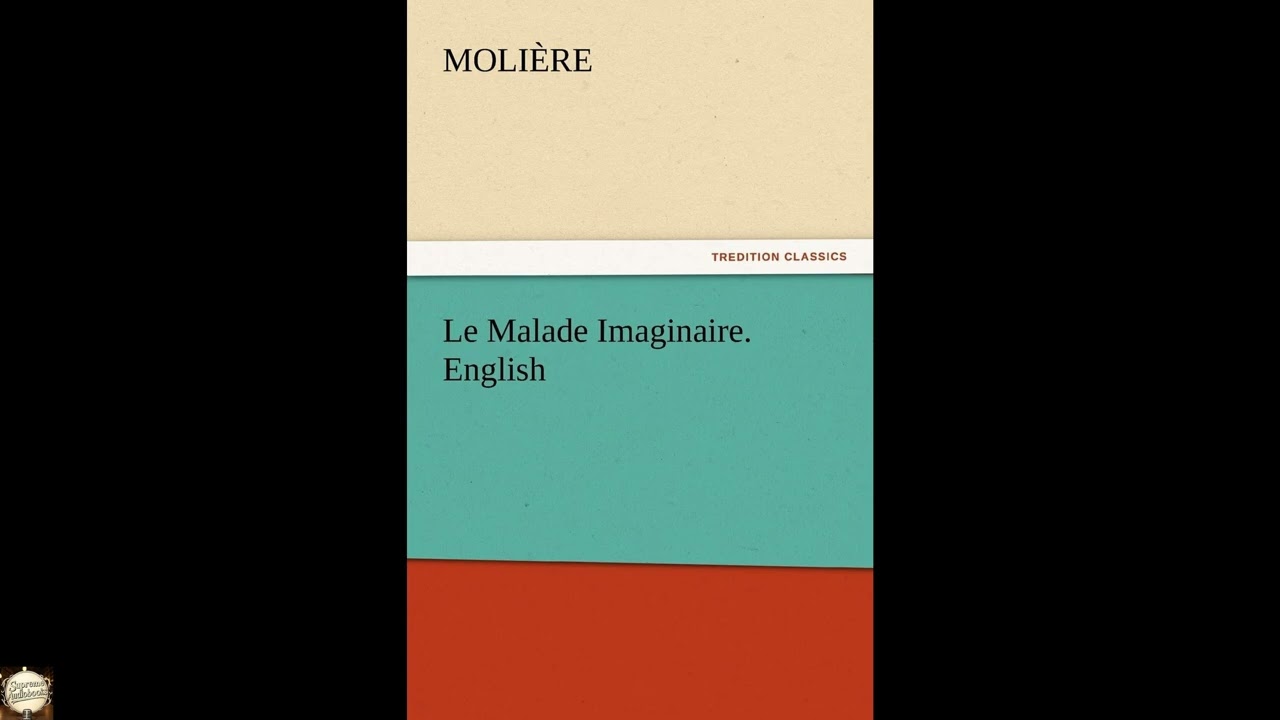
Le Malade Imaginaire. English
Imagine a world where your deepest anxieties about health are not just personal worries, but a powerful instrument for familial manipulation and social satire. Molire's Le Malade Imaginaire, presented here in a brilliant English translation, invites listeners into just such a world, a place where a man's obsession with his supposed ailments becomes a hilarious, yet profoundly insightful, mirror to human folly. This is far more than a 17th-century comedy; it’s a remarkably fresh commentary on our enduring fascination with health, our susceptibility to charlatans, and the delicate balance of power within the home, making it as relevant today as it was at its first performance. At the heart of the story stands Argan, a wealthy Parisian bourgeois consumed by hypochondria. Despite being in robust health, Argan is convinced he suffers from every imaginable malady, dutifully recording his symptoms and meticulously following the absurd dictates of his doctors and apothecaries. His house operates around his perceived infirmities, a constant cycle of purges, enemas, and consultations, much to the exasperation of his quick-witted maid, Toinette, who sees right through his delusions. Argan's paranoia takes a dramatic turn when he decides his eldest daughter, Angélique, must marry Thomas Diafoirus, the clumsy and intellectually barren son of his physician, ensuring he will always have a doctor in the family. This misguided paternal decree sets the central conflict in motion. Angélique, meanwhile, is secretly devoted to Cléante, a young man of good character but modest means. Adding another layer to the household's schemes is Argan's second wife, Béline, a cunning and outwardly affectionate woman who feigns devotion while secretly conspiring to inherit Argan's fortune and banish his daughters to a convent. With Argan too consumed by his imaginary ailments to perceive the true nature of those around him, it falls to the pragmatic Toinette and Argan's level-headed brother, Béralde, to expose the duplicity and guide Argan towards a more sensible path, even if it means resorting to elaborate deceptions of their own. The author, Jean-Baptiste Poquelin—universally known by his stage name, Molire—was born in Paris in 1622. The son of a prosperous upholsterer to the King, Molire initially studied law, seemingly destined for a conventional bourgeois life. However, his true passion lay in the theatre, leading him to abandon his inherited profession and found the Illustre Théâtre company in 1643. This venture initially failed, landing him in debtor's prison, but his subsequent twelve years touring the provinces of France honed his skills as an actor, director, and playwright, preparing him for the triumph that awaited him back in Paris. By 1658, Molire and his troupe returned to the capital, quickly gaining the patronage of King Louis XIV himself. This royal favor provided him the stability and platform to produce a remarkable series of comedies that would forever change French theatre. Plays such as Tartuffe, The Misanthrope, Don Juan, and The School for Wives cemented his reputation as a keen observer of human nature and a fearless satirist of contemporary society. His works, deeply rooted in the traditions of commedia dell'arte and neoclassical comedy, blended farce with biting social commentary, securing his place as one of the most influential playwrights in literary history. Tragically, Molire’s life came to an end in 1673, shortly after the fourth performance of Le Malade Imaginaire, a play in which he himself was acting the role of Argan. He collapsed on stage and died hours later. Le Malade Imaginaire confronts several enduring human themes with wit and precision. Central among these is the pervasive nature of self-delusion and hypochondria. Argan’s meticulous accounts of his bowel movements and his unwavering belief in the efficacy of his absurd medical treatments, despite overwhelming evidence of his good health, vividly illustrate how imagination can override reality. His steadfast refusal to acknowledge his own robust constitution underscores humanity's occasional preference for perceived suffering over inconvenient truth. Another prominent theme is the savage satire of the medical profession and institutional authority. Molire mercilessly lampoons the doctors of his era, portraying them as pompous, ignorant, and more concerned with their Latin jargon and fees than with actual patient care. The character of Thomas Diafoirus, who delivers a ridiculous, rote speech and proposes treatments that seem more likely to harm than heal, stands as a prime example of this critique. The absurdity culminates in a fantastical "doctor-making" ceremony, a hilarious yet scathing indictment of the performative nature of medical expertise and the blind faith placed in it. Listening to Le Malade Imaginaire as an audiobook offers a singular opportunity to fully appreciate the dramatic power and comedic brilliance of Molire's final play. The very nature of the work, driven by its superb dialogue and rapid-fire exchanges, comes alive through skilled narration. A talented voice cast can bring distinct personalities to Argan's whiny self-pity, Toinette's sassy wisdom, Béline's saccharine deceit, and the doctors' overblown pomposity, allowing the listener to visualize the characters and their interactions with exceptional clarity. The comedic timing, the rhythm of the lines, and the atmospheric interplay of voices transport you directly into Argan's chaotic household, making the full impact of Molire's genius accessible without the need for visual staging, focusing the experience on the sheer artistry of the words and the voices that render them.
Enjoyed Le Malade Imaginaire. English? A few ways to support us
Audible & Amazon links are affiliate; we may earn a small commission at no extra cost.
About this production
Human narration by a volunteer reader from LibriVox.org, the public-domain audiobook project. LibriVox volunteers record literary works whose copyright has expired in the United States, releasing the resulting recordings into the public domain.
Le Malade Imaginaire. English by Molire. The underlying text is in the U.S. public domain. We do not republish any modern copyrighted edition, translation, or commentary.
The 4K cinematic visuals accompanying this audiobook are generated by an AI image model from prompts derived from the source text. No copyrighted photos, paintings, or stock footage are used. AI generation is disclosed on every video on our YouTube channel as required by YouTube's altered/synthetic content policy.
English subtitles are transcribed from the LibriVox recording with OpenAI Whisper. Translations into the 11 other supported languages are produced by Meta's NLLB-200 neural translation model. No human translator's copyrighted translation is used.
Questions about sourcing or rights? See our DMCA & Sourcing policy or contact us.
Enjoyed this audiobook?
If you'd like to own a copy of Le Malade Imaginaire. English or hear a professionally produced edition, the links below help support free audiobook production at no extra cost to you.
As an Amazon Associate we earn from qualifying purchases. Audible / print links are affiliate.