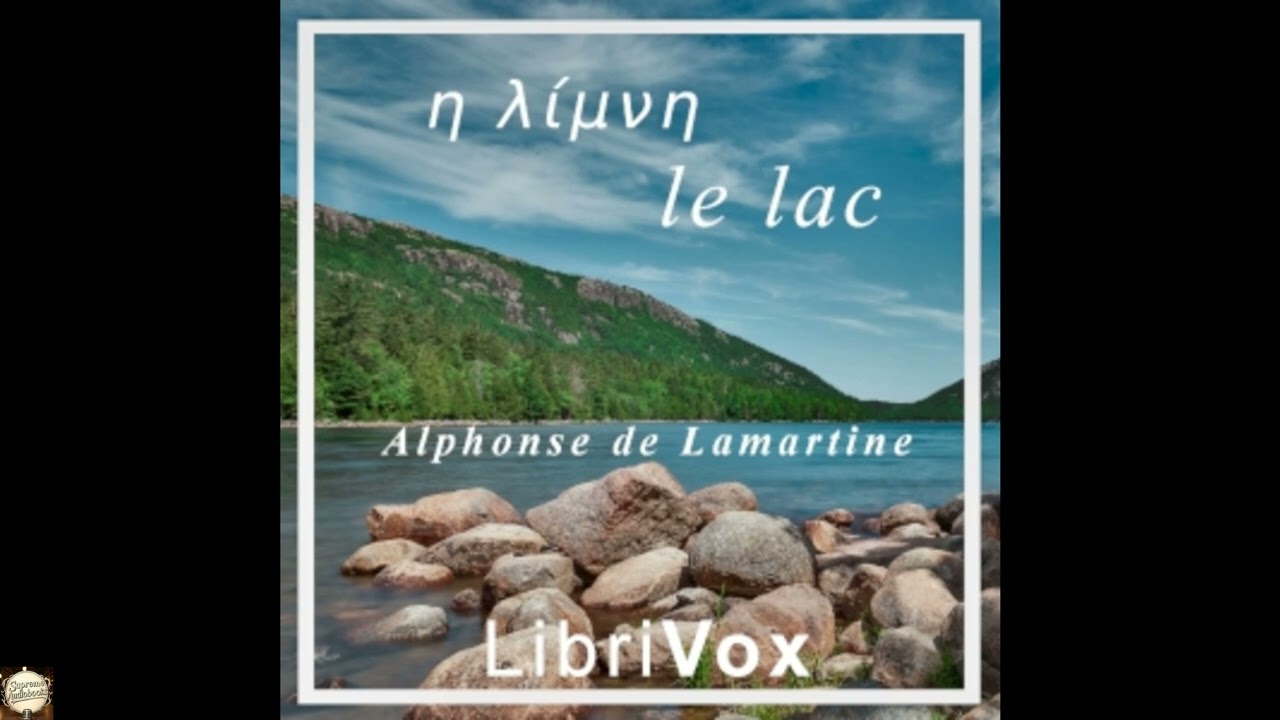
Η Λίμνη (Le Lac) Alphonse de Lamartines
“Le Lac,” or “The Lake,” by Alphonse de Lamartine, stands as a cornerstone of French Romantic poetry, a work that has resonated through generations for its profound emotional depth and lyrical beauty. This isn’t merely a poem; it’s a lament, a philosophical meditation on time, memory, and the enduring power of love that transcends the fleeting nature of human existence. For anyone seeking to understand the very heart of the Romantic movement, or simply to experience a work of art that articulates the bittersweet ache of longing and remembrance, Lamartine’s iconic verses offer an unparalleled encounter with the human spirit’s capacity for both joy and sorrow, making it as relevant and moving today as it was at its debut. The poem unfolds with a speaker revisiting the picturesque shores of Lake Bourget in the French Alps. He is drawn back to this idyllic setting, not for its inherent beauty alone, but because it holds the echo of a cherished past. The central conflict, or rather, the central emotional struggle, lies in the speaker’s profound sense of loss for a beloved woman, Elvire, with whom he once shared blissful moments by the lake. As he gazes upon the familiar scenery—the shimmering water, the majestic mountains, the gentle breeze—he is flooded with memories of their time together. The narrative arc follows his inner monologue, moving from poignant recollection to an impassioned plea addressed to nature itself. He describes their shared experiences: the setting sun, the tranquil nights, the whispered words of love. He notes how quickly those precious days vanished, leaving only a lingering sorrow. The speaker yearns for time to have stood still in those moments of perfect happiness, recognizing the cruel irony that while nature remains constant, human life and love are irrevocably transient. He doesn't merely recall the past; he actively grapples with its ephemeral quality, making his grief tangible and universally understandable. Alphonse de Lamartine (1790-1866) was far more than just a poet; he was a pivotal figure in French intellectual and political life during the 19th century. Born in Mâcon, France, into an aristocratic family, his early life was marked by a deep appreciation for nature and a fervent religious upbringing, influences that would profoundly shape his literary output. While initially destined for a military or diplomatic career, a profound love affair and later, the tragic death of his beloved Julie Charles (the inspiration for Elvire in "Le Lac"), steered him towards poetry as a means of expressing intense personal emotion. Lamartine’s literary career took off with the publication of his "Méditations poétiques" in 1820, which included "Le Lac" and immediately established him as a leading voice of French Romanticism. He followed this success with "Nouvelles Méditations poétiques" (1823) and "Harmonies poétiques et religieuses" (1830), cementing his reputation for lyrical grace and emotional sincerity. Beyond his poetic achievements, Lamartine had a significant, albeit tumultuous, political career, serving as a member of the Chamber of Deputies and famously playing a crucial role in the provisional government during the 1848 Revolution, where he helped avert the adoption of the red flag. His later years were shadowed by financial difficulties, but his place in the literary canon as one of the "four great Romantics" alongside Victor Hugo, Alfred de Vigny, and Alfred de Musset remained secure. "Le Lac" masterfully orchestrates several key themes. First and foremost is the passage of time and the fragility of human happiness. The speaker’s repeated invocations to "O temps! suspends ton vol!" (O time! suspend your flight!) underscore his desperation to halt the relentless march of moments, highlighting the bittersweet awareness that even the most profound joys are fleeting. This is powerfully enacted in the contrast between the unchanging lake and the ever-changing human experience. A second central theme is memory and its role in coping with loss. The lake itself becomes a vast mnemonic device, a vessel holding the echoes of a love that has passed. The speaker revisits the physical space to reconnect with the emotional landscape of his past, finding both solace and renewed sorrow in these recollections. Furthermore, the poem foregrounds nature as a sympathetic witness and a source of solace. The lake, the rocks, the caves, and the forests are not mere backdrops; they are personified entities called upon to remember and preserve the lovers' fleeting presence. "Be silent, waves, be silent, wind," the speaker implores, asking the natural world to hold onto the imprint of their love. This imbues the landscape with an almost sacred quality, transforming it into a monument to human emotion. Finally, the poem eloquently captures the Romantic emphasis on emotion, individuality, and the sublime. Lamartine pours his personal grief into universal verses, elevating individual suffering to a grand, poetic scale, where the beauty and majesty of nature are intertwined with profound human feeling. The early 19th century in France, the period surrounding the publication of "Le Lac," was a time of significant cultural and political upheaval. Following the fall of Napoleon and the Bourbon Restoration, French society grappled with the legacy of revolution and empire. Culturally, this era saw the definitive rise of Romanticism across Europe, a movement that championed emotion, individuality, and the spiritual power of nature in stark contrast to the Enlightenment's emphasis on reason and the classical forms of the preceding Neoclassical period. "Le Lac" emerged precisely at this juncture, capturing the nascent Romantic spirit with its focus on intensely personal feeling, melancholia, and an almost spiritual communion with the natural world. It represented a distinct break from the more formal and objective poetry that had dominated French letters, ushering in an era where the poet’s inner world became the primary subject. Lamartine’s lyrical voice resonated deeply with a generation weary of grand political narratives and seeking expression for their own emotional landscapes. Listening to "Le Lac" as an audiobook offers a unique and profoundly intimate experience. The spoken word breathes new life into Lamartine's exquisite verses, allowing the listener to absorb the poem’s inherent musicality and rhythm in a way that silent reading often cannot convey. With a run length of several hours, this audiobook likely provides not just a single reading, but perhaps multiple interpretations, historical context, or accompanying analysis, enabling a truly immersive study of this foundational work. Listen for the narrator’s careful pacing, which should allow the weight of each word and the nuanced emotional shifts to fully settle. Pay attention to how the voice articulates the speaker's yearning, his pleas to time and nature, and the delicate balance between remembrance and despair. The atmospheric quality of the narration, in particular, will enhance the evocative descriptions of Lake Bourget, making the listener feel transported to its reflective shores alongside the grieving poet.
Enjoyed Η Λίμνη (Le Lac) Alphonse de Lamartines? A few ways to support us
Audible & Amazon links are affiliate; we may earn a small commission at no extra cost.
About this production
Human narration by a volunteer reader from LibriVox.org, the public-domain audiobook project. LibriVox volunteers record literary works whose copyright has expired in the United States, releasing the resulting recordings into the public domain.
Η Λίμνη (Le Lac) Alphonse de Lamartines by Alphonse de Lamartine. The underlying text is in the U.S. public domain. We do not republish any modern copyrighted edition, translation, or commentary.
The 4K cinematic visuals accompanying this audiobook are generated by an AI image model from prompts derived from the source text. No copyrighted photos, paintings, or stock footage are used. AI generation is disclosed on every video on our YouTube channel as required by YouTube's altered/synthetic content policy.
English subtitles are transcribed from the LibriVox recording with OpenAI Whisper. Translations into the 11 other supported languages are produced by Meta's NLLB-200 neural translation model. No human translator's copyrighted translation is used.
Questions about sourcing or rights? See our DMCA & Sourcing policy or contact us.
Enjoyed this audiobook?
If you'd like to own a copy of Η Λίμνη (Le Lac) Alphonse de Lamartines or hear a professionally produced edition, the links below help support free audiobook production at no extra cost to you.
As an Amazon Associate we earn from qualifying purchases. Audible / print links are affiliate.