Knights of Malta, 1523-1798
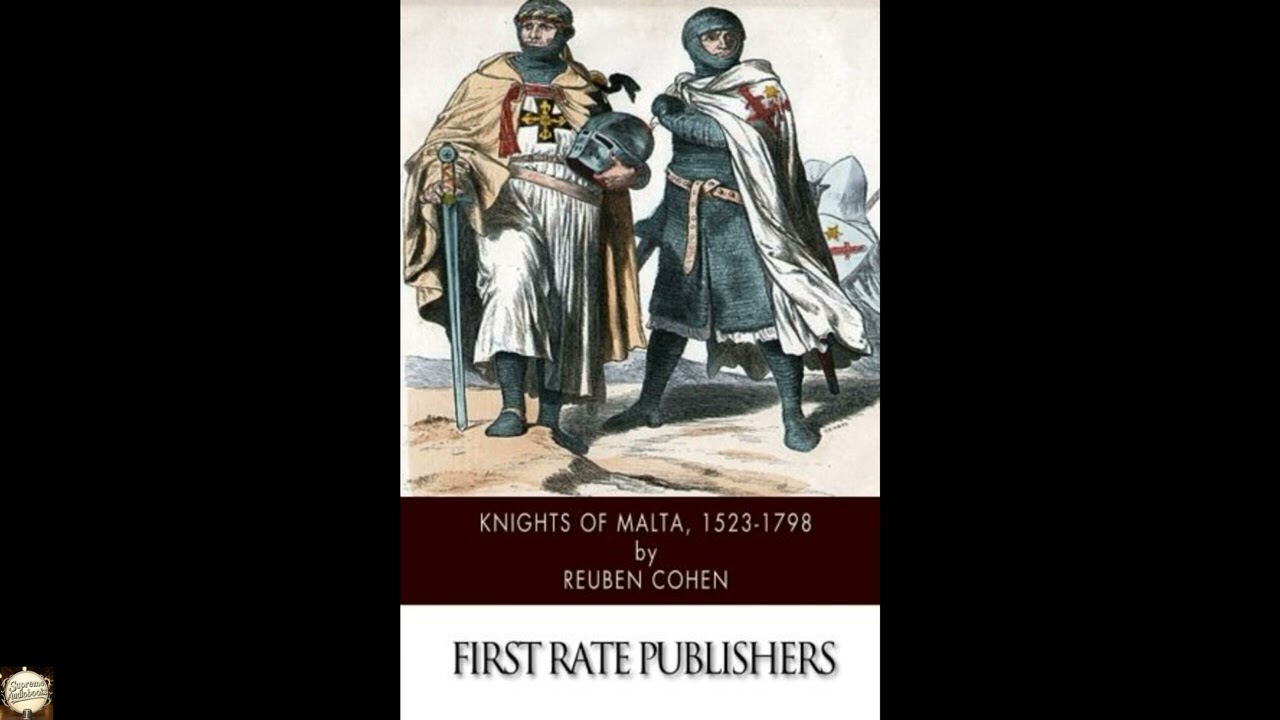
The clang of steel against stone, the whisper of political intrigue in sun-drenched courtyards, and the relentless defense of an island fortress against overwhelming odds — these images come to life in Reuben Cohen’s masterful account, “Knights of Malta, 1523-1798.” This is not merely a recounting of battles and dates, but a vivid recreation of a unique historical entity: the Sovereign Military Order of St. John, better known as the Knights of Malta. Listeners encounter a story of an organization born from crusading zeal, transplanted to a vital strategic rock in the Mediterranean, and forced to adapt to centuries of shifting geopolitical tides. The book examines how an order dedicated to faith and martial prowess navigates the complexities of governing a nation, enduring devastating sieges, and eventually facing the challenges of an enlightenment era that often saw such anachronistic powers as relics of a bygone age. Why does this story matter today? It offers a profound meditation on the nature of resilience, the burdens of power, and how institutions—even the most venerable—must confront the inevitability of change. Cohen’s narrative picks up after the Knights’ harrowing expulsion from Rhodes in 1522, detailing their search for a new home and their eventual establishment on the barren island of Malta, granted to them by Emperor Charles V in 1530. Here, they meticulously transform the island into an impregnable bulwark against the westward expansion of the Ottoman Empire. The early chapters paint a compelling picture of Grand Master Jean de Valette, a figure of extraordinary resolve, who spearheads the fortification efforts and prepares the Order for the inevitable confrontation. The narrative builds toward the epic Great Siege of Malta in 1565, a desperate four-month struggle where a vastly outnumbered force of Knights and Maltese defenders faced the might of Suleiman the Magnificent’s formidable army and navy. Cohen renders the siege in stark, gripping detail, from the relentless bombardments and fierce hand-to-hand combat to the strategic brilliance and unwavering courage that ultimately saved the island and arguably altered the course of Mediterranean history. Following this pivotal victory, the book charts the Order’s evolution from a purely military-monastic brotherhood into a sovereign state with a sophisticated administrative apparatus. Subsequent Grand Masters oversee the construction of Valletta, a magnificent city of baroque palaces and formidable bastions, becoming a center of European diplomacy and maritime power. The narrative follows the Knights’ continued role in naval warfare against corsairs and the Ottomans, their internal struggles with corruption, factionalism, and changing allegiances among the various langues (national branches) of the Order. Cohen diligently documents their periods of prosperity and influence, their contributions to medicine and architecture, and their increasingly complex relationship with European monarchies and the Papacy. Listeners witness the slow, inexorable decline of an institution whose original purpose gradually fades in an age of standing national armies and new political philosophies, setting the stage for the dramatic end of their dominion. Reuben Cohen distinguished himself as a scholar of exceptional rigor and narrative flair, emerging in a period that sought to blend meticulous archival research with accessible, engaging prose. Though specific dates for his life are not widely disseminated, his academic trajectory often placed him among the late nineteenth and early twentieth-century historians who championed a holistic approach to history, integrating military, political, and social dimensions into a cohesive story. His method involved extensive consultation of primary sources, from the detailed chronicles held in the Bibliotheca Nationalis in Malta to dispatches from various European courts, giving his work a remarkable authenticity and depth. While “Knights of Malta, 1523-1798” stands as his most celebrated achievement, Cohen was also recognized for his insightful studies on Mediterranean naval powers and the geopolitical landscape of early modern Europe, contributing significantly to a broader understanding of this pivotal historical epoch. Cohen’s place in the canon of classic literature stems from his ability to transform what could have been a dry historical account into a vibrant and enduring work of narrative art. He belongs to a tradition of historians who saw the past not just as a collection of facts but as a human drama, deserving of careful storytelling. His other academic endeavors, perhaps focusing on the rise of maritime empires or the decline of chivalric orders, likely honed the sharp analytical skills and clear prose evident throughout this volume. Cohen’s lasting legacy is his talent for illuminating complex historical periods with a clarity and immediacy that allows readers to feel present in the events he describes, thereby establishing his reputation as an essential voice for understanding the history of the Mediterranean and the enduring appeal of the Knights of St. John. “Knights of Malta, 1523-1798” enacts several compelling themes that resonate far beyond its specific historical moment. One prominent theme is resilience in the face of overwhelming adversity. The Great Siege of 1565 stands as the supreme example; Cohen shows how the Knights, against all odds and facing an enemy many times their number, held fast through ingenuity, sacrifice, and sheer force of will. He details instances where starvation and disease threatened to break their resolve, yet through Grand Master La Valette’s inspiring leadership and the desperate courage of the defenders, they turned back the Ottoman tide, an event that became a beacon of Christian defiance. Another powerful theme is the burden and paradox of sovereignty for a military-religious order. After the siege, the Knights had to transition from a band of crusaders to the rulers of a burgeoning state. Cohen illustrates the internal conflicts that arose as the Order navigated diplomacy, taxation, and the complexities of civilian governance, often struggling to reconcile their monastic vows with the demands of temporal power and the allure of wealth. A third theme woven throughout the book is adaptation and the eventual obsolescence of an institution. As Europe entered the Enlightenment and then the age of revolution, the Knights, with their feudal structures and crusading ethos, found themselves increasingly out of step with modern political thought. Cohen meticulously tracks how their naval prowess diminished, their treasury faced deficits, and their political influence waned, even as they continued to maintain a façade of their former glory. This leads to the fourth theme: the ebb and flow of cultural and geopolitical power. Malta, positioned at the crossroads of East and West, becomes a microcosm for the larger shifting dynamics between Christian Europe and the Ottoman Empire, and later, the emerging nation-states. The island's story, as told by Cohen, reflects the rise and fall of empires, the clash of civilizations, and the persistent human struggle for dominance and survival on a global stage. The book emerged in a period when historical scholarship was maturing, moving beyond mere chronicles to analytical narratives. Culturally, there was often a renewed fascination with chivalry, military history, and the exoticism of the Mediterranean, reflecting both a romanticism for the past and a desire to understand the roots of modern European identity. Politically, the late nineteenth and early twentieth centuries saw the consolidation of nation-states and global empires, prompting historians to look back at earlier models of power and governance, like the Knights’ unique sovereign status. Cohen's meticulous research and accessible style would have allowed his work to appeal to both serious academics and a broader educated public, making it a foundational text for understanding the specific dynamics of the Knights of Malta and their enduring legacy in a rapidly changing world. It stood out because it combined rigorous scholarship with a narrative sweep typically reserved for fiction, elevating historical writing to a literary art form. Listening to “Knights of Malta, 1523-1798” as an audiobook provides an immediate immersion into this epic saga. The narrator’s voice becomes crucial in conveying the grandeur of the setting and the gravitas of the historical events. With several hours of content, a skilled reader can modulate their pacing, building tension during the descriptions of siege warfare, then shifting to a more measured, reflective tone when discussing political machinations or the slower march of institutional change. Listen for the subtle inflections that bring figures like Grand Master de Valette or the various Ottoman commanders to life, giving them distinct presences without resorting to dramatic theatrics. The auditory experience enhances the atmosphere, allowing listeners to visualize the strategic fortifications, the crowded port of Valletta, and the relentless Mediterranean sun beating down on stone and steel. The spoken word adds a layer of immediacy, transforming a historical account into a compelling oral history that unfolds with both clarity and dramatic impact.
Enjoyed Knights of Malta, 1523-1798? A few ways to support us
Audible & Amazon links are affiliate; we may earn a small commission at no extra cost.
About this production
Human narration by a volunteer reader from LibriVox.org, the public-domain audiobook project. LibriVox volunteers record literary works whose copyright has expired in the United States, releasing the resulting recordings into the public domain.
Knights of Malta, 1523-1798 by Reuben Cohen. The underlying text is in the U.S. public domain. We do not republish any modern copyrighted edition, translation, or commentary.
The 4K cinematic visuals accompanying this audiobook are generated by an AI image model from prompts derived from the source text. No copyrighted photos, paintings, or stock footage are used. AI generation is disclosed on every video on our YouTube channel as required by YouTube's altered/synthetic content policy.
English subtitles are transcribed from the LibriVox recording with OpenAI Whisper. Translations into the 11 other supported languages are produced by Meta's NLLB-200 neural translation model. No human translator's copyrighted translation is used.
Questions about sourcing or rights? See our DMCA & Sourcing policy or contact us.
Enjoyed this audiobook?
If you'd like to own a copy of Knights of Malta, 1523-1798 or hear a professionally produced edition, the links below help support free audiobook production at no extra cost to you.
As an Amazon Associate we earn from qualifying purchases. Audible / print links are affiliate.