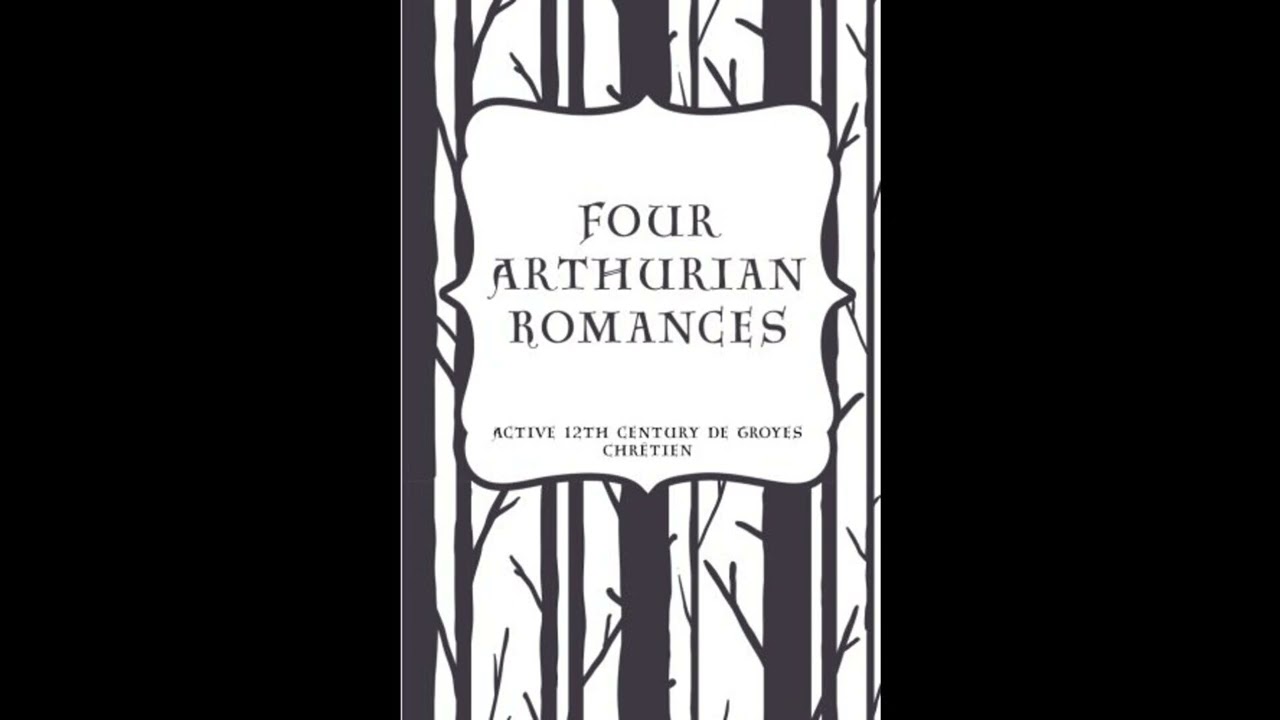
Four Arthurian Romances
Chrétien de Troyes’ Four Arthurian Romances stands as a monumental landmark in Western literature, a collection that not only codified the legends of King Arthur and his court but also laid the very groundwork for the romance genre as we know it. Before Chrétien, tales of knights and magic circulated, but it was his inventive spirit and polished verse, emerging from the vibrant intellectual life of the twelfth century, that truly shaped the enduring archetypes of chivalry, courtly love, and heroic quest. To encounter these narratives today is to step directly into the source spring of countless stories, from epic fantasies to modern romantic dramas, revealing the profound human desires for honor, love, and redemption that continue to resonate across centuries. This is where the familiar world of Camelot began its literary life, articulated with a wit and psychological subtlety that remains remarkably fresh. Within these pages, the listener is transported to the mythic realm of Arthur’s Britain, a land of formidable castles, enchanted forests, and tournaments where a knight’s honor is constantly tested. Each romance introduces a different knight, often a familiar figure from the Round Table, who must navigate a complex world of love, duty, and perilous adventure. In Erec and Enide, we follow the valiant Erec, who, after a period of intense valor, falls deeply in love with the impoverished but virtuous Enide. Their marriage, however, leads Erec to neglect his knightly duties, drawing accusations of effeminacy. To reclaim his honor and prove his love, Erec embarks on a series of harrowing quests, often putting Enide in danger, testing her loyalty and his own resolve, culminating in a restoration of his reputation and a deeper understanding of their bond. Another of these foundational tales, Yvain, the Knight of the Lion, centers on the impetuous Yvain, who rashly marries the Lady Laudine, widow of a knight he has just defeated. His newfound bliss is threatened when he succumbs to the call of adventure, promising his wife he will return within a year but forgetting his pledge. Broken-hearted and disgraced, Laudine rejects him, driving Yvain to madness and despair. He wanders the wilderness, a wild man, until he is healed and eventually finds redemption through acts of selfless chivalry, gaining the loyal companionship of a lion he saves from a serpent, and undertaking a series of heroic deeds to win back his lady’s love. These romances, along with Cligès—a tale of clever lovers defying a tyrannical emperor—and Lancelot, the Knight of the Cart—which established Lancelot's unwavering, almost religiously devoted love for Queen Guinevere—each explore the delicate balance between a knight’s personal desires and his public obligations, shaping the very definition of heroic romance for future generations. Chrétien de Troyes himself was a poet active in the second half of the twelfth century, primarily associated with the court of Marie de Champagne, daughter of Eleanor of Aquitaine. While firm biographical details are scarce, it is clear he was a sophisticated and highly educated figure who wrote in Old French vernacular, a significant departure from the Latin that dominated serious literature of the time. His patroness, Marie, was a leading figure in the cultural flowering of her era, known for her interest in courtly manners and the burgeoning ideals of courtly love. This patronage undoubtedly provided Chrétien with the environment and inspiration to develop his groundbreaking narratives. Beyond his "Four Romances," Chrétien is also known for Perceval, the Story of the Grail, an unfinished work that nevertheless profoundly influenced the subsequent development of the Grail legend. His output, though relatively small in number of works, was monumental in its impact. He effectively invented the Arthurian romance genre, synthesizing existing Celtic myths, historical anecdotes, and chivalric ideals into a coherent and artistically refined form. He established many of the characterizations and plot devices that would become standard for centuries, cementing his place as the father of French romance and a pivotal figure in the European literary tradition. At the heart of Chrétien’s romances lie several key themes, articulated with a remarkable psychological realism for their time. Courtly love is perhaps the most famous, presented as an idealized, ennobling passion, often between a knight and a married noblewoman, demanding immense devotion and service. Lancelot’s willingness to ride in a humiliating cart to reach Guinevere, or Yvain’s despair after losing Laudine’s favor, exemplify this intense, often self-sacrificing, affection. Another central theme is chivalry and knighthood, not merely as a set of martial skills, but as a moral code. Knights like Erec and Yvain must learn to balance their personal desires with the expectations of honor, valor, and service to others. Their quests are not just physical trials but ethical proving grounds, where true worth is tested. Furthermore, these stories grapple with individual identity versus social role, depicting knights who wrestle with the tension between their personal happiness and the public demands of their aristocratic status. Erec's temporary retreat from knighthood for love, and Yvain's subsequent fall and redemption, showcase the conflict between domestic bliss and the active pursuit of glory expected of a knight. Finally, the theme of redemption and self-discovery runs through these narratives. Chrétien’s heroes are not static; they make mistakes, suffer consequences, and must undergo profound internal and external transformations to regain their honor, love, or a sense of purpose. Yvain's period of madness and his subsequent acts of heroism illustrate this journey from disgrace to restoration, highlighting the possibility of growth and renewal through adversity. The twelfth century in Europe was a period of significant cultural ferment, often referred to as the "Renaissance of the Twelfth Century." There was a burgeoning interest in classical learning, a consolidation of political power in regional courts, and a shift in social structures that gave rise to a more refined aristocratic culture. The Crusades were ongoing, influencing notions of heroism and Christian knighthood, while the growing prosperity allowed for patronage of arts and letters. Crucially, this era saw the rise of vernacular literature, as writers began to compose in the everyday languages of the people rather than exclusively in Latin. Aristocratic women, like Marie de Champagne, played a vital role in fostering this new literary landscape, commissioning works that reflected their interests in sophisticated etiquette, idealized love, and heroic adventure. Chrétien de Troyes’ romances emerged precisely from this vibrant context, giving voice to the ideals of a new courtly society and shaping its understanding of honor, love, and heroism. Listening to Chrétien de Troyes’ Four Arthurian Romances as an audiobook offers a unique connection to its origins. These stories were initially performed orally, intended to be heard aloud in courtly settings, and the act of listening allows a modern audience to recapture some of that communal, immersive experience. A skilled narrator can bring the archaic yet elegant language to life, lending distinct voices to the valiant knights, their cunning ladies, and the various fantastical creatures they encounter. The measured pacing can transport the listener to medieval tournaments and moonlit forests, while the narrator’s tone and rhythm underscore the dramatic tension and lyrical beauty of Chrétien’s verse. It is an opportunity to hear the foundational myths of Arthurian legend unfold, allowing the rich descriptions and compelling dialogues to create a vivid landscape in the mind’s eye, making these ancient tales feel immediate and relevant today.
Enjoyed Four Arthurian Romances? A few ways to support us
Audible & Amazon links are affiliate; we may earn a small commission at no extra cost.
About this production
Human narration by a volunteer reader from LibriVox.org, the public-domain audiobook project. LibriVox volunteers record literary works whose copyright has expired in the United States, releasing the resulting recordings into the public domain.
Four Arthurian Romances by active 12th century de Troyes Chrétien. The underlying text is in the U.S. public domain. We do not republish any modern copyrighted edition, translation, or commentary.
The 4K cinematic visuals accompanying this audiobook are generated by an AI image model from prompts derived from the source text. No copyrighted photos, paintings, or stock footage are used. AI generation is disclosed on every video on our YouTube channel as required by YouTube's altered/synthetic content policy.
English subtitles are transcribed from the LibriVox recording with OpenAI Whisper. Translations into the 11 other supported languages are produced by Meta's NLLB-200 neural translation model. No human translator's copyrighted translation is used.
Questions about sourcing or rights? See our DMCA & Sourcing policy or contact us.
Enjoyed this audiobook?
If you'd like to own a copy of Four Arthurian Romances or hear a professionally produced edition, the links below help support free audiobook production at no extra cost to you.
As an Amazon Associate we earn from qualifying purchases. Audible / print links are affiliate.