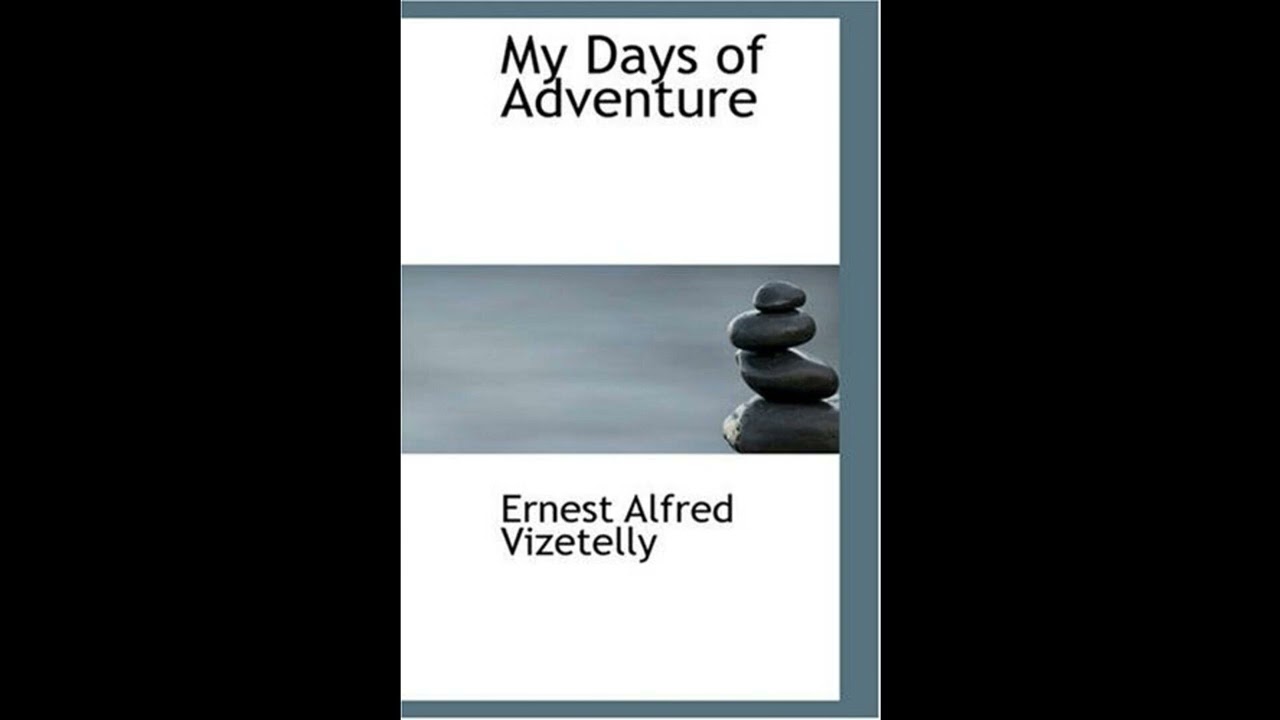
My Days of Adventure: The Fall of France, 1870-71
In the annals of European history, the Franco-Prussian War of 1870-71 often stands as a pivotal but sometimes overlooked conflict, a violent crucible that forged modern Germany and shattered the Second French Empire. Yet, for those who truly wish to grasp the raw, human experience of this cataclysmic period, Ernest Alfred Vizetelly's My Days of Adventure: The Fall of France, 1870-71 offers an unparalleled window into the past. This isn't a dry historical treatise; it is the vivid, immediate recollection of a young English war correspondent, barely a teenager, thrust into the heart of a collapsing nation. What makes this account resonate today is its startling immediacy—a testament to the enduring courage of those who bear witness, and a stark reminder that even in an age of instant communication, the personal narrative remains the most potent way to connect with the ghosts of history. It serves as a compelling firsthand document of heroism, folly, and the relentless brutality of war, seen through the eyes of someone who was quite literally growing up as empires fell around him. Vizetelly’s narrative opens in the bustling, confident Paris of 1870, a city still radiating the grandeur of Napoleon III’s Second Empire, oblivious to the storm gathering on its eastern border. The initial chapters paint a picture of Parisian life—its cafes, boulevards, and political fervor—as a stark contrast to the impending doom. As war is declared, Vizetelly, then just seventeen, finds himself reporting for his father’s London newspaper, experiencing the initial, misplaced French optimism that quickly sours into grim reality. He describes the chaotic mobilization, the early defeats at Sedan and Metz, and the swift advance of the Prussian forces. The focus soon narrows to the beleaguered city of Paris itself, as it prepares for siege. Vizetelly captures the desperate preparations—the felling of trees, the mounting of cannons, the gathering of provisions—all undertaken with a mix of patriotic zeal and growing apprehension. The central conflict of the book, beyond the Franco-Prussian struggle, becomes the internal battle for survival and sanity within Paris during the punishing siege. Vizetelly vividly details the daily privations: the dwindling food supplies, the ingenious and often horrifying measures taken to stave off starvation (including the consumption of zoo animals and rats), and the relentless bombardment by Prussian artillery. He documents the resilience and despair of the populace, the political machinations within the besieged government, and the grim procession of the wounded and dead. His observations extend beyond the physical suffering to the psychological toll, the way hope flickered and died, only to be rekindled by false rumors or desperate initiatives. The story builds toward the inevitable surrender, not just of Paris, but of a way of life, paving the way for the tumultuous and bloody period of the Paris Commune, which Vizetelly also witnesses with unflinching gaze. The arc of the story is one of gradual erosion, from a proud nation to a starving city, and finally, to a people grappling with defeat and internal strife. Ernest Alfred Vizetelly, born in London in 1853, hailed from a family deeply embedded in the world of publishing and journalism. His father, Henry Vizetelly, was a notable publisher known for introducing French realist and naturalist authors like Émile Zola to English readers. This background undoubtedly shaped young Ernest’s early exposure to literature and current affairs. It was this familial connection that propelled him, at the remarkably young age of seventeen, to serve as a war correspondent during the Franco-Prussian War—an experience that would profoundly shape his future life and career. He witnessed firsthand the siege of Paris, the subsequent Commune, and the chaotic aftermath, demonstrating an incredible maturity and journalistic tenacity for one so young. Following his extraordinary wartime experiences, Vizetelly continued a prolific career as a writer, journalist, and translator. He eventually settled in France, becoming a crucial cultural intermediary, bringing French life and letters to the English-speaking world. His work often revolved around French history, politics, and society, reflecting his deep understanding and affection for the nation he had seen in its darkest hour. He translated several of Émile Zola’s novels, helping to cement Zola’s reputation in Britain, and also authored numerous books, including The True Story of the Chevalier d’Eon, The Anarchists: Their Faith and Their Works, and Republican France, 1870-1912. His memoirs, including My Days of Adventure, were published later in his life, allowing him to reflect on his youthful observations with the added perspective of decades. He died in 1933, leaving behind a significant body of work that illuminates Anglo-French relations and the social history of the late nineteenth and early twentieth centuries. One prominent theme within My Days of Adventure is the stark disillusionment of war. Vizetelly strips away any romantic notions of glory, presenting the conflict as a grinding, dehumanizing ordeal. He offers concrete examples, such as his harrowing descriptions of the Parisian population reduced to eating rats, dogs, and eventually animals from the Jardin des Plantes, not as sensationalism, but as a grim testament to the physical and moral degradation brought by siege. The constant fear, the cold, the hunger, and the arbitrary violence—like stray artillery shells—paint a picture of war as a force that levels all before it, stripping away societal conventions and exposing raw human desperation. Another significant theme is the power and ethical imperative of witnessing. As a young correspondent, Vizetelly places himself repeatedly in danger to observe and report. He doesn't merely recount events; he brings the reader into the heart of them—describing the hurried evacuation of a hospital under bombardment, or the desperate final sorties from the besieged city. His youth adds a unique dimension to this theme; he is not a jaded veteran, but a wide-eyed observer whose sense of duty seems innate. His writing demonstrates that to bear witness, to record suffering and courage, is itself an act of defiance against the chaos, giving voice to the voiceless and ensuring that the sacrifices and tragedies are not forgotten. The book also implicitly addresses national identity in crisis, as it documents the swift collapse of the Second Empire and the turbulent birth of the Third Republic, showcasing the deep divisions within France that erupted into the violence of the Commune after the Prussian defeat. This memoir emerges from a period of profound transformation in Europe and in literature. The late nineteenth century saw the rise of realism and naturalism, movements that sought to depict life with unvarnished truth, eschewing romantic embellishment. The Franco-Prussian War itself was a brutal validation of these literary trends, demonstrating that conflict was far from glorious, and often squalid, bloody, and devastating for civilians. As photography became more widespread, and daily newspapers gained immense influence, there was a growing public appetite for immediate, factual accounts of current events. Vizetelly’s work fits perfectly into this context, offering an eyewitness account that bridges journalism and memoir, providing the kind of gritty detail that defined the new literary sensibility. It appeared when Europe was still reeling from the shockwaves of the war, and understanding the human cost was paramount for a generation grappling with the rapid pace of industrialization and military modernization. To listen to My Days of Adventure as an audiobook is to step directly into the sonic landscape of a bygone era. The sheer length—several hours—allows for an immersive experience, granting the narrative room to breathe and unfold at a pace that mirrors the gradual intensification of the siege and the slow unraveling of a nation. A skilled narrator's voice can lend a profound sense of authenticity, conveying Vizetelly's youthful earnestness and later, the reflective wisdom of an older man looking back on his defining experiences. One can listen for the subtle shifts in tone—from the initial excitement of a young reporter, to the growing weariness and horror as the siege progresses, and finally, to a measured solemnity in the aftermath. The narrative’s atmosphere, punctuated by the sounds of distant cannon fire, the rumble of desperate convoys, and the chilling silence of a starving city, becomes all the more palpable when delivered through the human voice, allowing the listener to truly inhabit the chaos and desolation of Paris during its darkest days.
Enjoyed My Days of Adventure: The Fall of France, 1870-71? A few ways to support us
Audible & Amazon links are affiliate; we may earn a small commission at no extra cost.
About this production
Human narration by a volunteer reader from LibriVox.org, the public-domain audiobook project. LibriVox volunteers record literary works whose copyright has expired in the United States, releasing the resulting recordings into the public domain.
My Days of Adventure: The Fall of France, 1870-71 by Ernest Alfred Vizetelly. The underlying text is in the U.S. public domain. We do not republish any modern copyrighted edition, translation, or commentary.
The 4K cinematic visuals accompanying this audiobook are generated by an AI image model from prompts derived from the source text. No copyrighted photos, paintings, or stock footage are used. AI generation is disclosed on every video on our YouTube channel as required by YouTube's altered/synthetic content policy.
English subtitles are transcribed from the LibriVox recording with OpenAI Whisper. Translations into the 11 other supported languages are produced by Meta's NLLB-200 neural translation model. No human translator's copyrighted translation is used.
Questions about sourcing or rights? See our DMCA & Sourcing policy or contact us.
Enjoyed this audiobook?
If you'd like to own a copy of My Days of Adventure: The Fall of France, 1870-71 or hear a professionally produced edition, the links below help support free audiobook production at no extra cost to you.
As an Amazon Associate we earn from qualifying purchases. Audible / print links are affiliate.