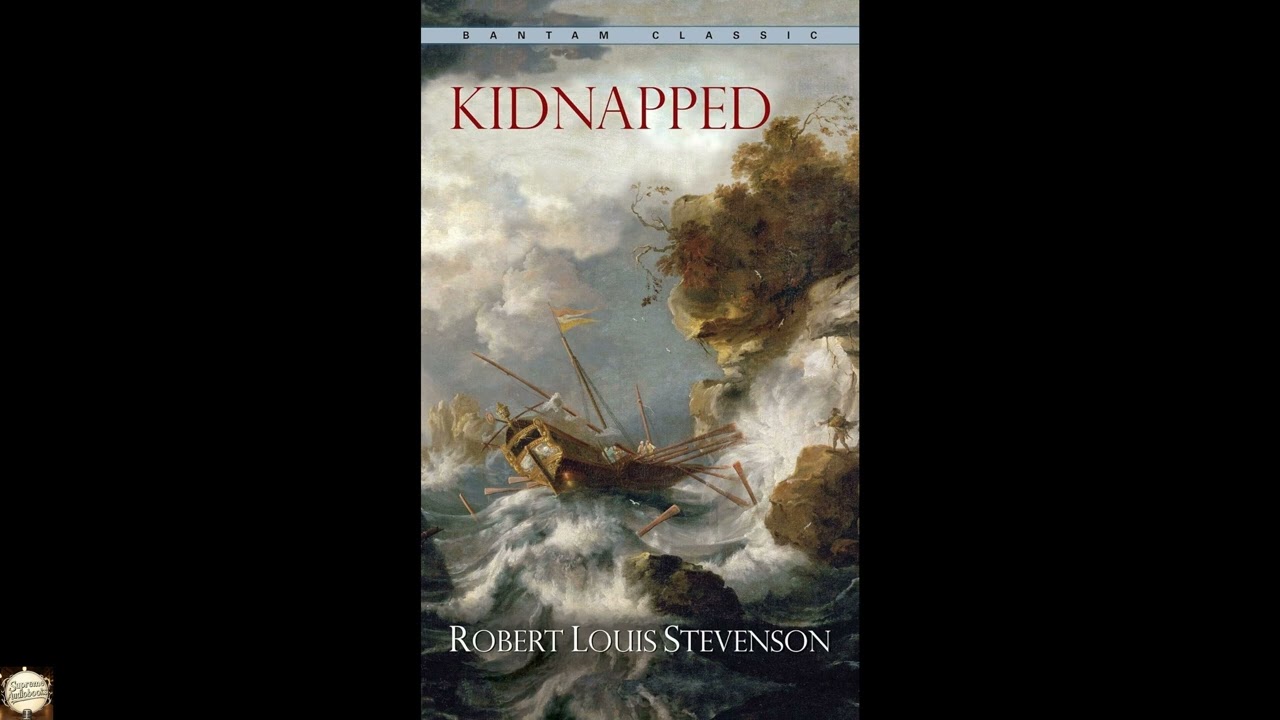
Kidnapped
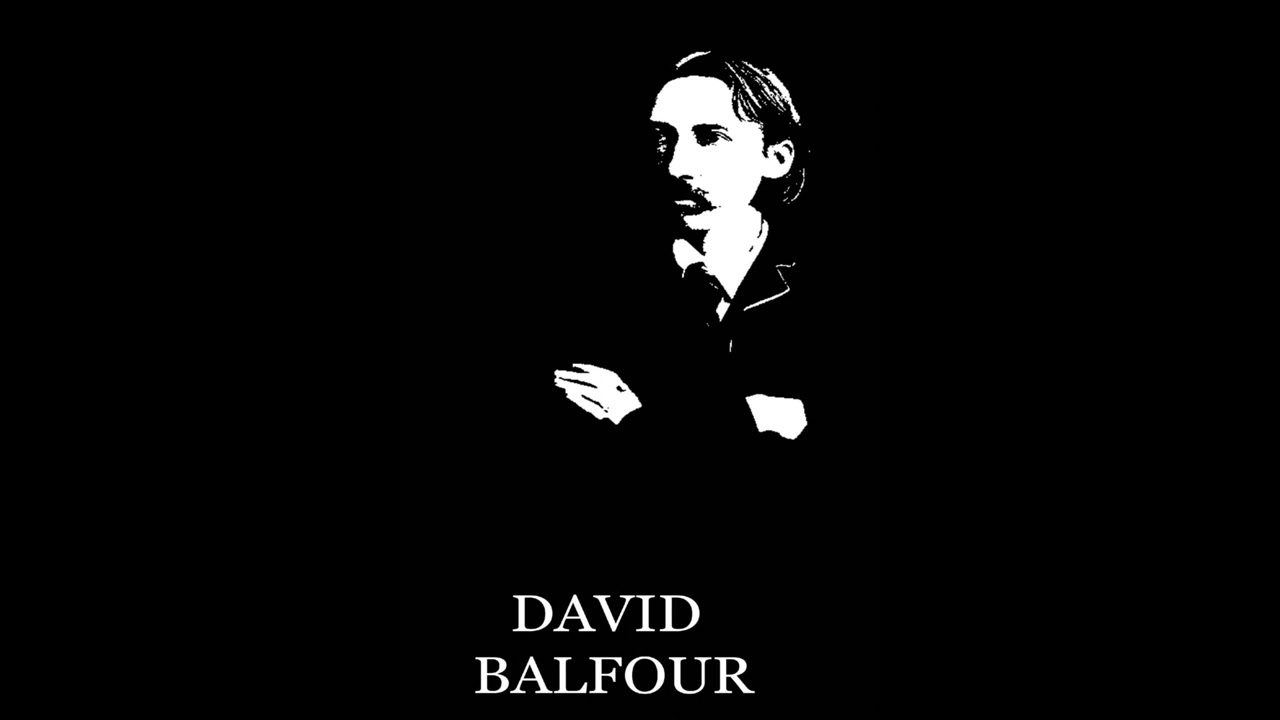
Imagine waking one day to find your world utterly upended, your inheritance stolen, and yourself abducted and cast adrift into a perilous, unknown future. This is the stark reality confronting David Balfour, the young protagonist of Robert Louis Stevenson’s celebrated adventure, Kidnapped. Far more than a simple boy's tale of derring-do, this historical novel plunges its audience into the raw, untamed heart of 18th-century Scotland, forcing a naive orphan to confront betrayal, hardship, and a nation's lingering political wounds. It is a story that speaks not only to the thrill of survival against overwhelming odds but also to the universal struggle for justice and the forging of character in the crucible of adversity—a potent reminder that courage often arrives when we least expect it, and from the most unexpected of alliances. Our story begins in the year 1751, a few years after the devastating defeat of the Jacobite Rising at Culloden. David Balfour, a respectable but unworldly seventeen-year-old, has just lost both his parents. With only a letter from his father and a few shillings, he sets off from rural Essendean for the bustling town of Cramond to meet his uncle, Ebenezer Balfour of Shaws. What David anticipates as a warm welcome from his last living relative quickly sours into a chilling encounter. Ebenezer, a miserly and sinister figure, lives in a decaying house, clearly harboring dark secrets and an even darker intent regarding his nephew's rightful inheritance. David soon discovers that his uncle has no intention of honoring his late brother's wishes; instead, Ebenezer schemes to get rid of the young heir by any means necessary, leading to David’s shocking abduction onto the brig Covenant, bound for the Carolinas as an indentured servant. Trapped aboard the treacherous ship, David finds his fortunes taking another dramatic turn. A chance encounter during a foggy night at sea introduces him to Alan Breck Stewart, a charismatic, high-spirited Jacobite exile with a bounty on his head. Alan, fleeing after the failed rebellion, is a man of sharp wit, unwavering loyalty, and dangerous charm. When a sudden disaster strikes the Covenant, David and Alan are thrown together, forming an unlikely and often contentious bond that will see them through the most desperate of circumstances. Their adventures take them from the stormy seas to the wild, majestic Highlands of Scotland, where they become entangled in the aftermath of a notorious murder – the "Red Fox" assassination – that casts them as fugitives in a country still simmering with political and cultural tensions. Pursued by government troops and facing constant danger, they must rely on their wits, their courage, and their growing mutual respect to survive the harsh wilderness and the prejudices of a divided nation, all while David desperately seeks to reclaim his inheritance and bring his uncle to justice. The author behind this riveting tale was Robert Louis Stevenson, a Scottish novelist, poet, essayist, and travel writer, born in Edinburgh in 1850. From an early age, Stevenson struggled with chronic ill health, a condition that would profoundly influence his life and work. Despite his delicate constitution, he possessed an insatiable curiosity and a restless spirit. Though he initially studied engineering and then law at Edinburgh University, he soon realized his true calling lay in literature. His health often necessitated travel to warmer climates, leading him to live in various parts of Europe and eventually settling in the South Pacific, where he died in Samoa in 1894. These travels, often undertaken by sea, undoubtedly informed the vivid maritime descriptions and the sense of adventure present in many of his stories. Stevenson was an exceptionally prolific writer of the late Victorian era, making a significant impact on English literature. He distinguished himself through a diverse body of work that encompassed both children's verses and sophisticated psychological dramas. His fame rests primarily on his adventure novels, which include the perennially popular Treasure Island, published just a few years before Kidnapped, and the chilling psychological novella Strange Case of Dr. Jekyll and Mr. Hyde. Stevenson possessed a remarkable ability to craft gripping narratives, memorable characters, and evocative settings, which secured his place as a master storyteller. He is often recognized for revitalizing the adventure novel, imbuing it with literary merit and psychological depth beyond mere entertainment, bridging the gap between popular fiction and more serious literary endeavors. At its core, Kidnapped is a profound story of a young man's coming of age. David Balfour begins as a sheltered, somewhat naive boy, thrust into a world of adult treachery and brutal reality. We see him transform through hardship: from the terror of his abduction on the Covenant and his desperate fight for survival, to his arduous flight through the unforgiving Scottish Highlands. He learns to navigate moral ambiguities, to distinguish genuine loyalty from deceit, and to stand up for himself in the face of overwhelming odds. This development from innocence to experience is powerfully illustrated in his evolving relationship with Alan Breck Stewart, whose worldly wisdom and wild independence force David to challenge his own preconceptions and grow into a resourceful, resilient individual. The novel also poignantly addresses themes of justice and injustice, particularly in the context of political and social divisions. David's entire predicament stems from the profound injustice of his uncle's attempt to steal his inheritance. Beyond his personal struggle, the story constantly highlights the broader historical injustices faced by the Highland Scots after the Jacobite defeat. The "Red Fox" murder, though peripheral to David's direct goal, becomes a central plot device that forces him to witness firsthand the severe penalties and cultural bias faced by the Jacobite sympathizers. Stevenson uses the differing perspectives of David, the Lowlander and Whig loyalist, and Alan, the Highlander and Jacobite, to present a nuanced portrayal of a deeply fractured society, where what constitutes justice depends entirely on one's allegiance and background. Their friendship, forged despite these deep divisions, suggests a path towards understanding and shared humanity. Stevenson published Kidnapped in 1886, a period in Great Britain marked by a renewed fascination with historical fiction and a yearning for adventure tales. The industrial revolution had reshaped society, leading to a burgeoning middle class with more leisure time and a desire for escapism in literature. Victorian sensibilities, while often promoting moralistic narratives, also appreciated stories of courage, loyalty, and the triumph of good over evil. At the same time, there was a particular interest in the history of Scotland, Stevenson’s homeland, still grappling with the legacies of its turbulent past. The novel emerged as a powerful piece of historical fiction, depicting the specific historical context of the post-Jacobite Uprising of 1745. The British government had implemented harsh measures to suppress Highland culture—disarming clans, banning tartan, and dismantling the clan system—creating a volatile environment ripe for conflict and divided loyalties, which Stevenson expertly brings to life. Listening to Kidnapped as an audiobook offers an unparalleled opportunity to truly immerse oneself in Stevenson's world. The spoken word elevates the experience, particularly with its vivid descriptions of the Scottish landscape and the distinctive dialogue. A skilled narrator can bring to life the lilting cadences of Alan Breck Stewart's Highland speech, the earnestness of young David Balfour, and the various regional accents and social distinctions that define the story's characters. The pace of the narration often mirrors the thrilling chase sequences and quiet moments of reflection, making the several hours of listening flow seamlessly. Pay close attention to the atmosphere created through vocal performance—the tension of a hidden encampment, the roar of a storm at sea, or the subtle nuances in a heated argument between David and Alan. It allows the listener to fully appreciate the dramatic tension and rich characterizations Stevenson so carefully crafted.
Enjoyed Kidnapped? A few ways to support us
Audible & Amazon links are affiliate; we may earn a small commission at no extra cost.
About this production
Human narration by a volunteer reader from LibriVox.org, the public-domain audiobook project. LibriVox volunteers record literary works whose copyright has expired in the United States, releasing the resulting recordings into the public domain.
Kidnapped by Robert Louis Stevenson. The underlying text is in the U.S. public domain. We do not republish any modern copyrighted edition, translation, or commentary.
The 4K cinematic visuals accompanying this audiobook are generated by an AI image model from prompts derived from the source text. No copyrighted photos, paintings, or stock footage are used. AI generation is disclosed on every video on our YouTube channel as required by YouTube's altered/synthetic content policy.
English subtitles are transcribed from the LibriVox recording with OpenAI Whisper. Translations into the 11 other supported languages are produced by Meta's NLLB-200 neural translation model. No human translator's copyrighted translation is used.
Questions about sourcing or rights? See our DMCA & Sourcing policy or contact us.
Enjoyed this audiobook?
If you'd like to own a copy of Kidnapped or hear a professionally produced edition, the links below help support free audiobook production at no extra cost to you.
As an Amazon Associate we earn from qualifying purchases. Audible / print links are affiliate.