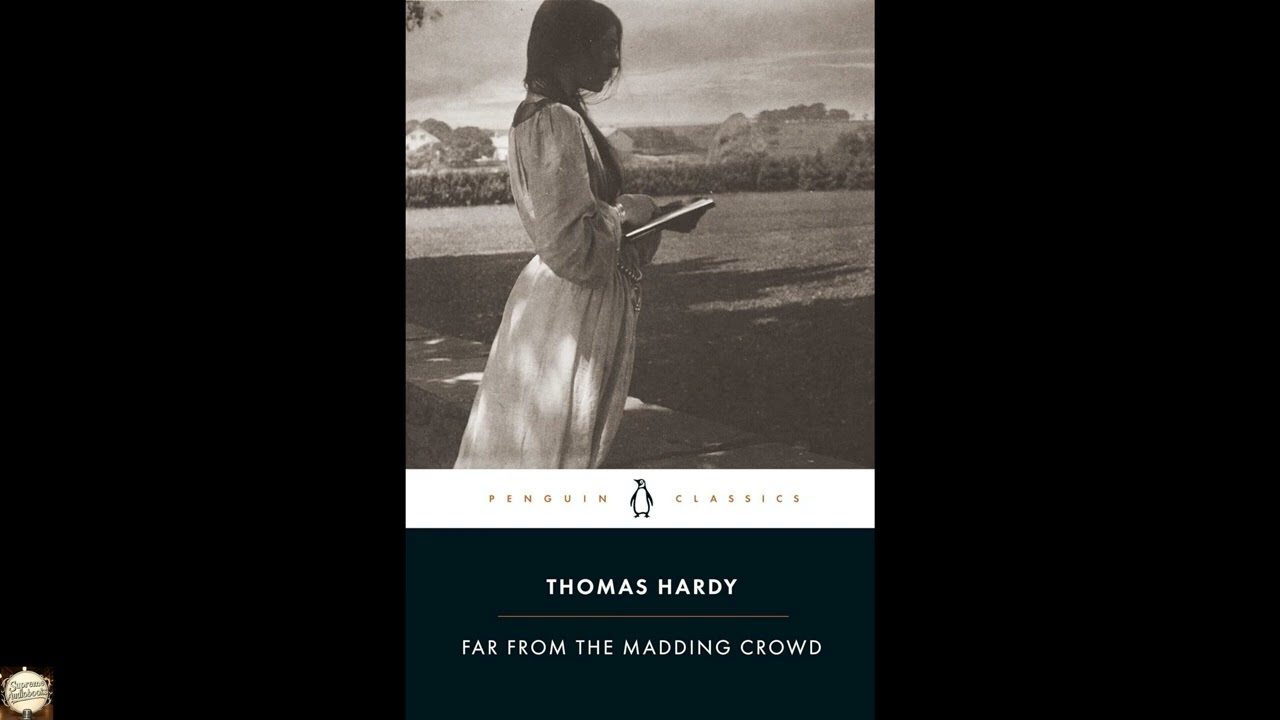
Far from the Madding Crowd
Thomas Hardy's Far from the Madding Crowd stands as a cornerstone of English literature, a powerful and poignant story that pulls the listener into the heart of rural Victorian England. At its core, it is a tale about love in its many forms, the search for independence, and the often-painful lessons learned from the choices we make. This is a novel that feels as fresh and relevant today as it did upon its publication, speaking to universal human desires for connection, self-determination, and the quiet dignity of a life lived authentically, even amidst the clamor of conflicting passions and societal expectations. It asks what true happiness looks like and how we navigate the complex landscape of our own hearts. The story unfolds in the fictional pastoral realm of Wessex, Thomas Hardy's evocative reconstruction of his native Dorset, a landscape that is as much a character in the narrative as any human. Here we meet Bathsheba Everdene, a young woman of spirited independence who, through a stroke of fortune, inherits and undertakes the management of a large farm in a world dominated by men. Headstrong and beautiful, Bathsheba finds herself at the center of attention from three very different suitors. First there is Gabriel Oak, a steadfast and honorable shepherd whose quiet devotion and practical wisdom are initially overlooked by Bathsheba. He is a man rooted in the land, a voice of reason and enduring affection who becomes her trusted bailiff. Then enters William Boldwood, a prosperous and reserved farmer, older and seemingly settled, who becomes consumed by an intense, almost obsessive love for Bathsheba after a casual Valentine's jest. His quiet world is irrevocably disturbed by her presence. Finally, there is Sergeant Frank Troy, a dashing, reckless soldier whose charm and superficial glamour quickly sweep Bathsheba off her feet with a whirlwind of passionate, if ultimately destructive, romance. The narrative follows Bathsheba's turbulent path as she grapples with her own desires, societal pressures, and the weighty consequences of her impulsive decisions, all while striving to maintain her farm and her dignity. It is a story of self-discovery, of learning to discern true value from fleeting attraction, set against the backdrop of agricultural life and the changing seasons. Thomas Hardy, born in Higher Bockhampton, Dorset, England, in 1840, was intimately familiar with the rural landscapes and traditions that form the bedrock of his most celebrated fiction. Trained initially as an architect, a profession he practiced for over a decade, Hardy gradually turned his focus to writing, drawing inspiration from the very fields, villages, and people he had known since childhood. His breakthrough came with Far from the Madding Crowd in 1874, establishing him as a significant literary voice. He continued to produce a remarkable series of novels that cemented his reputation, including The Return of the Native, The Mayor of Casterbridge, and two of his most profound and controversial works, Tess of the d'Urbervilles and Jude the Obscure. Hardy's novels are often categorized under Victorian realism and naturalism, portraying human beings caught between their personal desires and the overwhelming forces of fate, circumstance, and societal convention. He was a keen observer of class structure, gender roles, and the erosion of traditional rural life in the face of modernity. His distinctive literary style, marked by a precise sense of place, a poetic use of language, and an unflinching look at life's ironies and tragedies, ensured his prominent place in the English literary canon. Though he eventually ceased writing novels due to public outcry over the perceived pessimism and immorality of his later works, Hardy dedicated his remaining decades to poetry, producing volumes of verse that further showcased his unique voice and philosophical depth until his death in 1928. Far from the Madding Crowd resonates with several enduring themes that provide a rich experience for any listener. One prominent idea is the assertion of female independence and agency in a restrictive Victorian world. Bathsheba's initial refusal to marry, her decision to manage her own farm, and her very public navigation of romantic entanglements challenge the era's prescribed roles for women. For instance, her early, playful Valentine card sent to Boldwood, an act seemingly trivial, sets in motion a chain of events that highlights her burgeoning power and the unexpected consequences of even small deviations from convention. Another central theme is the contrasting nature of different kinds of love and their profound impact on human lives. Hardy masterfully distinguishes between Gabriel Oak's steadfast, loyal affection, which is patient and practical; Boldwood's possessive and almost destructive obsession; and Frank Troy's superficial, passionate but ultimately shallow infatuation. The listener witnesses Bathsheba's confusion and growth as she struggles to distinguish between these forms, often making choices based on external dazzle rather than inner substance. Her initial dismissal of Gabriel's quiet strength in favor of Troy's flashy uniform illustrates her learning curve, showcasing how appearance can blind one to genuine character and lasting devotion. The novel's historical context is crucial to understanding its enduring power. Published in the mid-1870s, it emerged during a period of significant transition in England. The agricultural landscape, though still dominant in many regions, was beginning its slow decline as industrialization gained momentum and populations shifted towards urban centers. Hardy, a profound observer of this change, often infused his work with a sense of elegy for a disappearing rural way of life, depicting communities and traditions that were under threat. Socially, the Victorian era upheld strict moral codes, particularly concerning women's roles, which were largely confined to the domestic sphere. Bathsheba's unconventional path as an independent farm owner and her navigation of multiple suitors would have been seen as quite radical, making her story a subtle critique of the prevailing gender norms and expectations of her time. Listening to Far from the Madding Crowd as an audiobook offers a particularly immersive and rewarding experience. Hardy's prose is meticulously crafted, full of lyrical descriptions of the Wessex landscape and precise observations of human nature. The several hours of listening time allow for a gradual absorption into this world, perfect for extended periods of quiet contemplation, during commutes, or while engaged in other tasks. A skilled narrator brings to life the distinct voices and personalities of Bathsheba, Gabriel, Boldwood, and Troy, enhancing the nuanced dialogue and emotional depth of their interactions. The pacing of the narration can underscore the novel's deliberate rhythm, allowing the listener to savor Hardy's poetic language and fully appreciate the weight of each decision and the sweeping grandeur of the natural environment that frames this unforgettable story.
Enjoyed Far from the Madding Crowd? A few ways to support us
Audible & Amazon links are affiliate; we may earn a small commission at no extra cost.
About this production
Human narration by a volunteer reader from LibriVox.org, the public-domain audiobook project. LibriVox volunteers record literary works whose copyright has expired in the United States, releasing the resulting recordings into the public domain.
Far from the Madding Crowd by Thomas Hardy. The underlying text is in the U.S. public domain. We do not republish any modern copyrighted edition, translation, or commentary.
The 4K cinematic visuals accompanying this audiobook are generated by an AI image model from prompts derived from the source text. No copyrighted photos, paintings, or stock footage are used. AI generation is disclosed on every video on our YouTube channel as required by YouTube's altered/synthetic content policy.
English subtitles are transcribed from the LibriVox recording with OpenAI Whisper. Translations into the 11 other supported languages are produced by Meta's NLLB-200 neural translation model. No human translator's copyrighted translation is used.
Questions about sourcing or rights? See our DMCA & Sourcing policy or contact us.
Enjoyed this audiobook?
If you'd like to own a copy of Far from the Madding Crowd or hear a professionally produced edition, the links below help support free audiobook production at no extra cost to you.
As an Amazon Associate we earn from qualifying purchases. Audible / print links are affiliate.