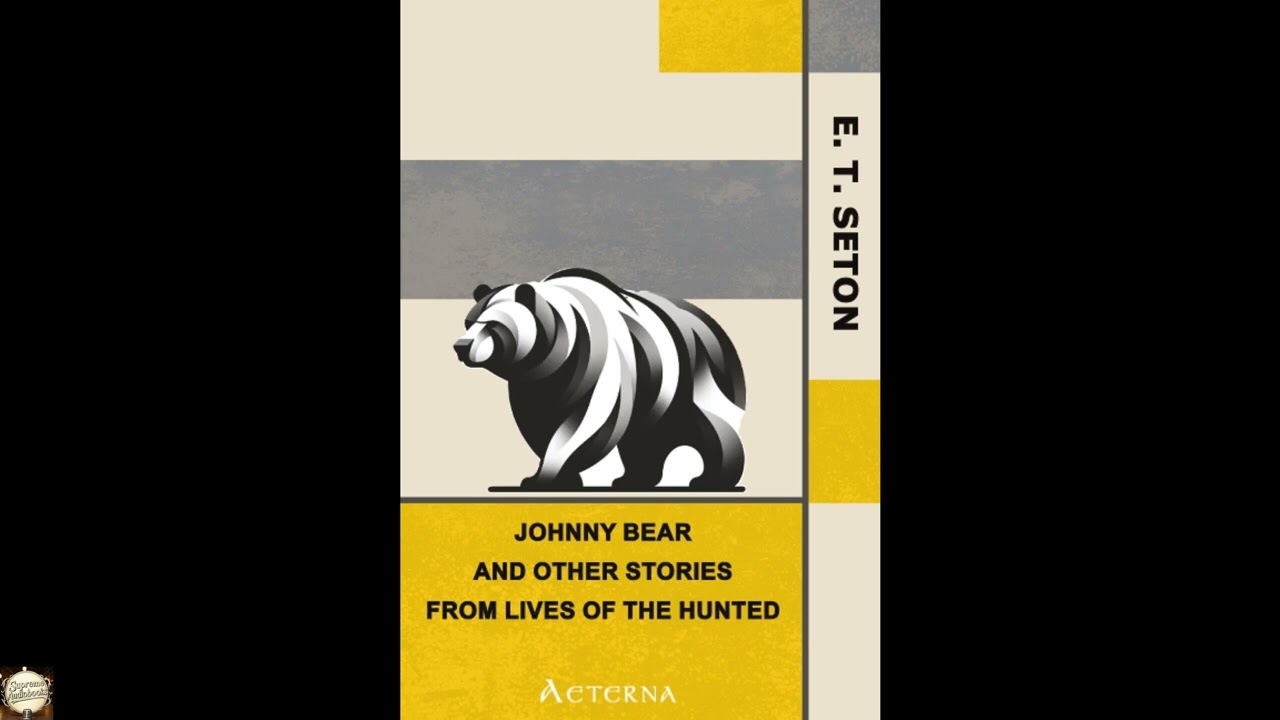
Johnny Bear, and Other Stories from Lives of the Hunted
Enter the vivid, often harsh, and deeply empathetic world of Johnny Bear, and Other Stories from Lives of the Hunted, a foundational work by the acclaimed naturalist and author, Ernest Thompson Seton. This collection offers far more than simple tales of the wild; it presents a radical shift in perspective, inviting listeners to witness the world through the eyes of its non-human inhabitants. Seton gives voice to the unspoken dramas of the wilderness, portraying animals not as mere instinct-driven creatures, but as individuals with distinct personalities, complex emotions, intelligence, and the same will to survive that defines humanity. For anyone seeking to reconnect with the primal rhythms of nature, to understand the profound interconnectedness of life, and to challenge anthropocentric views, these stories remain as potent and necessary today as they were when first written, offering a powerful reminder of the dignity and struggle inherent in all lives. The collection, at its heart, transports us to the vast, untamed landscapes of North America – from the rugged peaks of the Rockies to the sweeping plains and the dense, silent forests. Seton's stories unfold in a time when these wild spaces were still largely intact, yet already feeling the encroaching presence of human civilization. Each narrative focuses on a particular animal protagonist, whose life story forms the central arc. We meet Johnny Bear, a clever and mischievous young grizzly whose exploits provide both humor and a growing sense of the challenges he faces as he matures. We encounter Wahb, a majestic and powerful grizzly, whose legend grows with each escape from the relentless hunters determined to claim him. Randy, a courageous wolf, and Tito, a cunning coyote, also star in their own sagas of survival, wit, and resilience against the twin forces of a brutal natural world and the increasing pressures from human expansion. The central conflict in each story is the animal's struggle for existence. This is a battle waged on multiple fronts: against the harsh elements, against rival predators, and, most significantly, against the ever-present threat of human hunters and settlers. Seton meticulously details the strategies animals employ to find food, evade danger, and protect their young. The narratives follow the animals from birth or early youth through their most significant struggles and triumphs, painting a complete picture of their lives within their natural habitats. The arc of these stories often charts a progression from innocence to hard-won experience, showcasing the animals' remarkable capacity for learning and adaptation, and revealing the profound emotional bonds they form within their own species. Seton’s narratives build with an almost inevitable tension, drawing the listener deep into the high-stakes world where every decision can mean the difference between life and death, but they resist easy sentimentality, instead honoring the raw truth of the wild. Ernest Thompson Seton, born in England in 1860 and raised primarily in rural Canada, developed an early and intense passion for natural history. His childhood was marked by a deep immersion in the natural world, fostering a keen observational eye and a profound understanding of animal behavior. He studied art in London and Paris, a training that would later inform his meticulous illustrations for his books, giving visual form to the creatures he so vividly described in prose. Seton spent significant time living in the wilderness of Manitoba as a naturalist, hunter, and artist, meticulously documenting the flora and fauna he encountered. This period was instrumental in shaping his unique literary approach, leading him to reject the prevalent anthropomorphic fables of his time in favor of realistic, albeit dramatic, portrayals of animal lives. Seton’s literary output was prodigious, and he stands as a pioneering figure in modern nature writing. His first collection, Wild Animals I Have Known (1898), revolutionized the genre, establishing him as a voice that blended scientific accuracy with narrative empathy. Other notable works include The Biography of a Grizzly and Two Little Savages, which further cemented his reputation. Beyond his literary achievements, Seton was a passionate educator and conservationist. He co-founded the Woodcraft Indians, an organization that provided outdoor education and promoted environmental ethics, which later significantly influenced the development of the Boy Scouts of America. His work consistently advocated for a deeper respect for wildlife and the preservation of natural habitats, placing him at the forefront of the burgeoning conservation movement of his era. One of the central themes woven throughout Johnny Bear and its companion stories is the inherent intelligence and nobility of animals. Seton meticulously illustrates how creatures like Johnny Bear or Wahb are not simply driven by instinct, but exhibit problem-solving skills, memory, cunning, and even emotional depth. For instance, Johnny Bear's cleverness in outwitting human traps or finding food sources demonstrates a remarkable capacity for learning and adaptation, challenging the notion of animals as mindless beasts. Seton shows their bravery in the face of danger, their loyalty to their kin, and their enduring will to live, often portraying these qualities with a dignity that rivals human heroism. Another powerful theme is the tragic impact of human expansion on the wilderness and its inhabitants. Throughout the stories, the relentless pursuit by hunters, the clearing of lands, and the ever-shrinking territories underscore the devastating consequences of human encroachment, positioning humanity as both a dominant force and often, an unwitting destroyer. The narratives serve as poignant elegies for a disappearing world, mourning the loss of the wild as civilization advances. These stories also compellingly enact the brutal yet beautiful cycle of survival and adaptation in the natural world, alongside a profound sense of the interconnectedness of all life. Seton’s narratives do not shy away from the harsh realities of predator and prey, yet he imbues each creature with an intrinsic value, presenting the ecosystem as a delicate balance where every life, from the smallest rabbit to the mightiest grizzly, plays a vital role. The tales highlight how animals adapt their behaviors, change their territories, and develop new strategies to cope with both natural threats and human pressures, showcasing their remarkable resilience. The literary significance of Seton’s work lies in his revolutionary approach to animal biography. He was among the first to present animals as protagonists in their own right, lending them individual agency and character, rather than merely using them as allegorical figures. This method not only made his stories immensely popular but also fostered a widespread appreciation for wildlife and fueled the nascent conservation movement, bridging the gap between scientific observation and compassionate storytelling. The late nineteenth and early twentieth centuries, when Seton penned these stories, marked a critical period in American history. It was a time of rapid industrialization, westward expansion, and an increasing awareness of the environmental consequences of such growth. The vast wildernesses that had once seemed limitless were now visibly shrinking under the axes of loggers, the plows of farmers, and the rifles of market hunters. This era saw the rise of the conservation movement, with figures like Theodore Roosevelt and John Muir championing the preservation of natural lands and wildlife. Seton’s writings emerged directly from this context, serving as both a response to and a powerful advocate for the natural world. His stories provided a counter-narrative to the prevailing view of nature as something to be conquered or exploited, instead fostering empathy and respect for the creatures that inhabited it. They helped to awaken a public conscience about the value of wildlife and the importance of its protection, contributing significantly to the cultural shift towards ecological awareness. Listening to Johnny Bear, and Other Stories from Lives of the Hunted as an audiobook offers a truly immersive and affecting experience. The spoken word breathes new life into Seton's lyrical prose, allowing the listener to fully absorb the rich descriptions of the wilderness and the emotional weight of each animal's struggle. The careful pacing of a skilled narrator can emphasize the quiet majesty of a forest scene or the intense drama of a chase, drawing listeners directly into the narrative without the distraction of a printed page. With several hours of content, this collection becomes a perfect companion for long walks, quiet evenings, or whenever one seeks a respite from the human world. A good performance will subtly differentiate characters—not through overt mimicry, but through shifts in tone and rhythm that convey the unique spirit of Johnny Bear’s youthful energy, Wahb’s stoic power, or the desperate cunning of a smaller creature. It allows the profound atmosphere of the wild, its sounds and silences, to resonate more deeply, making Seton's groundbreaking stories feel immediate and powerfully relevant to the present moment.
Enjoyed Johnny Bear, and Other Stories from Lives of the Hunted? A few ways to support us
Audible & Amazon links are affiliate; we may earn a small commission at no extra cost.
About this production
Human narration by a volunteer reader from LibriVox.org, the public-domain audiobook project. LibriVox volunteers record literary works whose copyright has expired in the United States, releasing the resulting recordings into the public domain.
Johnny Bear, and Other Stories from Lives of the Hunted by Ernest Thompson Seton. The underlying text is in the U.S. public domain. We do not republish any modern copyrighted edition, translation, or commentary.
The 4K cinematic visuals accompanying this audiobook are generated by an AI image model from prompts derived from the source text. No copyrighted photos, paintings, or stock footage are used. AI generation is disclosed on every video on our YouTube channel as required by YouTube's altered/synthetic content policy.
English subtitles are transcribed from the LibriVox recording with OpenAI Whisper. Translations into the 11 other supported languages are produced by Meta's NLLB-200 neural translation model. No human translator's copyrighted translation is used.
Questions about sourcing or rights? See our DMCA & Sourcing policy or contact us.
View 10 famous quotes from this book →
Enjoyed this audiobook?
If you'd like to own a copy of Johnny Bear, and Other Stories from Lives of the Hunted or hear a professionally produced edition, the links below help support free audiobook production at no extra cost to you.
As an Amazon Associate we earn from qualifying purchases. Audible / print links are affiliate.