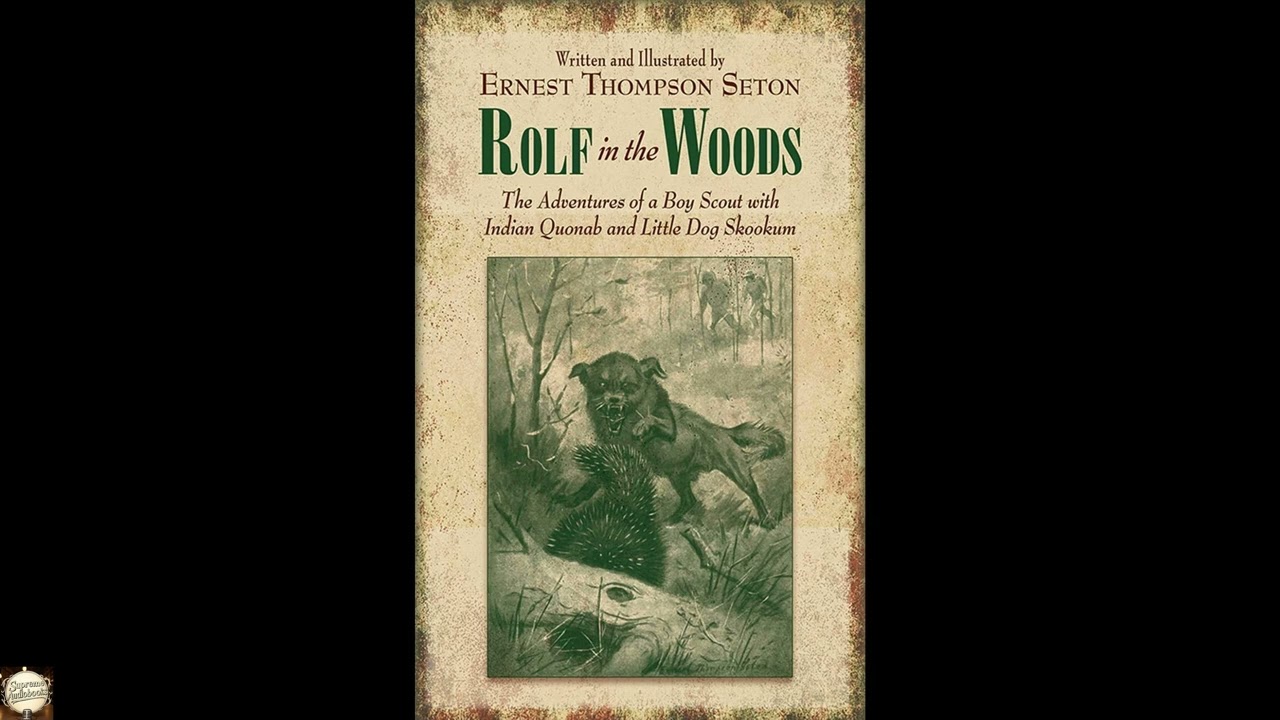
Rolf in the Woods: The Adventures of a Boy Scout with Indian Quonab and Little Dog
Step into a verdant world where the whisper of pines and the call of the wild set the stage for discovery and enduring friendship. Rolf in the Woods: The Adventures of a Boy Scout with Indian Quonab and Little Dog offers more than just a nostalgic glimpse into early 20th-century juvenile literature; it presents a foundational narrative about self-reliance, respect for nature, and the bonds forged in shared experience. This classic tale resonates today as a powerful reminder of the value of outdoor education, the wisdom gleaned from diverse perspectives, and the simple yet profound lessons learned away from the clamor of civilization. It invites listeners to reconnect with the spirit of youthful curiosity and the enduring allure of the wilderness, making it a compelling listen for those seeking both adventure and reflection. The narrative transports listeners to the heart of the American wilderness, a setting that feels both vast and intimate. Here we meet Rolf, a spirited young Boy Scout eager to prove his mettle and master the skills of the forest. Though initially enthusiastic, Rolf's understanding of the natural world is largely theoretical, drawn from his Scout manual. His true education begins when he encounters Quonab, a wise and stoic Native American who becomes his guide and mentor. Quonab possesses an unparalleled knowledge of the woods, its inhabitants, and its secrets, skills honed over a lifetime of intimate observation. Completing this remarkable trio is Little Dog, Rolf’s loyal and courageous canine companion, whose keen senses and unwavering devotion often prove invaluable in their escapades. Together, this unlikely trio navigates a series of challenges and wonders within the sprawling woods. From tracking elusive game through dense undergrowth to constructing sturdy shelters against sudden storms, Rolf learns by doing, guided by Quonab's patient instruction and Little Dog's instinctive reactions. Their adventures range from encounters with forest creatures, both formidable and gentle, to moments of quiet observation under a canopy of stars. The central arc of the story follows Rolf's transformation from a somewhat naive boy into a resourceful and perceptive individual, his book knowledge enriched by the practical wisdom of the wilderness and the profound teachings of his companion. The story builds through various episodes that test Rolf's courage, his ingenuity, and his growing understanding of the delicate balance of nature, all while nurturing the deep friendship that forms between the boy, the elder, and the dog. As the author of Rolf in the Woods remains uncredited, the work stands as a testament to a particular vein of American storytelling rather than the specific genius of a single individual. It emerged during a period when the United States was grappling with rapid industrialization and urbanization, prompting a cultural yearning for the perceived simplicity and virtue of the natural world. Many authors, known and unknown, contributed to a burgeoning genre of juvenile adventure literature that championed outdoor life, moral fortitude, and practical skills. These narratives often served a didactic purpose, aiming to instill values of self-reliance, courage, and citizenship in young readers. This type of story was also deeply intertwined with the rise of the Boy Scout movement, founded in America in 1910, which emphasized character development through outdoor activities, community service, and a code of ethics. Books like Rolf in the Woods provided fictional blueprints for the ideals of scouting, showing how boys could learn to "Be Prepared" by immersing themselves in nature and acquiring practical wilderness competencies. The nameless author likely drew upon prevalent themes and narrative structures of the time, crafting a story that resonated with the aspirations of a generation seeking to define itself through connection to the land and the lessons it offered. Thematic threads are woven throughout Rolf in the Woods, presenting lessons that remain pertinent. One prominent theme is the importance of wilderness education and self-reliance. Rolf's initial struggles to build a fire or identify tracks give way to competence as Quonab demonstrates the practical application of forest lore. A scene where Rolf, left alone for a short period, must rely on his nascent skills to find water or identify an edible plant exemplifies this growth, showcasing how direct engagement with nature fosters resilience and ingenuity. Another key theme is mentorship and the passing of knowledge across generations and cultures. Quonab serves as more than just a guide; he is a patient teacher, his deep understanding of the land contrasting with Rolf's more academic approach. We witness this when Quonab shows Rolf how to read the subtle signs of the forest – a broken twig, a disturbed patch of moss – revealing a world of information invisible to the untrained eye, thus bridging a gap between different ways of knowing. Furthermore, the story thoughtfully presents the theme of friendship and loyalty, not only between Rolf and Quonab but also extending to Little Dog. The unwavering companionship of the dog, whose barks might warn of danger or whose presence offers comfort in solitude, underscores the profound bonds that can form in shared adventure. Consider the moments when Little Dog's keen nose detects an unseen trail or his protective growl signals an approaching animal, cementing his role as an indispensable member of the trio. Finally, the narrative subtly touches upon coming-of-age and the development of character. Through his experiences, Rolf learns not just practical skills, but also patience, humility, and a deeper respect for the natural world and its rhythms. His initial eagerness, sometimes bordering on impatience, matures into a thoughtful appreciation for Quonab's measured approach, marking his passage from boyhood impetuousness to a more considered understanding of his place within the vastness of the woods. The emergence of Rolf in the Woods should be understood within the broader cultural currents of the late nineteenth and early twentieth centuries. America was undergoing rapid industrialization, leading to a romanticized view of the wilderness as a place of purity, challenge, and character development. There was a prevailing concern that urban life was softening American youth, and a desire to counter this with narratives that promoted outdoor activity, physical prowess, and moral virtue. Figures like Theodore Roosevelt championed a strenuous outdoor life, and movements like the Boy Scouts were founded on principles of character building through nature. In the literary world, adventure stories for boys were immensely popular, often featuring young protagonists who learned valuable lessons through encounters with nature, animals, and sometimes, the complexities of other cultures. These stories frequently presented idealized versions of Native American characters who served as wise guides or noble figures, reflecting a romanticized, albeit often simplified, understanding of Indigenous peoples prevalent at the time. Rolf in the Woods fits squarely into this tradition, emerging as a work designed to inspire young readers, provide them with escapism, and subtly impart lessons about self-reliance and the grandeur of the American landscape, all while reflecting the specific cultural anxieties and aspirations of its era. Listening to Rolf in the Woods as an audiobook offers a particularly immersive experience, inviting listeners to truly inhabit the world of the story. A skilled narrator can bring the distinct voices of Rolf, Quonab, and Little Dog to life, differentiating Rolf's youthful earnestness from Quonab's measured wisdom, creating a vivid conversational dynamic. The run length, several hours, is perfectly suited for a relaxed, extended listening session—perhaps during a hike in the actual woods, a quiet afternoon by a window, or a long drive through scenic landscapes, allowing the story to unfold at a natural pace. Pay attention to how the narration conveys the sounds of the forest—the rustling leaves, the distant calls of animals, the crackle of a campfire—building an atmosphere that transports you directly into the narrative's heart. The descriptive passages detailing the natural environment and the characters' actions will gain a heightened sense of presence through the spoken word, making the adventures of Rolf, Quonab, and Little Dog feel immediate and alive.
Enjoyed Rolf in the Woods: The Adventures of a Boy Scout with Indian Quonab and Little Dog? A few ways to support us
Audible & Amazon links are affiliate; we may earn a small commission at no extra cost.
About this production
Human narration by a volunteer reader from LibriVox.org, the public-domain audiobook project. LibriVox volunteers record literary works whose copyright has expired in the United States, releasing the resulting recordings into the public domain.
Rolf in the Woods: The Adventures of a Boy Scout with Indian Quonab and Little Dog by Ernest Thompson Seton. The underlying text is in the U.S. public domain. We do not republish any modern copyrighted edition, translation, or commentary.
The 4K cinematic visuals accompanying this audiobook are generated by an AI image model from prompts derived from the source text. No copyrighted photos, paintings, or stock footage are used. AI generation is disclosed on every video on our YouTube channel as required by YouTube's altered/synthetic content policy.
English subtitles are transcribed from the LibriVox recording with OpenAI Whisper. Translations into the 11 other supported languages are produced by Meta's NLLB-200 neural translation model. No human translator's copyrighted translation is used.
Questions about sourcing or rights? See our DMCA & Sourcing policy or contact us.
Enjoyed this audiobook?
If you'd like to own a copy of Rolf in the Woods: The Adventures of a Boy Scout with Indian Quonab and Little Dog or hear a professionally produced edition, the links below help support free audiobook production at no extra cost to you.
As an Amazon Associate we earn from qualifying purchases. Audible / print links are affiliate.