A Voice in the Wilderness: Classic Literature
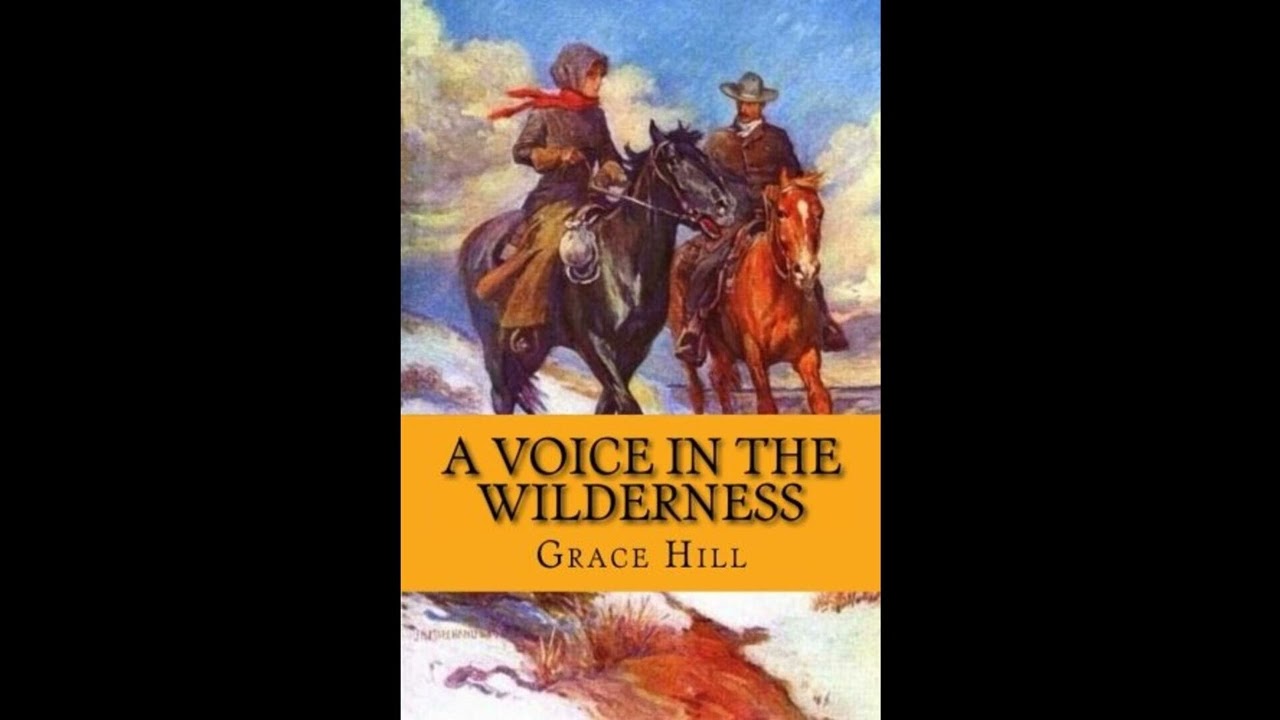
In a world that often feels loud and chaotic, where moral clarity can seem obscured by compromise, the novels of Grace Livingston Hill offer a beacon—a quiet strength and unwavering conviction. "A Voice in the Wilderness" is a quintessential example of her enduring appeal, inviting listeners into a narrative where steadfast faith, profound love, and the courage of one's convictions shape destiny. This audiobook presents a story not merely of personal trials, but of the universal human longing for purpose and connection, demonstrating how a single voice, guided by principle, can transform a community and even a landscape. It is a comforting testament to the power of goodness, as relevant today in its gentle wisdom as it was when first penned. Our story introduces Margaret, a young woman accustomed to the comfortable routines of urban life, whose circumstances abruptly change, forcing her relocation to a remote, untamed corner of the American West. Here, the raw beauty of nature is matched only by the rugged independence—and sometimes suspicion—of the local inhabitants. Alone and facing an unforgiving environment, Margaret quickly discovers that her genteel upbringing offers little preparation for the challenges of homesteading and the isolated rhythms of rural life. Her initial struggles are profound, marked by a sense of displacement and a deep yearning for the familiar world she has left behind. As Margaret endeavors to adapt, she encounters a diverse cast of characters, each grappling with their own struggles and secrets. Among them is a compelling, solitary figure, an enigmatic man whose quiet strength and principled stand often set him apart from the cynical prevailing attitudes of the frontier. Despite initial misunderstandings and the stark contrast in their backgrounds, a slow, tentative connection begins to form, built upon mutual respect and a shared sense of justice. Margaret finds herself caught in a local conflict, witnessing firsthand the moral compromises and hardships that define life on the edges of civilization. She must learn to trust her own intuition, cultivate resilience she never knew she possessed, and ultimately, find her own voice amidst the wild silence, not only to survive but to bring light and hope to a community in need. Grace Livingston Hill, born in 1865 in Wellsville, New York, and living until 1947, was an immensely prolific and beloved American author. The daughter of a Methodist minister and niece of acclaimed author Isabella Macdonald Alden (known as Pansy), Hill was immersed in a literary and religious environment from an early age. Her early life was shaped by faith and storytelling, influences that would later become the bedrock of her own literary career. After the death of her first husband, Frank Hill, in 1901, she began writing in earnest to support her young daughters, quickly finding a dedicated readership for her wholesome, inspirational narratives. Over five decades, Hill authored more than one hundred novels, establishing herself as a leading voice in Christian fiction. Her works, including popular titles such as Marcia Schuyler, The Enchanted Barn, and The Witness, sold millions of copies, appealing to a vast audience seeking stories that upheld traditional values, moral integrity, and the triumph of good over adversity. Hill’s literary impact extended beyond mere sales; she created a distinct genre of romantic fiction that blended adventure, suspense, and a clear spiritual message, earning her a lasting place in the hearts of readers who appreciated her unique blend of romance and earnest piety. Her stories provided both escape and moral guidance during periods of significant social change in America. At the core of "A Voice in the Wilderness" lie several powerful themes that resonate deeply with human experience. Foremost is the theme of faith and divine providence, illustrated through Margaret's unwavering trust in a higher power even when faced with overwhelming odds. For instance, in moments of despair when her meager resources are depleted or her efforts seem futile, Margaret often finds solace and renewed purpose in quiet reflection, leading her to unexpected solutions or timely assistance from unforeseen sources. This demonstrates how steadfast belief can sustain an individual through extreme hardship. Another key theme is moral courage and integrity, embodied by the principled stand Margaret takes against local corruption, despite the personal risk. There are scenes where she steadfastly refuses to compromise her values, even when pressured by powerful figures, showcasing her internal strength and the magnetic quality of her conviction. Further, the narrative thoughtfully considers redemption and transformation, particularly evident in the character arc of the solitary frontiersman who, through Margaret's influence and his own evolving understanding of justice, sheds his hardened exterior to embrace a more open and compassionate path. His initial cynicism gradually gives way to a commitment to community, demonstrating the profound effect one person's goodness can have on another. Finally, the story beautifully depicts the power of community and connection, as Margaret, initially an outsider, slowly builds relationships based on trust and mutual respect, ultimately bringing fragmented individuals together to forge a stronger, more united front against adversity. Her willingness to extend kindness and understanding gradually breaks down barriers of prejudice and isolation, proving that true strength often lies in unity. Grace Livingston Hill wrote during a period of immense transformation in American society, spanning from the late Victorian era through the early to mid-20th century. This was a time marked by rapid industrialization, the aftershocks of World War I, the rise of new social freedoms in the Roaring Twenties, and the profound economic anxieties of the Great Depression. As the nation grappled with shifting moral landscapes and the questioning of established traditions, Hill's novels offered a reassuring anchor. They provided a consistent message of hope, faith, and traditional values, serving as a counter-narrative to the burgeoning realism and naturalism found in mainstream literature. Her works emerged as a vital source of comfort and moral reinforcement for countless individuals seeking stories that celebrated goodness, perseverance, and the ultimate triumph of a righteous spirit over worldly challenges, reflecting a deep societal need for optimism and clear moral guidance amidst upheaval. Listening to "A Voice in the Wilderness" as an audiobook offers a unique and intimate way to experience Grace Livingston Hill's distinct narrative voice. The run length, measured in several hours, allows for a truly immersive engagement, perfect for reflective walks, quiet evenings, or providing a soothing backdrop during daily tasks. A skilled narrator brings Margaret's quiet resolve, the rugged charm of the wilderness, and the nuanced interactions among the characters to vivid life. Pay close attention to the pacing, which often mirrors the deliberate, reflective nature of Hill's prose, allowing moments of tension to build gradually and emotional breakthroughs to resonate deeply. The careful modulation of voices during dialogue, differentiating character personalities and internal states, truly enhances the sense of being present in this compelling story, allowing the listener to truly hear "a voice in the wilderness" that still speaks profoundly today.
Enjoyed A Voice in the Wilderness: Classic Literature? A few ways to support us
Audible & Amazon links are affiliate; we may earn a small commission at no extra cost.
About this production
Human narration by a volunteer reader from LibriVox.org, the public-domain audiobook project. LibriVox volunteers record literary works whose copyright has expired in the United States, releasing the resulting recordings into the public domain.
A Voice in the Wilderness: Classic Literature by Grace Livingston Hill. The underlying text is in the U.S. public domain. We do not republish any modern copyrighted edition, translation, or commentary.
The 4K cinematic visuals accompanying this audiobook are generated by an AI image model from prompts derived from the source text. No copyrighted photos, paintings, or stock footage are used. AI generation is disclosed on every video on our YouTube channel as required by YouTube's altered/synthetic content policy.
English subtitles are transcribed from the LibriVox recording with OpenAI Whisper. Translations into the 11 other supported languages are produced by Meta's NLLB-200 neural translation model. No human translator's copyrighted translation is used.
Questions about sourcing or rights? See our DMCA & Sourcing policy or contact us.
Enjoyed this audiobook?
If you'd like to own a copy of A Voice in the Wilderness: Classic Literature or hear a professionally produced edition, the links below help support free audiobook production at no extra cost to you.
As an Amazon Associate we earn from qualifying purchases. Audible / print links are affiliate.